Tuesday, 6 October 2026
Retail property accounted for 36% of commercial real estate investment in both Poland and Italy during the second quarter of 2026, the highest proportion among the eight European markets covered by Focus Estate Fund’s latest analysis. The figures point to renewed investor appetite for selected retail assets, although activity remains uneven between countries and property formats.
The analysis covers Poland, Italy, the United Kingdom, Spain, Germany, France, the Czech Republic and Portugal. Total commercial property investment during the quarter reached EUR 11.52 billion in the UK, EUR 5.87 billion in Spain, EUR 5.39 billion in Germany, EUR 4.81 billion in France, EUR 4.29 billion in Italy and EUR 2.0 billion in Poland. The Czech Republic recorded EUR 943 million and Portugal EUR 470 million.
Based on Focus Estate Fund’s figures, the 36% allocation implies approximately EUR 720 million of Polish retail investment and around EUR 1.55 billion in Italy. These are calculated values rather than independently reported transaction totals and should therefore be treated as approximations.
Independent market research broadly supports the Polish figure. Cushman & Wakefield data put Polish retail investment at close to EUR 713 million in Q2, more than five times the EUR 140 million recorded a year earlier. Retail parks represented half of the quarter’s transactions by number, alongside three shopping-centre deals and two transactions involving individual stores.
The Italian figures are also consistent with research from other property advisers. Dils estimates that approximately EUR 1.6 billion was invested in Italian retail property during Q2, making it an exceptionally strong quarter for the sector. Large transactions involving prominent properties and outlet assets accounted for a significant proportion of the volume.
The comparison illustrates an important distinction between the percentage of capital allocated to retail and the absolute size of individual investment markets. Poland and Italy led the Focus Estate Fund comparison by retail’s share of total property investment, but this does not necessarily make them Europe’s largest retail investment markets in every measurement.
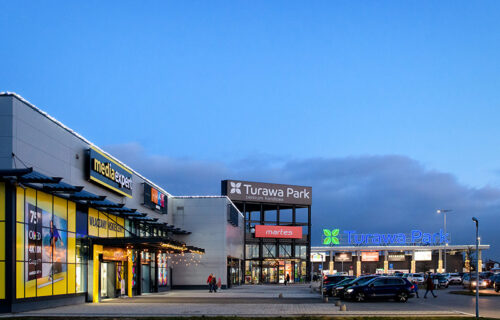
Investor demand also remains concentrated on particular types of property. Retail parks continue to attract capital, supported by their relatively straightforward operating model, convenience-led tenant mixes and continued development activity.
This trend is particularly visible in Poland. CBRE recorded 160,600 sqm of new retail space delivered during Q2, taking the country’s stock covered by its research to approximately 15.85 million sqm. Most new supply was concentrated in retail parks, which also dominate the development pipeline.
BNP Paribas Real Estate similarly reports that retail parks account for the majority of the 546,500 sqm of Polish retail space under construction and scheduled for delivery during 2026 and 2027. The adviser also points to continued refurbishment and extension activity across existing properties.
Poland’s consumer economy provides additional support for the sector. Retail sales at constant prices increased by 6.2% year-on-year in June and were 3.5% higher across the first six months of 2026 compared with the corresponding period of 2025, according to Statistics Poland.
The country’s wider economy also strengthened during the period. Statistics Poland’s preliminary estimate puts second-quarter GDP growth at 3.8% year-on-year, compared with 3.3% in the corresponding quarter of 2025. This updates the earlier 3.7% figure contained in the Focus analysis.
The investment picture nevertheless remains selective rather than indicating a uniform European retail recovery. Shopping centres, retail parks, high-street properties and individual stores face different investor requirements, while transaction volumes can be heavily influenced by a small number of large deals.
Poland provides a good example. Retail represented approximately 36% of Q2 investment, but the wider commercial property market was also performing strongly. CBRE estimates that total Polish investment exceeded EUR 3.03 billion during the first half of 2026, 78% above the corresponding period of 2025 and the strongest first-half performance since 2018.
The combination of stronger investment liquidity, growing consumer spending and continued development of retail parks suggests that the sector has moved considerably beyond the uncertainty that affected European retail property following the pandemic and subsequent interest-rate increases.
Capital is not returning indiscriminately, however. Investors continue to differentiate sharply between locations, formats, tenant mixes and individual asset performance. The Q2 figures therefore point less towards a broad European retail rebound than towards a more disciplined return of capital to properties where investors believe income can be sustained and future value created.