Saturday, 19 September 2026
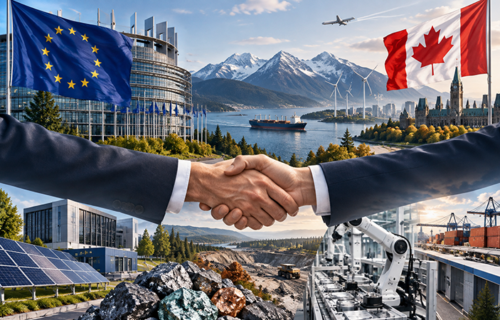
Canada and the European Union are considering a new economic and strategic framework that could deepen cross-border investment in energy, critical minerals, technology, defence and advanced manufacturing. The initiative follows European Commission President Ursula von der Leyen’s proposal for Canada to become the EU’s first associate member, although no such formal category currently exists and the eventual structure remains to be negotiated.
Canadian Prime Minister Mark Carney has welcomed closer integration while making clear that Canada is not seeking conventional EU membership. Ottawa is instead pursuing a partnership that would build on existing trade and political agreements while maintaining Canadian sovereignty. The areas identified for greater cooperation include critical minerals, energy security, artificial intelligence and computing capacity, defence manufacturing, space technology, financial services and digital trade.
The two economies already have an extensive commercial relationship through the Comprehensive Economic and Trade Agreement. The EU was Canada’s second-largest trading partner for goods and services in 2025, while substantial direct investment flows in both directions provide an existing base for further integration. Canada is also participating in European research and defence initiatives and became the first non-European country to join the EU’s SAFE defence programme.
Critical minerals are emerging as one of the most important areas for future cooperation. Canada has substantial reserves of materials required for batteries, electronics, energy technologies and defence production, while Europe is seeking to diversify supply chains and reduce dependence on a limited number of external suppliers. Combining Canadian resources with European processing, engineering and manufacturing capabilities could encourage additional investment across extraction, mineral processing, battery production, industrial facilities and supporting logistics infrastructure.
Technology and energy could provide another significant investment channel. Canada and the EU have specifically identified artificial intelligence, computing capacity and energy security as priorities for deeper cooperation. If these discussions translate into projects, they could increase demand for data centres, electricity infrastructure, technology campuses and other specialised properties. These remain potential investment consequences rather than projects already agreed under the proposed partnership.
Defence cooperation is already progressing more concretely. Canada’s participation in SAFE allows Canadian companies to compete for European defence opportunities, and a Canadian company has already secured a contract under the initiative. Greater integration of Canadian and European defence supply chains could generate additional requirements for manufacturing plants, secure warehouses, research facilities and logistics properties as European countries continue expanding defence production.
The proposed relationship could eventually extend into labour mobility, education and financial markets. Carney has called for greater opportunities for young Canadians and Europeans to live, study and work across the Atlantic. However, Canada has not been offered the unrestricted movement of goods, services, capital and people associated with the EU single market. The rights and obligations of any future arrangement therefore remain open to negotiation, while EU governments will also have to agree on how far integration should extend.
Canada and the EU are expected to advance discussions at their next summit in Canada on 29–30 October. Whatever name is ultimately given to the relationship, the economic objective is increasingly clear: Canada wants to diversify its international partnerships while Europe is seeking reliable suppliers and investment partners in strategically important industries. If the negotiations result in deeper industrial integration, the effects could extend into property markets through additional demand for manufacturing facilities, logistics assets, energy infrastructure, mineral-processing sites and data centres on both sides of the Atlantic.