Tuesday, 22 September 2026
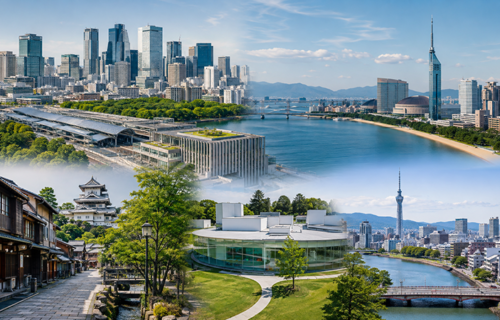
For decades, Tokyo has dominated discussions about Japan’s urban transformation, attracting investment, talent and large-scale redevelopment projects. While the capital continues to evolve, a quieter but equally significant transformation is taking place across the country. Cities beyond Tokyo are pursuing their own regeneration strategies, combining economic development, improved transport, cultural preservation and sustainable planning to strengthen their long-term competitiveness.
Rather than attempting to replicate Tokyo’s model, regional cities are increasingly building on their own strengths. From innovation districts and technology hubs to heritage-led renewal projects, urban regeneration across Japan has become more diverse and locally focused.
A National Strategy for Balanced Development
One of Japan’s long-standing challenges has been the concentration of population and economic activity in Tokyo. Decades of migration from rural areas and regional cities have contributed to demographic decline elsewhere, creating pressure on local economies and public services.
To address this imbalance, the Japanese government has introduced a series of policies aimed at supporting regional revitalisation. The 2014 legislation addressing population decline and local economic development established a framework encouraging municipalities to create long-term growth strategies suited to their own circumstances.
The Ministry of Land, Infrastructure, Transport and Tourism (MLIT) has complemented these efforts through urban planning initiatives designed to make cities more efficient and liveable. One of the most influential approaches is the Compact Plus Network concept, which promotes higher-density urban centres connected by reliable public transport. Instead of allowing low-density expansion, municipalities are encouraged to concentrate residential development within designated areas while improving access to services, employment and transport.
This approach also helps local governments reduce infrastructure costs while supporting an ageing population that increasingly depends on accessible public transport.
Osaka Expands as a Business and Innovation Centre
Osaka has emerged as one of Japan’s strongest examples of large-scale regeneration outside the capital.
Major redevelopment around Umeda and the adjacent Umekita district has transformed former railway land into a mixed-use district combining offices, commercial space, housing, hotels and extensive public green areas. These projects have strengthened Osaka’s position as a business hub while improving the city’s public realm and transport connectivity.
Investment linked to advanced manufacturing, life sciences, tourism and international events has further enhanced Osaka’s role within western Japan, attracting both domestic and overseas businesses seeking alternatives to Tokyo.
Fukuoka Builds a Startup-Friendly City
Fukuoka has gained international recognition for its business-friendly policies and emphasis on innovation.
Local authorities have introduced incentives to attract entrepreneurs, simplified regulatory procedures and encouraged private-sector investment. Redevelopment around Hakata Station, combined with transit-oriented residential projects, has helped create a compact urban environment that appeals to both businesses and younger professionals.
The city’s relatively affordable housing, shorter commuting times and high quality of life have strengthened its ability to retain graduates and attract skilled workers who might otherwise relocate to the capital.
Kanazawa Demonstrates the Value of Cultural Regeneration
Not every successful regeneration strategy depends on large commercial developments or skyscrapers.
Kanazawa has taken a different path by investing in its cultural identity and historic character. Rather than replacing traditional districts with modern construction, the city has focused on restoring heritage assets while introducing contemporary cultural institutions.
Projects such as the Kanazawa Citizens’ Art Village and the 21st Century Museum of Contemporary Art have helped attract domestic and international visitors while supporting local creative industries. This combination of heritage conservation and modern cultural investment has strengthened tourism without sacrificing the city’s distinctive identity.
A More Diverse Urban Future
Japan’s regional regeneration illustrates that successful urban development does not follow a single formula. While Tokyo remains the country’s largest economic engine, other cities are demonstrating that growth can be achieved through strategies tailored to local strengths.
Some cities are focusing on innovation and advanced industries, others on entrepreneurship, transport integration or cultural preservation. Together, these approaches contribute to a broader national objective of creating a more balanced urban network while improving resilience against demographic and economic challenges.
As Japan continues to adapt to population ageing and changing patterns of work and investment, regional cities are likely to play an increasingly important role. Their regeneration efforts suggest that the country’s future growth will not depend solely on Tokyo, but on a network of well-connected, competitive and distinctive urban centres across the nation.
Source: © CIJ.World Japan Research & Analysis Team