Wednesday, 7 October 2026
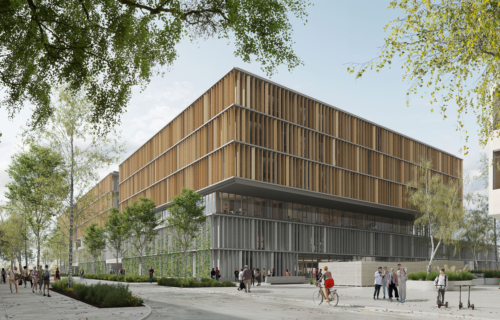
PORR and the City of Vienna are using low-emission concrete in the construction of the ZBG Seestadt Aspern vocational school project in Vienna, with projected savings of around 4,200 tonnes of CO₂e over the course of the development.
The educational complex, scheduled to open in September 2028, will provide capacity for up to 7,500 students annually across approximately 42,000 sqm of usable space. The project is being delivered by PORR and its joint venture partner Apleona, with up to 400 workers expected on site during peak construction phases.
As part of the project, PORR is using concrete based on CEM II/C cement for load-bearing structures. According to the company, the material choice, combined with shorter transport routes, contributes significantly to lowering emissions associated with the construction process.
Approximately 36,000 cubic metres of low-emission concrete are expected to be used during construction. PORR estimates that this will reduce emissions by around 4,200 tonnes of CO₂e compared with conventional concrete solutions.
Karl-Heinz Strauss, CEO of PORR, said the savings demonstrate the scale of emissions reductions possible through alternative construction materials and supply chain optimisation.
The project also serves as a testing ground for the wider application of CO₂e-optimised concrete mixtures. PORR noted that alternative concrete formulations can create technical and logistical challenges, including longer curing times and stricter processing requirements. However, the company said these issues have not presented significant difficulties at the Aspern project.
To further reduce emissions, the project incorporates shorter supply chains and local material processing. A mobile concrete plant has been installed on site, while excavated material is being processed at a nearby gravel facility located around two kilometres away and reused in concrete production.
According to PORR, the experience gained through the project will support future applications of lower-emission construction materials in large-scale developments.