Sunday, 4 October 2026
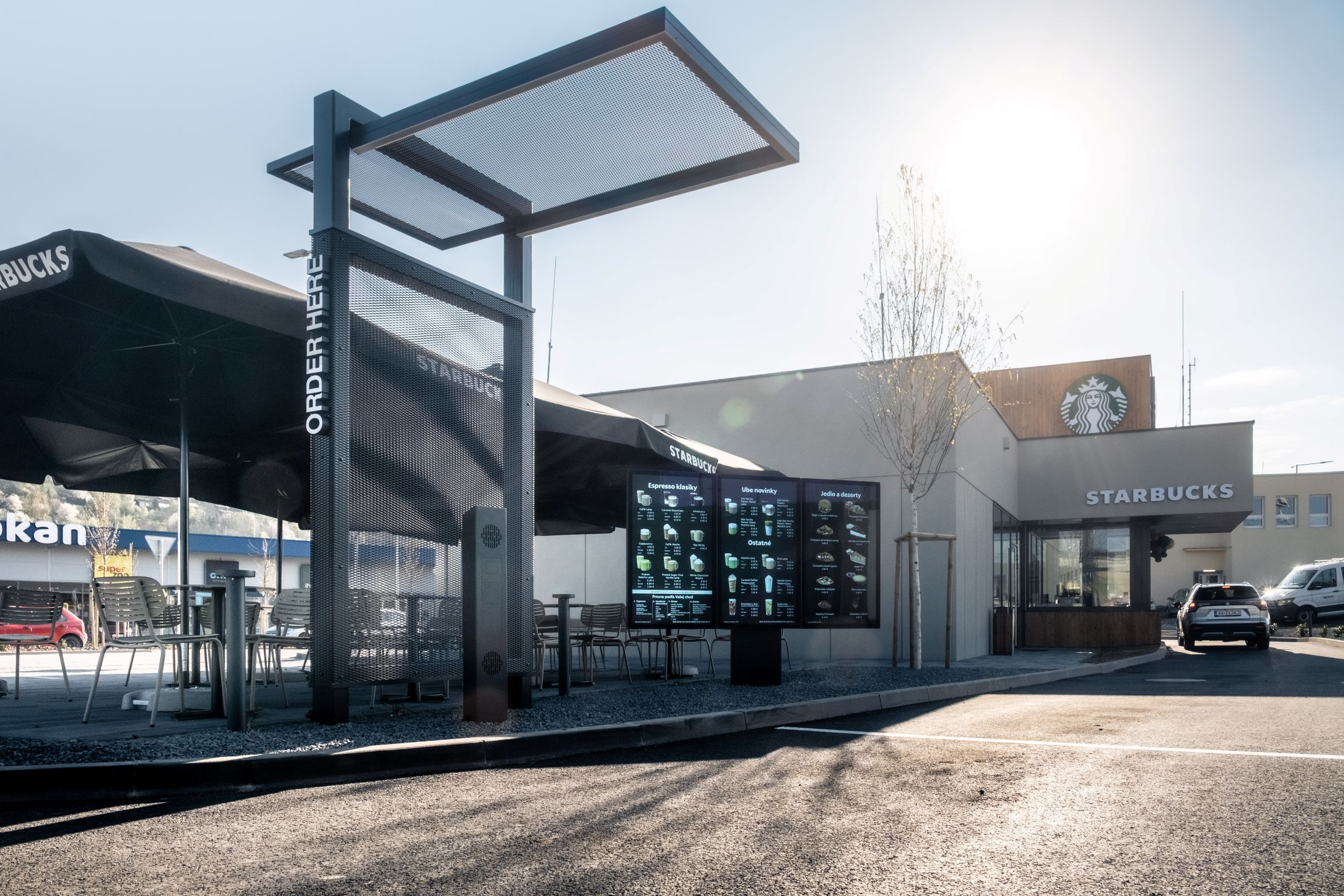
Construction company HSF System SK has completed the first Starbucks Drive Thru café in Slovakia and the Czech Republic. The new outlet has opened at the Klokan shopping centre in Žilina, with the project developed for investor MC Štadión, part of the KLM real estate group.
The single-storey building includes a customer sales area, bar and kitchen facilities, as well as technical and staff areas. The project also incorporates a dedicated Drive Thru lane designed to allow customers to order and collect products directly from their vehicles.
“The new single-storey building with a rectangular floor plan represents a modern object that combines high-quality architectural solutions, technological innovation and an ecological approach to construction, while creating a comfortable environment for customers and effective conditions for operation,” said Peter Guoth, Sales Director at HSF System SK.
The building has a footprint of 208.6 sqm and a total usable area of 168.14 sqm. The structure combines masonry construction with a prefabricated reinforced concrete frame system supported by reinforced concrete foundations.
“The architectural solution works with modern materials and respects the corporate identity of the brand while maintaining high aesthetic and technical standards,” said Tomáš Mydlo, Production Director at HSF System SK.
The façade combines an external insulation system with aluminium glazing and triple-glazed insulated panels. Wooden and aluminium cassette cladding were also incorporated into the design. The flat roof features foil waterproofing and a stabilising gravel layer.
Internally, the building uses plasterboard partition systems with insulation and fibre concrete flooring finished with ceramic surfaces. Heating and cooling are provided through a VRF system with an air-to-air heat pump, while ventilation is managed through a rooftop heat recovery unit supplemented by local extraction systems in sanitary and kitchen areas.
The project also included surrounding infrastructure and landscaping works. Access roads and handling areas were built using asphalt and cement concrete designed to withstand high mechanical loads. Rainwater drainage is managed through an oil separator and infiltration blocks.
“The landscaping is designed with an emphasis on the microclimatic, aesthetic, representative, accompanying and hygienic function of greenery, while the selection of vegetation has been adapted to climate changes and the effects of biotic and abiotic factors,” added Mydlo.