Thursday, 10 September 2026
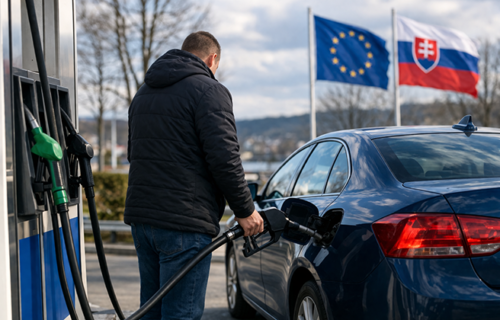
The government of Slovakia has decided to extend its system of dual diesel pricing for a further 30 days, while removing the existing €400 cap on individual refuelling transactions. The move confirms earlier statements by Prime Minister Robert Fico and comes despite criticism from the European Commission.
Under the measure, diesel sold to vehicles with foreign licence plates remains priced at a higher level than for domestic users. The government has, however, lifted limits on the volume and value of fuel purchases, a change previously requested by Slovak transport operators. Motorists are still restricted to refuelling directly into vehicle tanks and, in limited cases, into a single container of up to 10 litres.
“The decision on double prices makes sense. Therefore, we will again put this provision into the preparation of the government regulation so that the Ministry of Finance can go down this path,” Fico said.
The price for foreign vehicles is calculated as an average of diesel prices in neighbouring countries, including the Czech Republic, Poland and Austria, based on data from the European Commission. This currently stands at around €2.00 per litre, compared with approximately €1.75 per litre on the domestic market.
The policy was introduced in March in response to increased cross-border demand, often described as fuel tourism, after Slovak fuel prices fell below levels in neighbouring countries following disruptions linked to the conflict in the Middle East. The European Commission has argued that the dual pricing mechanism is discriminatory and may be incompatible with EU law.
Slovakia implemented the regulation under a state of oil emergency declared earlier this year after supplies through the Druzhba oil pipeline were interrupted. Although some restrictions have since been eased, the government has opted to maintain selected measures.
State-owned refinery Slovnaft, part of the MOL Group, has resumed near-full operations and is sourcing crude oil via the Adria pipeline, including shipments from Libya and Saudi Arabia. According to CEO Gabriel Szabó, the company is continuing technical adjustments to enable processing of non-Russian crude, with completion expected next year.
At the same time, uncertainty around regional supply remains. Volodymyr Zelenskyy said that flows through the Druzhba pipeline could resume by the end of April, following earlier disruptions linked to the ongoing conflict.
The Slovak government maintains that the measures are necessary to stabilise the domestic fuel market, while discussions with EU institutions on their compliance continue.
Source: CTK