Sunday, 4 October 2026
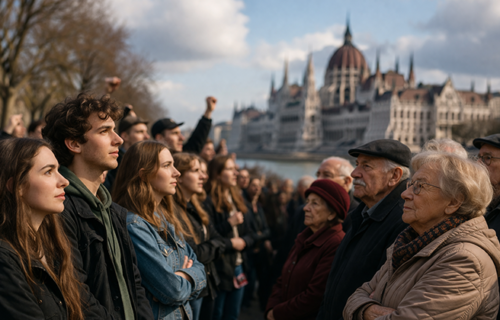
Hungary’s upcoming parliamentary election is increasingly being shaped by a clear divide between generations, as younger voters show growing support for a political alternative to the country’s long-serving leadership, while older citizens largely remain aligned with the current government.
In the weeks leading up to the 12 April vote, grassroots campaigning by younger supporters has become more visible across smaller towns and regional centres. Many in their twenties, having grown up entirely under the same political leadership, are now actively engaging in efforts to encourage change, reflecting a broader shift in political participation among younger Hungarians.
At the centre of this momentum is Péter Magyar, a former insider of the governing political structure who has repositioned himself as a challenger. His political platform has gained rapid traction, particularly among voters who had previously remained disengaged from public life. Surveys conducted in recent months suggest that younger demographics are significantly more inclined to support his movement, while backing for the ruling party remains strongest among pensioners and in rural areas.
Analysts point to a deeper structural transition underway. A generation that once defined Hungary’s political direction following the end of communism is now being confronted by a younger cohort shaped by different priorities, including economic prospects, transparency in governance and the country’s broader international alignment. This shift is not only ideological but also reflects changing expectations about the role of institutions and public accountability.
Recent political developments have further intensified engagement, particularly among younger voters. A high-profile controversy in 2024 involving a presidential pardon triggered widespread public reaction and is widely seen as a catalyst for renewed interest in political participation. In its aftermath, new political forces have emerged, reshaping the electoral landscape and narrowing what was once a dominant lead for the governing party.
Despite these changes, the outcome of the election remains uncertain. The incumbent leadership continues to benefit from established support networks, particularly outside major cities, as well as policies that resonate with older voters, including pension measures and family-related incentives. The campaign has also increasingly emphasised stability and continuity, framing the election as a choice between experience and risk.
The contest has grown more polarised in recent weeks, with disputes over institutional fairness, media conditions and campaign practices adding to an already tense political environment. While opposition forces appear to have gained momentum, Hungary’s electoral dynamics suggest that turnout and regional voting patterns will play a decisive role.
As the country approaches election day, the balance between continuity and change may ultimately rest on whether the emerging political engagement among younger voters translates into a sustained shift at the ballot box.