Wednesday, 30 September 2026
DIW Study Links Germany’s Record Absenteeism Levels to Respiratory Illnesses and Post-Pandemic Behaviour Changes
DIW Berlin has found that the sharp increase in sickness-related absences among employees in Germany during 2022 was primarily driven by respiratory illnesses and changing attitudes toward working while sick following the pandemic, rather than by the introduction of electronic sick leave certificates.
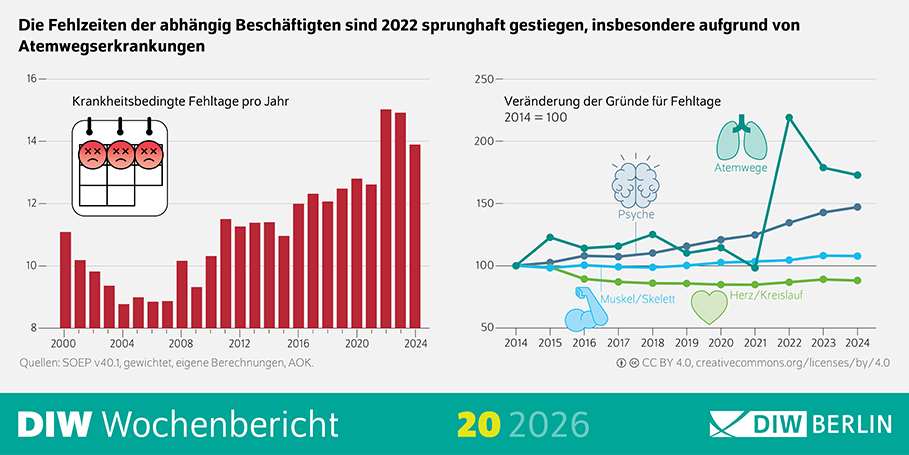
According to the study by the German Institute for Economic Research, employees in Germany were absent from work for an average of 15 days in 2022, representing a 19 percent increase compared with the previous year and marking the highest level on record.
The rise coincided with the introduction of electronic sick leave certificates, known as eAU, leading to speculation that the increase reflected improved administrative reporting rather than a genuine change in absenteeism levels. However, the study argues that this explanation is insufficient.
Researcher Markus Grabka analysed data from the Socio-Economic Panel (SOEP), which records employee absences independently from official sick leave submissions. While official statistics showed a 32 percent increase in sick leave, the SOEP data still identified a substantial 19 percent rise.
The study highlights respiratory illnesses as the main factor behind the increase. Data from health insurer AOK showed a significant rise in absences linked to respiratory conditions during 2022. Older employees and workers with heightened health concerns were identified as particularly affected groups, both recording above-average increases in sick days.
According to the report, behavioural changes following the COVID-19 pandemic also played an important role. Employees, particularly those considered vulnerable, appear more likely to remain at home when experiencing contagious symptoms than before the pandemic.
The study warns against policy proposals aimed at reducing absenteeism through measures such as cutting continued wage payments during illness or introducing unpaid waiting days. Grabka argues that such approaches could increase “presenteeism”, where employees continue working despite being unwell, potentially worsening health outcomes and spreading illness within workplaces.
Instead, the report recommends exploring partial sick leave systems that would allow employees with milder conditions to continue limited work activity through reduced hours or remote working arrangements. The study also calls for expanded preventative healthcare measures, particularly in the area of mental health, which has become an increasingly important contributor to long-term absenteeism in Germany.