Thursday, 10 September 2026
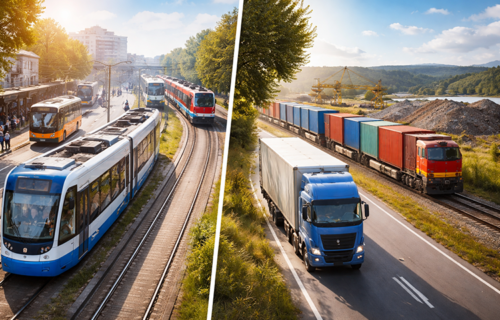
Public transport in Slovakia continued its recovery in 2025, with passenger numbers exceeding pre-pandemic levels, while freight transport remained under pressure, according to the latest data published by the Statistical Office of the Slovak Republic.
Nearly 748 million passenger journeys were recorded last year, representing a 5 percent increase compared with 2024 and almost 7 percent more than in 2019. The growth confirms a sustained return to public transport following the sharp declines seen during the pandemic years.
In the fourth quarter alone, passenger transport recorded 193 million journeys, up 4.3 percent year-on-year. Urban public transport and suburban as well as long-distance bus services saw notable increases, while rail transport experienced a slight decline in the number of trips during the final quarter.
Road-based transport continues to dominate the sector. Over the long term, close to 90 percent of public transport journeys are carried out by road. In 2025, road transport accounted for the vast majority of trips, with nearly 656 million passengers using urban, suburban and long-distance road services.
When measured by distance travelled, passenger transport performance grew even more strongly. In the fourth quarter, total passenger-kilometres rose by 9.5 percent year-on-year to 3 billion. For the full year, passenger transport performance increased by 11.8 percent to 12.1 billion passenger-kilometres. The growth was driven particularly by longer travel distances in suburban and long-distance road transport, as well as continued gains in urban public transport.
In contrast to passenger growth, freight transport indicators pointed to stagnation and decline. During 2025, more than 198 million tonnes of goods were transported, representing a 6.4 percent drop compared with the previous year. Road transport remained the dominant mode, accounting for three-quarters of total freight volume, while rail held an 18 percent share.
The overall decrease in freight volumes was influenced by significant reductions in pipeline transport and lower volumes in public road freight services. Rail freight also recorded a year-on-year decline. Freight transport performance, which reflects both volume and distance, fell by 7.6 percent to 36.2 billion tonne-kilometres.
In the fourth quarter, freight volumes declined by 4.2 percent compared with the same period of 2024, reaching 50.1 million tonnes. The reduction was primarily driven by a sharp drop in pipeline transport. However, non-public road transport, carried out by companies for their own business needs, recorded double-digit growth in the volume of goods transported.
The data suggest a diverging trend within Slovakia’s transport sector: while passenger mobility continues to strengthen and exceed pre-pandemic levels, freight transport remains subdued amid weaker demand and structural challenges across certain modes of transport.
Source: SSOSK