LIVING Launches Sales for Mártonhegy Villapark Residential Development in Buda

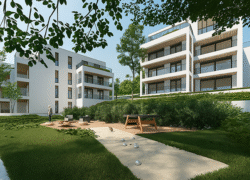
LIVING, the residential development brand of WING, has begun sales for Mártonhegy Villapark, a new housing project in Budapest’s District 12. The scheme will be built on an 8,000 sq m south-facing plot on Bürök utca and is planned to deliver 48 apartments across five villa-style buildings. Completion is scheduled for the fourth quarter of 2027.

The site is located in a well-established part of the Hegyvidék district with access to public transport, including bus lines 102, 110 and 990, and tram line 59. Nearby amenities include schools, playgrounds, sports facilities and two shopping centres—Hegyvidék Shopping Centre and MOM Park.

The project will offer a range of unit sizes, from one-bedroom apartments to larger units, including penthouses of up to 148 sq m with terraces. A total of 85 parking spaces will be created, with buyers of larger apartments able to purchase two spaces. The buildings are planned with A+ energy performance ratings and technical features such as heat-pump-based ceiling heating and cooling, electric blinds with smart control, and heat-recovery ventilation.

According to WING’s Head of Residential and Office Development, Tibor Tatár, the project aims to integrate into the character of the surrounding neighbourhood while providing modern housing options.

Plans also include outdoor areas and shared facilities. Approximately 5,000 sq m of landscaped green space will surround the buildings, and the development will incorporate recreational zones, a BBQ area and a small spa.

LIVING will make available its residential services package, which supports buyers through handover, furnishing, rental and property management. Up to a certain construction stage, buyers can select one of three basic smart-home packages—focusing on security, comfort or voice-controlled systems—at no additional cost.

The project is being financed through the Housing Capital Programme (Lakhatási Tőkeprogram).

CPI Europe Posts Strong Revaluation Gains and Higher Profit in First Three Quarters of 2025

CPI Europe AG has reported a sharp increase in profitability for the first nine months of 2025, supported by positive revaluation gains and improved financial results. According to the company’s unaudited figures, net profit rose to €236.9 million, up from €50.9 million a year earlier. 

Operating profit (EBIT) increased to €396.2 million, reflecting €118.5 million in revaluation gains across standing investments, property development and asset sales. Financial results improved significantly to –€93.6 million, driven by valuation effects on interest derivatives and favourable exchange-rate movements. 

Rental income amounted to €412.6 million, slightly below last year’s level, which the company attributes to the strategic disposal of non-core assets. Funds from operations (FFO 1 after tax) stood at €186.1 million, compared with €230.9 million in the same period of 2024. 

Portfolio Optimisation Continues

CPI Europe executed property sales totalling €690.6 million during the period. As of 30 September 2025, the portfolio comprised 365 properties valued at €7.7 billion, with standing investments accounting for 97.8% of total assets and a rentable area of 3.1 million sqm. The portfolio recorded an occupancy rate of 93.9%, while the weighted average unexpired lease term (WAULT) was 3.8 years. 

Solid Balance Sheet and Liquidity Position

The company reported an equity ratio of 47.8% and a net loan-to-value ratio (net LTV) of 41.0%. Cash and cash equivalents reached €654.7 million. CPI Europe noted that all of its financial liabilities were fully hedged against interest-rate fluctuations. As of the reporting date, IFRS book value per share was €30.39, while EPRA NTA per share increased to €33.08. 

The full interim report for the period to 30 September 2025 is available on the company’s website.

S IMMO AG Reports Higher Profit

CPI Europe also highlighted the publication of results from its sister company, S IMMO AG. For the first three quarters of 2025, S IMMO recorded total revenues of €275.2 million, including €167.3 million in rental income and €13.1 million from hotel operations. Net profit rose to €187.6 million, supported by improved financial results and property sales. 

The results notification is available on the S IMMO website.

Feldberg Capital Begins Redevelopment of Former Osram Courtyards into Life Science Campus

Feldberg Capital has begun the redevelopment of the former Osram Courtyards in Berlin-Mitte, initiating a multi-year project to convert the listed industrial site into a large-scale life science campus. The investment volume is around €100 million, with completion planned in phases through to 2030.

The 65,000 sqm complex, located between Oudenarder Strasse, Seestrasse, Groninger Strasse and Liebenwalder Strasse, will undergo a full refurbishment. Approximately 20,000 sqm will be converted initially into laboratory and research space. These areas will be progressively modernised and leased to institutions and companies active in the life sciences sector. Current tenants include Charité, the German Heart Centre and several laboratory operators, alongside users from retail, public services and brewing.

Feldberg took over the site in mid-2024 and is now moving ahead with implementation. Planned measures include expanding laboratory and office capacity, improving energy efficiency within heritage constraints, refurbishing roof structures and redesigning outdoor areas. The updated landscaping concept will add green and public spaces intended to integrate work, residential and everyday uses. All works are being coordinated with heritage authorities.

“The former Osram Courtyards offer ideal conditions for the development of a modern life sciences campus – both structurally and in terms of location,” said Rodney Bysh, CEO of Feldberg. “We are proud to lead this iconic Berlin industrial landmark into the future – creating long-term value for our investors, the city, and Germany as a business hub. This repositioning lays the foundation for highly qualified jobs in one of the most dynamic future industries, while strengthening the life sciences cluster of the Berlin-Brandenburg region.”

Laboratory and research space remains in strong demand across the Berlin-Brandenburg region, particularly units designed around stringent safety, functionality and technical requirements. The site can accommodate both large-format laboratories and modular configurations combining laboratory, office and storage areas.

The complex has more than a century of industrial history. Lightbulb production began there in 1904, and after Osram acquired the facility in 1935, it grew into one of Europe’s major lamp production sites and served as Osram’s German headquarters until the late 1980s.

India’s Warehousing and Logistics Sector Enters a More Measured Phase After Years of Rapid Expansion

India’s logistics and warehousing industry, one of the fastest-growing segments of the real estate market between 2020 and 2024, is showing clearer signs of moderation in 2025 as developers and occupiers adjust to rising costs, slowing e-commerce expansion and emerging capacity pressures in several micro-markets.

According to data from JLL India, total Grade A and B warehousing stock in the country’s top markets crossed over 530 million sq ft by end-2024, marking a near-doubling of capacity within six years. This growth was driven by a surge in e-commerce fulfilment, expanding third-party logistics operations, and the strengthening of domestic manufacturing, particularly in Tier-1 and stronger Tier-2 cities.

Industry data shows that annual leasing consistently exceeded 50 million sq ft between 2021 and 2024, reflecting robust demand across 3PLs, e-commerce, automotive, engineering and retail. However, consultants note that 2025 represents a more mature phase of the cycle. Cushman & Wakefield reports a softer investment environment this year, linked to higher land acquisition costs, infrastructure gaps and concerns over saturation in some corridors.

This shift comes after an exceptional 2020–2024 period when online retail platforms rapidly expanded last-mile networks. Knight Frank data indicates that warehousing transactions in the top cities have steadily increased since 2021, though not at the extreme levels sometimes suggested. Market analysts emphasise that the momentum remains positive but no longer at the breakneck pace seen during the pandemic-era consumption surge.

A key driver of the moderation is a deliberate slowdown in the quick-commerce segment. Platforms such as Swiggy Instamart, Blinkit and Zepto — which previously fuelled aggressive warehouse and dark-store leasing — have eased expansion to focus on profitability. Industry observers say that this has removed a major accelerant that previously contributed more than 40% of incremental warehousing demand in certain micro-locations.

Several structural constraints are also weighing on project pipelines. Rising land costs remain the biggest hurdle across Delhi NCR, Mumbai Metropolitan Region and Bengaluru, where developers face shrinking margins and more cautious capital deployment. In Tier-2 and Tier-3 cities, the challenges differ, with delays commonly attributed to land aggregation, title disputes and administrative complexities.

Infrastructure limitations present a further obstacle. Despite ongoing investment in highways, freight corridors and port capacity, India’s logistics expenditure remains around 13–14% of GDP, significantly higher than in more advanced economies. Last-mile connectivity remains uneven, and dwell times at major ports — often exceeding two days — continue to be well above global benchmarks.

At the same time, the push towards automation is reshaping cost structures. India’s warehouse automation market, valued at around USD 400–500 million, is expected to grow three- to four-fold by 2030 as facilities adopt robotics, sensors, AGVs and AI-enabled warehouse management systems. While long-term gains are expected in efficiency and safety, developers and occupiers cite barriers such as skilled-labour shortages, high import duties and upfront capex requirements.

The market is also confronting the possibility of overcapacity in selected emerging corridors. Analysts warn that vacancy risks may increase in peripheral or speculative locations where e-commerce was expected to be the primary demand engine. These include outer zones of NCR, the fringes of Bengaluru, and several early-stage logistics clusters around central and eastern India.

Despite these challenges, industry sentiment remains broadly positive. Many developers believe that the sector has entered a more sustainable growth trajectory and expect stronger capital-markets interest in the medium term. Several investors and operators are considering public listings to unlock scale and institutionalise operations — a move seen as the next milestone in the sector’s evolution.

While 2025 may not match the extraordinary expansion of the previous four years, India’s warehousing and logistics industry continues to benefit from rising domestic consumption, supply-chain diversification and the government’s continued focus on logistics reform. Most analysts agree that the long-term outlook remains robust, even as the market transitions into a more balanced and efficiency-driven phase.

© 2025 cij.world

Czech Industry Warns of Unmanageable Costs Under New EU Climate Target

The Czech Republic would have to commit several trillion crowns to modernising industrial production in order to meet the European Union’s new 2040 climate goal, according to a study presented by the Confederation of Industry. The analysis argues that the scale of investment required over the next 15 years would exceed what most domestic companies—especially those dependent on high energy use—can realistically finance or implement.

Representatives of the Confederation said the pressure on factories to reduce emissions far more quickly than in previous decades would place Czech firms at a growing disadvantage compared with competitors operating under less demanding rules. Heavy industry, including metals, chemicals and producers of cement, glass and other mineral materials, is identified as the most exposed.

The EU agreed earlier this month that the bloc should reduce emissions sharply by 2040. National contributions may differ, but companies across Europe will be expected to adopt cleaner processes, use new fuels and technologies, and adjust to stricter environmental policies.

According to the study, Czech manufacturers would need to switch to a much higher share of electrified production, introduce technologies using hydrogen or carbon-capture methods, and upgrade large parts of their equipment. Many of these options remain either unproven at commercial scale or significantly more expensive than existing technologies. Industry representatives said the required investments could not be financed without outside support, noting that company profits have already been under pressure in recent years.

The study outlines several investment paths. Two of them assume deep emissions cuts and require total spending in the range of three trillion crowns or more. A third scenario, which the authors describe as closer to what companies could realistically manage, involves less extensive reductions and roughly one trillion crowns of investment.

Business groups argue that if the targets remain unchanged, the Czech Republic risks losing production capacity to regions with more favourable energy costs and regulatory conditions. They are urging the government to take domestic conditions into account during EU negotiations and to adopt measures that would ease the transition. Their proposals include quicker tax write-offs for green investments, simpler approval procedures, and steps to stabilise energy prices for the most exposed sectors.

According to the Confederation, long-term clarity over policy and financing tools will be crucial for companies deciding whether to upgrade facilities in the Czech Republic or relocate production elsewhere.

Source: CTK and CIJ EUROPE Analysis Team

Slovakia’s Business Sentiment Improves in November, but Consumer Confidence Falls to Two-Year Low

Slovakia recorded a mixed confidence climate in November 2025, with business sentiment improving across most sectors while consumer confidence declined to its weakest level since early 2023, according to the latest business and consumer tendency survey from the Statistical Office of the Slovak Republic  .

Industry Confidence Strengthens

Confidence in industry rose by 2.3 points to –8, supported mainly by more positive expectations for production over the coming three months. Despite this improvement, several components weakened. The industrial production trend balance fell sharply by 28 points to 12, driven largely by a downturn in the manufacture of transport equipment. Order levels also deteriorated: overall orders decreased to –25 and foreign orders slipped to –23, with the most notable declines in the chemical industry, textile production, and manufacture of non-metallic products.

Finished goods inventories were slightly lower, reaching –2, though 93% of respondents considered stock levels adequate. Employment expectations strengthened, with the employment balance rising to 4. An increase in hiring is expected mainly in machinery and non-metallic product manufacturing. Price expectations also rose modestly, with the balance moving to 8.

Construction Confidence Edges Up

The construction confidence indicator increased slightly by 0.5 points to –2.5, driven by improved expectations for employment. The recent construction activity trend remained unchanged at 22, with 38% of enterprises reporting higher activity over the past three months.

Assessment of the current level of orders worsened by one point to –14, mainly among building construction firms. Employee shortages (33%), financial constraints (29%) and insufficient demand (28%) were cited as the main barriers to growth. Respondents also mentioned legislative changes, price increases, and consolidation measures, including the raised VAT rate of 23% and the transaction tax.

Employment expectations improved, with the balance rising to 9, although expectations for production prices over the next three months eased slightly to 32.

Trade Sector Shows Moderate Improvement

Business confidence in trade increased by one point to 8.3. Retailers assessed recent business activity more favourably, with the activity trend rising to 16. Stock levels decreased marginally but remained seasonally adequate for 93% of respondents.

Expectations for supplier requirements strengthened, reaching 27, particularly in non-specialized retail and specialized household-goods stores. However, expectations for business activity over the next three months weakened, falling to 17, with pessimism most visible among fuel retailers. Employment expectations improved to 12, while expected price developments declined by four points to 24.

Services Sector Sees Broad-Based Recovery

The services confidence indicator rose to 8.7, up from –0.3 in October of the previous year. Respondents reported an improvement in business conditions, with the business situation balance increasing by 11 points to 5. Demand over the past three months also strengthened, rising to 8, driven mainly by transportation and storage services.

Expectations for future demand improved significantly, with the balance climbing to 13. Employment expectations softened slightly, falling to 3, as some sectors — particularly transportation and storage — anticipate a decline. Expected service prices decreased to a balance of 9, with the majority of enterprises expecting price stability.

Consumer Confidence Declines Further

In contrast to business sentiment, consumer confidence deteriorated. The consumer confidence indicator fell by 1.8 points to –24.6, marking the lowest reading since March–April 2023. All components of the index weakened, with households expressing greater concerns about their financial situation, savings outlook, overall economic conditions and unemployment. Consumer sentiment was 4.1 points lower than one year earlier.

Economic Sentiment Rises Despite Consumer Weakness

Overall economic sentiment improved month-on-month. The Economic Sentiment Indicator (ESI) rose by 4.5 points to 98.1, supported mainly by optimism in services, but also by more positive assessments in industry, trade and construction. Despite the monthly improvement, the ESI remained 7.9 points below the long-term average and was 0.7 points lower than a year earlier.


Passenger Transport in Slovakia Continues to Grow, While Freight Declines in Q3 2025

The Statistical Office of the Slovak Republic has released new quarterly data showing contrasting developments in the country’s transport sector during the third quarter of 2025. Passenger transport continued its upward trend across most modes, while freight transport recorded another significant decline.

According to the report, passenger transport increased by 7.7% year-on-year, reaching 179.3 million people. Public transport providers — including urban, suburban and long-distance bus services — carried more than 121 million passengers, almost 10% more than in the same period last year. Suburban and long-distance buses transported nearly 35 million people, a rise of 5.2% compared with 2024. Rail transport, however, saw a slight decrease, falling by 0.5% to 18.7 million passengers.

Transport performance, measured in passenger-kilometres, also strengthened. Travellers covered a total of 3.5 billion kilometres in the quarter, representing a 12.9% increase. This was driven in particular by higher demand for longer-distance bus transport, which grew by 16.3%. For the first nine months of 2025 as a whole, the total number of transported passengers rose by 5.2%, while overall transport performance increased by 12.6%.

In contrast, freight transport continued to weaken. Slovakia moved 51.3 million tons of goods in the third quarter, a year-on-year decline of 6.4% and the sixth consecutive quarterly decrease. Freight performance fell to 8.6 billion ton-kilometres, down 6.8% from 2024. Rail freight registered the sharpest drop, with ton-kilometres falling by 16.1%. Road freight also declined by 4.4%, while other modes — including water, air and pipeline transport, as well as warehousing and support services — collectively dropped by more than 45%.

For the January–September period, freight volume declined by 7.1% and freight performance by 8.6% compared with last year. The figures suggest that while mobility among the population continues to recover and expand, the freight sector remains under pressure amid weaker industrial and trade activity. The Statistical Office will continue to monitor these trends in upcoming quarterly releases.

Urban Partners and HIH Invest acquire logistics development in Garbsen

Urban Partners and HIH Invest have purchased a logistics development site in Garbsen, Lower Saxony, through their existing joint venture focused on German logistics assets. The acquisition is the third transaction completed by the partnership. Most of the project financing comes from Urban Partners’ NSF V Fund, described by the company as the largest value-add real estate fund in Europe.

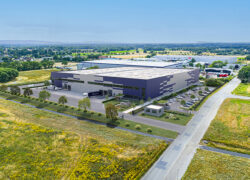
The project involves the development of a logistics hall on a roughly 25,000 m² site. Construction is scheduled to begin in the first quarter of 2026, with completion planned for the end of 2026. The planned building will have around 15,000 m² of rental space, which has already been fully pre-let on a long-term basis.

“With this transaction, Urban Partners and HIH Invest are strengthening their successful partnership in a strategically important market with high demand for high-quality and sustainable logistics properties. The development in Garbsen is already our third joint project and will generate stable cash flow thanks to a high pre-letting rate from resilient key industries. By prioritizing flexibility and high ESG standards, we are creating future-proof logistics solutions with this project that offer long-term value for investors and users alike,” said Wolfgang Ködel, Managing Director at Urban Partners.

This marks Urban Partners’ tenth logistics-sector investment in Germany. The company now manages over 210,000 m² of logistics projects in the country. The acquisition in Garbsen follows joint purchases in Herten earlier in the year and in Bensheim during summer 2025.

“With this third purchase within a few months, the joint venture’s investment volume has risen to a three-digit million figure. We continue to look for attractive deals and already have several projects in the pipeline. HIH Invest scores highly with its experience from logistics transactions worth over €1.5 billion. This makes us one of the leading investment managers for logistics in Germany,” said Lars Bothe, Head of Value Add at HIH Invest.

Maximilian Tappert, Head of Transaction Logistics at HIH Invest, added: “With the project development in Garbsen, we have found an excellent addition to our portfolio. The logistics hall offers a space layout that can be used for third-party purposes and can be divided into two rental units. The completed property meets current sustainability requirements and is being built in accordance with taxonomy standards. A DGNB Gold certificate is being sought. The property will be heated by a heat pump and a photovoltaic system will be installed on the roof.”

The development is located within an established commercial and industrial area in Garbsen. The site has direct access to the B6 federal highway, offering connections to the A2, A352 and A7 motorways. Hanover Airport is about 20 minutes away, and the Hanover-Lehrte freight terminal can be reached in approximately 30 minutes. Ashurst provided legal due diligence, and Drees & Sommer advised on technical aspects.

CA Immo sells Kavčí Hory Office Park in Prague

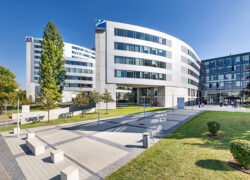
CA Immo has completed the sale of the Kavčí Hory Office Park office building in Prague’s Pankrác district. The property, which has approximately 42,300 m² of leasable space and 700 parking spaces, was sold to the Conseq Group. The asset generates annual gross rental income of about €7.7 million, is 96% leased, and has an average weighted lease term of nearly four years. The sale was executed at around book value, the company said.

“Having achieved almost full occupancy, our business plan for Kavčí Hory has been fulfilled. With this sale, we are taking advantage of market liquidity to free up capital for alternative allocation options while monetizing expected future profits in a situation where we no longer see significant scope for further value creation within our business model,” said Keegan Viscius, CEO of CA Immo.

The transaction forms part of CA Immo’s ongoing capital rotation strategy, which focuses on concentrating its portfolio on large, modern Class A office buildings in central locations. As part of this approach, the company sells assets that no longer fit its core profile in relation to location, building quality, age or value-creation potential. Proceeds are directed toward new development projects, debt reduction, corporate purposes, distributions to shareholders, or acquisitions where appropriate opportunities are identified.

CBRE acted as transaction advisor, while CA Immo received legal counsel from Dentons.

As of 30 September 2025, CA Immo’s Prague portfolio comprised six office buildings with a total leasable area of around 110,000 m² and a book value of approximately €400 million. All buildings hold LEED Platinum, LEED Gold or DGNB Platinum sustainability certification.

Delta Hagibor rental residence receives BREEAM certification

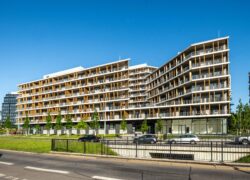
Delta Hagibor Residence, a rental housing project located between Vinohrady, Strašnice and Žižkov, has been awarded the BREEAM sustainability certificate with a “Very Good” rating. The certification confirms that the 145-apartment and 19-studio complex meets defined standards for energy efficiency, environmental performance and indoor comfort. The building is managed by Zeitgeist Asset Management on behalf of Invesco Real Estate.

The certification process was supported by consultant Grinity. According to the assessment, the project performed particularly well in transport accessibility (89%), materials used (75%) and building maintenance and management (71%).

“The Delta Hagibor Residence proves that modern rental housing can be comfortable, economical, and environmentally friendly at the same time. The certification audit confirmed that the building meets strict international standards in terms of energy efficiency, indoor environmental quality, and environmental friendliness,” said Peter Noack, CEO of Zeitgeist Asset Management.

Jan Dalík, Investment Management Director at Invesco Real Estate, said: “BREEAM certification is an important milestone for us, confirming the quality of our investments in sustainable real estate. The Delta Hagibor residence represents a modern standard of rental housing, combining comfort for residents with a responsible approach to the environment. We are proud to offer our tenants housing in a certified building that not only saves them energy but also provides a healthy and pleasant environment for everyday life.”

BREEAM evaluates buildings across their full life cycle. In the case of Delta Hagibor, key factors included access to public transport, the use of certified long-life materials such as low-carbon cement mixes and steel from electric arc furnaces, and operational efficiency supported by professional building management. The residence also incorporates LED lighting, energy-efficient lifts, modern heating systems, and water-saving fixtures designed to reduce consumption.

Indoor environmental quality was assessed through ventilation systems with high-grade filtration, daylighting, and the use of materials compliant with health standards. Waste sorting facilities, including a room equipped for mixed, sorted and organic waste, form part of the building’s operations.

“For our tenants, the BREEAM certificate is tangible proof of the quality of their home. In practice, they will feel the difference in the form of lower monthly costs, a higher-quality indoor environment that promotes health and well-being, and, last but not least, modern technologies that make their everyday lives easier. Mobile apps for apartment management, smart home systems, and charging stations for electric cars—all of this is standard at the Delta Hagibor Residence,” said Michal Nečas, Managing Director of Zeitgeist Asset Management.

Delta Hagibor comprises three connected buildings with a staffed reception, 150 parking spaces including five EV charging points, and six ground-floor commercial units. Approximately two-thirds of the apartments are offered fully furnished. The residence forms part of the Hagibor district development, which includes a park, retail boulevard and nearby services such as the Atrium Flora shopping centre within walking distance.

LATEST NEWS