Czech Trading Firm FTMO Completes Acquisition of U.S. Brokerage OANDA

Czech trading firm FTMO has taken over the American brokerage company OANDA, finalising a deal that marks one of the most significant international moves by a Czech financial-technology player to date. The company confirmed the acquisition in a statement, without disclosing the purchase price. Media reports suggest the value of the transaction reached several billion crowns.

The takeover process began early this year, when FTMO agreed on terms with OANDA’s previous owner, CVC Asia Fund IV. Completion was subject to approval from regulators across multiple jurisdictions, with the final consent granted in November. FTMO officially assumed ownership on 1 December.

OANDA, founded in 1996, operates as a global digital trading platform, offering access to a broad range of financial instruments along with market data and analytical tools. The company maintains offices in major financial hubs such as New York, Toronto, London, Warsaw, Singapore, Tokyo and Sydney. Its chief executive, Gavin Bambury, said the combination with FTMO would enable faster expansion and allow the business to deliver more advanced and integrated trading solutions to users worldwide.

While the financial terms have not been published, FTMO co-founder Otakar Šuffner previously indicated to Czech media that the company had secured a substantial loan to support the acquisition.

FTMO, established in 2015, specialises in training and development services for traders seeking to build skills in financial markets. Its global reach now extends to more than 140 countries. In 2023, the company reported revenues of roughly five billion crowns and an operating profit of 2.3 billion.

The acquisition positions FTMO to deepen its presence in the global fintech landscape by combining its training-focused model with OANDA’s long-standing brokerage infrastructure.

Poland’s Industrial Output Reaches PLN 1.72 Trillion in 2024 Despite a Year-on-Year Decline

Poland’s industrial sector generated PLN 1.716 trillion in sold production in 2024, according to the latest national report on industrial products published by Statistics Poland. Although the result represents a 4.2% decrease compared with 2023, the value remains 47% higher than in 2020, underscoring the sector’s strong growth over the longer term. The survey covered 38,334 enterprises and 4,855 product groups across mining, quarrying and manufacturing. 

The data shows mixed performance across industries. Production increased in 11 of the 28 PKWiU divisions, with the strongest year-on-year gains observed in tobacco products, other mining and quarrying activities, other transport equipment, wearing apparel and computers, electronic and optical products. In contrast, the most notable declines were recorded in hard coal and lignite, electrical equipment, leather goods, wood products and machinery and equipment. Despite these shifts, the structure of industry remained broadly stable. Food products retained the largest share of total sold production, accounting for 19.2% of national output, followed by motor vehicles, trailers and semi-trailers at 11.4% and electrical equipment at 6.9%. 

Significant regional differences persist. Mazowieckie Voivodeship remained the country’s industrial centre, generating 21.9% of all sold production in 2024, or PLN 377.4 billion. It was followed by Śląskie with a 14.5% share and Wielkopolskie with 12%. At the opposite end of the spectrum, Świętokrzyskie Voivodeship accounted for only 1.9% of national production. These shares have changed only modestly since 2020, although Mazowieckie and Małopolskie strengthened their positions slightly, while Dolnośląskie and Śląskie recorded a decrease compared with 2023. 

Large enterprises continued to dominate the industrial landscape. Companies employing 50 or more people were responsible for 94.3% of all sold production, while smaller entities employing between 10 and 49 workers accounted for PLN 98.3 billion. Industrial firms also contributed the overwhelming majority of production, with non-industrial entities representing only a small fraction of the total. 

Production carried out under subcontracting arrangements amounted to PLN 15.1 billion in 2024, marking a 6.1% increase from the previous year. The largest contributions came from the food, beverages and tobacco industries, followed by fabricated metal products, chemicals and chemical products, and motor vehicles and trailers. Growth in subcontracting was particularly notable in pharmaceuticals, wood and wood-based products, other transport equipment, rubber and plastics and electrical equipment. 

The report also highlights rapid expansion in technologically advanced categories. Sold production of goods containing embedded electronic systems reached PLN 42.2 billion, rising 28.8% over 2023 and 75.5% compared with 2020. Products incorporating Internet-of-Things elements accounted for 27.5% of this group. Output was dominated by companies operating in the manufacture of computers, electronics and optical equipment, as well as electrical equipment, with domestic-capital firms responsible for nearly three-quarters of the total value. 

In terms of manufactured volumes, the period between 2020 and 2024 saw sharp increases in products such as direct-current motors and generators, sanitary ware of iron or steel, high-power agricultural tractors, condensed sweetened milk and paper labels. At the same time, production fell steeply in several traditional categories, including stainless-steel sinks, lead and tin ores, newsprint, household mixers and juicers, and textile household linens. The 2024-on-2023 comparison shows similarly diverse results, with notably higher production of white chocolate, zinc-coated flat products, electric hoists, potassic fertilisers and parquet flooring, but major declines in printed periodicals, needle roller bearings, specialised agricultural trailers and several machine tools. 

Within the European Union, Poland maintained its position as the fifth-largest industrial producer when measured by the number of PRODCOM product categories for which output was reported. In 2024, Poland submitted data for 3,144 products, representing 77.7% of the EU’s statistical list. For around 400 products, Poland held between 10% and 20% of the EU’s sold production value, with the highest concentrations in food products, chemicals, rubber and plastics, fabricated metals and machinery. For approximately 268 products, Poland’s share exceeded 20%, including 61.1% of EU production of television receivers and more than half of the EU’s output of household washing and drying machines. In several cases, Poland accounted for over 50% of EU production volumes, including handmade paper, MDF boards under 5 mm, scouring preparations, electric toasters, potato-harvesting machinery and selected furniture components. 

Czech Unemployment Rises to 3.2%

The latest labour-market data published by the Czech Statistical Office (CZSO) indicates that the rate of unemployment in the Czech Republic increased to 3.2 % in October, according to the monthly survey of labour-force status. 

The employment rate — defined as the share of employed persons among all residents aged 15–64 — reached 75.4 % in October 2025, marking a 0.2 percentage-point rise compared to the same month last year.  The male employment rate was recorded at 80.0 %, while the female rate stood at 70.8 %. 

At the same time, the rate of economic activity, that is the share of people aged 15–64 who are either employed or actively seeking employment, climbed to 77.9 % — up 0.5 percentage point year-on-year. 

“Gradual increasing of the unemployment rate is apparent in both males and females in the course of this year,” said Dalibor Holý, Director of the Labour Market and Equal Opportunities Statistics Department at CZSO. 

The survey is based on the internationally comparable Labour Force Sample Survey (LFSS), which is conducted among private households (excluding collective accommodation and temporary shelters), and defines employment and unemployment in line with the recommendations of the International Labour Organization. 

The rise to 3.2 % unemployment — from 3.0 % in September 2025 as reported in the previous release — suggests a modest but persistent upward trend in joblessness at a time when employment and activity rates remain robust. 

Deka Immobilien Sells Yokohama High-Tech Park Asset After 17 Years

Deka Immobilien has sold an office and service property in the Hakusan High-Tech Park in Yokohama, Japan. The asset was acquired by Godo Kaisha Hakusan, a vehicle established by a consortium of Japanese institutional investors. The transaction concerns a property held in the open-ended real estate fund Deka-ImmobilienGlobal. The purchase price remains confidential.

Completed in 1987, the “German Industry Park” offers approximately 15,600 sqm of lettable space and 107 parking spaces. Alongside office areas, the property provides flexible space for production, research, product demonstrations and warehousing. Additional amenities include a restaurant, cafeteria and training rooms. The building is fully occupied by 24 tenants from the industrial, technology and manufacturing sectors.

Situated in Yokohama—Japan’s second-largest city—the property benefits from its location within the Hakusan High-Tech Park, a recognised hub for German companies operating in Japan. Transport links include proximity to Tokyo Haneda International Airport, about 20 kilometres away, and a nearby railway station providing rapid connections on the high-speed line between Tokyo and Osaka.

The property has received a four-star rating under Japan’s CASBEE sustainability certification system.

According to Deka Immobilien, the disposal takes advantage of favourable market conditions following a holding period of more than 17 years. The sale forms part of ongoing portfolio optimisation, involving the divestment of older assets and reinvestment into new opportunities. The fund intends to redeploy the capital into countercyclical acquisitions. Over the entire holding period, investors generated a significant profit from the transaction.

Dietz AG Delivers 73,000 sqm Sustainable Logistics and Production Facility in Rheda-Wiedenbrück

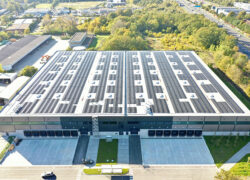
Dietz AG has completed a built-to-suit logistics and production centre of roughly 73,000 sqm for Beckhoff Automation GmbH & Co. KG in Rheda-Wiedenbrück. The property on Ferdinand-Braun-Straße was handed over on schedule after a 14-month construction period.

The facility has been developed to the EG40 efficiency building standard and incorporates a series of sustainability measures. A rooftop photovoltaic installation with a capacity of approximately 4 MW supplies green electricity, while an air-source heat pump system provides fossil-free heating for the entire complex. Dietz AG is pursuing DGNB Gold certification for the building. The layout and technical specifications were tailored to Beckhoff Automation’s operational requirements.

“The excellent partnership with List Bau Nordhorn GmbH and the entire project team was a decisive factor in the success and quality of this project,” said Markus Engelmann, CEO of Dietz AG, acknowledging the performance of the general contractor.

Engelmann noted that close coordination with local authorities and specialist departments played an important role in keeping the project on schedule, despite a challenging regulatory environment. Logivest, a long-standing partner of Dietz AG, advised on the project and facilitated both the land acquisition and the leasing process.

“With the completion of this project, we not only want to contribute to strengthening the regional industrial and logistics infrastructure, but also send a clear signal for sustainable project development in East Westphalia,” Engelmann added.

NOVIKO Animal Health opens new distribution premises at Panattoni Business Park Zdice

NOVIKO Animal Health, part of the Covetrus group, has begun operating from its new 12,400 m² premises at Panattoni Business Park Zdice. The facility will expand the company’s storage capacity and support the distribution of its Calibra and Covetrus product ranges, including goods requiring controlled temperatures. The project was developed by Panattoni, with Accolade as the investor.

The new building is equipped with a cooling system designed to maintain temperatures below 25 degrees Celsius, enabling the handling of pet food, supplements, and other products that require specific storage conditions. NOVIKO will use the site as its main distribution point for selected international markets.

Calibra, a brand established in the Czech Republic more than two decades ago, supplies feed and veterinary diets for dogs, cats, and small animals and is currently sold in over 40 countries. Covetrus products, aimed at veterinary professionals, are also distributed in more than 40 markets.

“We are very pleased with the trust NOVIKO has placed in us and its decision to locate its distribution center in Panattoni Business Park Zdice. The industrial center near Prague, with excellent connections to Western markets, offers not only perfect logistics conditions, but also modern, environmentally friendly and innovative facilities. Within a single hall, we have managed to create a space tailored to the needs of three different plants,” said Jan Andrejco, Director of Regional Development at Panattoni.

The complex incorporates several environmental features, including a landscaped area designed to reduce heat accumulation, a retention tank for rainwater, and a façade intended to limit heat absorption. The site is located away from residential areas, allowing freight traffic to avoid local neighbourhoods.

“The takeover of the site by NOVIKO Animal Health in Zdice confirms that we have long been successful in bringing stable businesses to the regions. From the very beginning, we prepared the site to provide tenants with everything they need for distribution, further increasing production capacity, and supporting their development in European markets. At the same time, we make sure that such investments have a direct and positive impact on the surrounding area, including the creation of new jobs, the development of related services, and overall economic activity in the area,” said Jiří Stránský, Director of Development at the Accolade Group.

Business Park Zdice is located near exit 28 of the D5 motorway, around 40 kilometres from Prague and 120 kilometres from Rozvadov on the Czech–German border. The area also provides access to long-distance and freight rail services via the nearby Zdice railway station.

REALOGIS Brokers 8,000 Sq m Lease in Braunschweig for SCT Group’s New German Headquarters

REALOGIS Immobilien Deutschland GmbH has brokered a long-term lease for approximately 8,000 sq m of commercial space on Spechtweg in Braunschweig. The transaction was completed on behalf of Hillwood, the international investor and project developer.

The new tenant, the SCT Group – a producer of motor oils, lubricants, AdBlue and automotive spare parts – is establishing its German headquarters at the site and increasing its operational capacity in response to continued growth in sales volumes.

The leased area includes 7,000 sq m of industrial and warehouse space, 500 sq m of mezzanine space and 300 sq m of office space. The SCT Group has also taken 19 car parking spaces and one lorry parking space.

“The long-term lease significantly strengthens the performance of the location for Hillwood, as the tenant’s profile fits perfectly with the owner’s sustainable investment and location strategy. The WGK III specification of the premises and the property’s excellent connections to the A2 and A39 motorways and public transport were key factors in the decision to lease,” says Fabian von Rohr, the REALOGIS consultant responsible for the transaction.

The building, comprising two hall sections, is part of a recently completed development on a revitalised brownfield site. The total lettable area is 15,600 sq m, and the property is now fully occupied. Alongside the SCT Group, a second company has also taken space in the facility.

Former Třinec industrial site converted into major golf training facility with automated building systems

A long-unused heating plant in Třinec has been redeveloped into a large indoor golf training centre that opened earlier this year. The facility, known as the Třinec Golf Arena, now serves youth players and the public and is described by the operator as one of the largest training sites of its type in Europe. The project combines sports uses with digital building management, relying on an automation system supplied by Loxone to coordinate lighting, access, and other operational functions.

The redevelopment required centralised control of dozens of lighting circuits across the complex. A single interface at the reception desk allows staff to adjust lighting throughout the building, while sensors automate routine switching. According to Pavel Lískovec, Loxone’s director for Eastern Europe, “The system can also respond to the intensity of daylight and current game requirements. The result is impressive lighting scenes that enhance the atmosphere of the game while optimizing energy consumption.”

The same system is used for security and nightly cleaning. Limited access can be granted to specific areas, and all doors and windows are automatically secured once work is completed. “Thanks to automation, cleaning is much more efficient – the cleaning lady only has access to designated areas, and after she leaves, the entire building is automatically locked,” said Jan Szkandera, who implemented the solution. He noted that the system also triggers alerts if an unauthorised entry occurs.

The site also includes a photovoltaic installation and charging points for electric vehicles, with full integration into the automation system planned to support future energy-management functions.

The Golf Arena project has been recognised in two regional and national competitions focused on construction and redevelopment. The new facility was financed by a private investor, Ján Moder, and did not use public funding. Since opening, it has attracted visitors from across the Czech Republic and abroad.

Hungary Adopts New Condominium Building Right to Strengthen Buyer Protection and Support Housing Programmes

Hungary has introduced a new legal framework for residential developments with the adoption of the társasházi építményi jog, or condominium building right. The legislation, passed by parliament on 18 November, amends several statutes and is designed to provide stronger protection for purchasers of off-plan apartments while supporting the government’s Otthon Start housing programme. The core provisions will take effect from 1 February 2026.

The new condominium building right gives buyers a registered real right in the land registry during the construction phase, replacing the weaker “future buyer’s claim” used previously. Once a developer has registered the preliminary formation of a condominium, purchasers can have their building right recorded on the plot, enabling them to secure their position and, if necessary, use the right as collateral for state-subsidised or commercial housing loans. When the project is completed and the condominium officially created, the right is extinguished and converted into full ownership of the unit, with any related encumbrances transferred accordingly.

Legal analysts say the reform brings Hungary closer to the off-plan purchase protection standards used in several Western European jurisdictions. By enabling early financing and improving security in the event of developer insolvency, the system aims to increase predictability for all parties. Developers may also benefit from more reliable pre-sales and earlier access to bank financing.

However, despite broad support for the concept, market participants note several implementation challenges. The success of the new framework will depend on the capacity of the land registry to process preliminary condominium formations and building-right registrations without added delays. Banks are also expected to take a cautious approach until mortgage procedures and risk models are fully adapted to the new form of collateral. Developers, particularly smaller firms, face increased administrative obligations at an early project stage, which could raise costs and affect project launch timelines.

Questions also remain about the handling of insolvency scenarios, the coordination of ranking rules between developer lenders and unit-buyer lenders, and the practicalities of transferring building rights on the secondary market. Lawyers point out that the system relies heavily on the accuracy of preliminary documentation, which may be subject to change as construction progresses.

While the reform is viewed as a significant step toward strengthening buyer protection and stimulating residential development, industry observers expect a transitional period in 2026 as the market adapts to the new legal structure and clarifies procedural uncertainties.

CTP Enters Italian Market with Acquisition of VLD and €1 Billion Investment Plan

CTP has entered the Italian market through the €241 million acquisition of VLD S.r.l., a development company previously controlled by FBH Group. The transaction forms part of CTP’s plan to invest €1 billion in Italy over the next five years as it expands its European logistics and industrial real estate platform.

VLD brings an 8.7 million sqm landbank across northern, central and southern Italy. Of this, CTP has acquired 1.7 million sqm of owned land, 2.7 million sqm under contract subject to zoning for industrial and logistics use, and 4.3 million sqm under option. The landbank provides scope for around 3.5 million sqm of future gross lettable area (GLA). Two standing assets totalling 30,000 sqm are also included in the acquisition.

CTP expects to complete about 200,000 sqm of projects in Italy in 2026, including developments for ALS Luxury and logistics provider CEVA. From 2027 onward, planned annual deliveries are projected at 250,000–300,000 sqm. The company targets a yield-on-cost of 8.5–9.5%.

Italy becomes CTP’s eleventh market, following earlier expansions into Poland and Germany. The company cites Italy’s industrial base, demand for modern logistics space and relatively low supply of Grade A facilities—estimated at around 0.5 sqm per capita—as drivers for its entry. CTP expects demand from manufacturing companies, SMEs, FMCG firms, 3PLs and multinational tenants expanding into Italy.

CTP has expanded rapidly in recent years. Its portfolio has grown from 5.9 million sqm at year-end 2020 to 13.8 million sqm at Q3 2025. The group also holds a significant European landbank of 25.7 million sqm, mostly in existing CTParks. Following the VLD acquisition, the landbank increases to 34.4 million sqm.

The newly acquired business will operate as CTP Italy, led by Agostino Emanuele, with a local development team being established to support the rollout of projects in key regions including Lombardy, Emilia-Romagna, Piedmont, Veneto, Lazio, Tuscany and Bari.

LATEST NEWS