Eurozone Business Activity Accelerates as Services Lead the Recovery

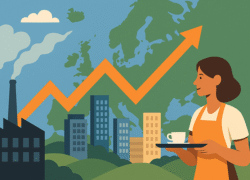
Private-sector growth across the eurozone gained fresh momentum in October, recording its fastest pace in more than two years as services demand strengthened and business confidence edged higher. The latest survey data suggest that Europe’s economy may be turning a corner after months of uneven performance, though the rebound remains concentrated in a handful of resilient markets.

Preliminary figures indicate that overall business activity rose for the ninth consecutive month, with the region’s combined output index climbing to roughly 52 points, up from 51 in September. The improvement was strongest in consumer-facing and business-service industries, while manufacturing showed signs of stabilising after a prolonged slump.

Germany Powers Ahead While France Falters

Germany, the bloc’s largest economy, led October’s expansion. Activity there rose to levels last seen in early 2023, supported by a robust service sector and signs that factory output may finally be bottoming out. Order books have begun to fill again, particularly among logistics and technology firms, and hiring has returned to modest growth. Economists say the data point to a better-than-expected start to the final quarter of the year for Europe’s industrial powerhouse.

France, by contrast, remains mired in contraction. Output continued to decline for the fourteenth straight month, with both manufacturing and services under pressure from weaker domestic demand and continued political uncertainty over the 2026 budget. Business leaders in Paris and Lyon have reported slower client spending and reduced investment plans, adding to concerns that France could weigh on the wider eurozone recovery if the trend persists.

Southern Europe and Smaller Economies Add Stability

Outside the two largest economies, results were more balanced. Italy and Spain both maintained moderate expansion in October, supported by steady tourism flows, energy-transition projects and improving domestic services. Their contribution helped offset France’s drag and added to the eurozone’s aggregate growth figure.

Analysts note that the region’s composite indicator for October now stands at its highest since mid-2023, suggesting that Europe’s post-pandemic slowdown may be easing. The upward movement in services output, which reached about 52.5 points, marks the strongest showing in over a year. Manufacturing, although still fragile, has moved closer to neutral territory after a lengthy contraction phase.

Inflation Signals and Policy Context

Survey respondents reported easing cost pressures for raw materials and intermediate goods, but firms continued to raise selling prices, particularly in the services sector. This pattern implies that consumer inflation could remain sticky even as supply-chain costs stabilise. Economists interpret these results as supporting the European Central Bank’s current wait-and-see stance on interest rates. The ECB left borrowing costs unchanged this month, citing the need for more evidence that inflation is retreating toward its two-percent goal.

Market Mood and Broader Outlook

Despite the stronger-than-expected business readings, financial markets reacted cautiously. The euro traded little changed near $1.16, while government bond yields moved only slightly higher. Equity indices across the continent were mixed, with investors awaiting new U.S. inflation figures and corporate earnings reports for confirmation of global demand trends.

Overall, the October data portray a two-speed Europe: northern and southern economies showing moderate resilience, France still under strain, and manufacturing only tentatively emerging from weakness. Economists emphasise that sustained recovery will depend on stronger household spending and renewed investment over the coming quarters.

If present momentum holds, the eurozone could close 2025 with its first full-year of consistent private-sector expansion since before the pandemic—though the path ahead remains uneven and dependent on maintaining both price stability and consumer confidence.

Editorial Disclaimer: This article is for informational and analytical purposes only. CIJ.World maintains strict editorial neutrality and verifies all facts at the time of publication.
Catherine Connolly Elected as Ireland’s Next President in Landmark Vote

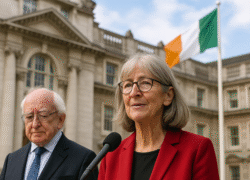
Ireland has elected independent lawmaker Catherine Connolly as its next president, marking a decisive moment in the country’s political landscape. Early results showed Connolly taking a commanding lead that prompted her main rival, Heather Humphreys of Fine Gael, to concede even before counting was complete.

Connolly, 68, a Galway-based barrister and veteran parliamentarian, ran as an independent but drew broad support from across Ireland’s left-leaning parties, including Sinn Féin, Labour, the Greens and the Social Democrats. Her victory, with roughly two-thirds of first-preference votes, reflects a shift in voter sentiment toward candidates promising a more inclusive and socially focused presidency.

While the office of president in Ireland carries limited executive powers, Connolly’s campaign resonated beyond its ceremonial boundaries. She pledged to act as a moral and civic voice for equality, housing reform and peace, themes that appealed strongly to younger voters and those frustrated with the country’s rising living costs.

Connolly’s background as a critic of global militarisation and her calls for a more socially oriented European Union have distinguished her within Ireland’s political establishment. She has also spoken out on humanitarian issues, including the conflict in Gaza, and has argued that Ireland’s neutrality should remain central to its foreign policy. Her opponent, Heather Humphreys, who serves as Minister for Social Protection, congratulated Connolly shortly after tallies confirmed the scale of her lead, saying that she would be “a president for everyone.”

Turnout was just under half of registered voters, one of the lowest in Ireland’s presidential history, though analysts noted that the result still delivered a clear mandate. Outgoing President Michael D. Higgins, who has served two terms since 2011, is expected to formally hand over office in mid-November at Áras an Uachtaráin, the presidential residence in Dublin’s Phoenix Park.

Connolly’s election is widely seen as a symbolic endorsement of change rather than a transformation of Ireland’s political structure. The president’s responsibilities are largely constitutional—representing the state abroad, signing bills into law, and acting as guardian of the republic’s democratic traditions—yet the choice of who occupies the office often reflects the national mood.

Connolly’s presidency is unlikely to alter the mechanics of Ireland’s foreign or defence policy, which remain firmly under government control. However, her public positions could subtly influence how Ireland’s neutrality is articulated on the European stage. During her campaign, she emphasised the importance of diplomacy over deterrence and called for a stronger focus on humanitarian priorities within the EU’s foreign policy framework. Observers in Brussels and Dublin expect her to maintain Ireland’s pro-EU stance while giving greater visibility to debates over military spending, social justice and peacebuilding—issues she has championed throughout her parliamentary career. Analysts suggest that Connolly’s symbolic leadership could lend momentum to those in Europe advocating a “civilian power” approach rather than deeper defence integration.

At the same time, officials note that Ireland’s presidency of the European Council in 2026 will fall entirely under government direction, with the president serving a representative and ceremonial role. Connolly’s challenge, therefore, will be to project moral authority without overstepping constitutional limits—a balance that her predecessor Michael D. Higgins managed with notable success. Her election also arrives at a time when Europe’s geopolitical environment is shifting rapidly, and questions about NATO cooperation, EU defence autonomy and neutrality are being revisited across the continent. In that context, Connolly’s presidency may serve as a reminder that Ireland remains one of the few EU members committed to a non-aligned identity, even as it deepens practical cooperation with its European partners.

Analysts say her landslide victory signals public appetite for a more independent and socially conscious tone in Irish politics, even if her formal powers remain limited. As one Dublin political observer put it, the presidency is where Ireland expresses its conscience, and this result shows that conscience has shifted.

Connolly’s success also mirrors a wider European pattern in which voters are turning toward candidates seen as outside traditional party hierarchies. Across the continent—from independent mayors in Central Europe to civic and green movements in Scandinavia—electorates are rewarding figures who embody integrity, authenticity and social balance rather than strict party loyalty. Her win reinforces the sense that symbolic offices, once viewed as apolitical, are becoming arenas where citizens express their expectations for a fairer and more accountable Europe.


Editorial Disclaimer: This article is for informational and analytical purposes only. CIJ.World maintains strict editorial neutrality and verifies all facts at the time of publication.
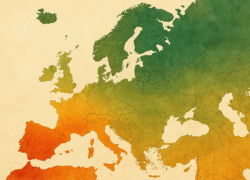
Southern Europe Narrows the Employment Gap as Regional Labour Markets Reshape

Employment across the European Union has reached its strongest level on record, and for the first time in more than a decade, the fastest growth is coming from the south. New Eurostat data show that regions in Greece, Portugal, Spain, and Italy are closing the long-standing gap with northern Europe, powered by tourism, public investment, and post-pandemic reforms that have drawn thousands back into the workforce.

For people aged 20 to 64, the EU’s employment rate climbed to 75.8 percent in 2024, a historic high that brings the bloc within striking distance of its 78 percent target for 2030 under the European Pillar of Social Rights. Nearly half of Europe’s 243 statistical regions have already met or exceeded that threshold. Northern countries continue to dominate the rankings — the Åland Islands in Finland lead with an 86 percent employment rate, closely followed by Warsaw, Bratislava, and Budapest — but southern Europe is where momentum is now strongest.

In Greece, employment has rebounded dramatically since 2021. The recovery has been driven by tourism and hospitality, but also by targeted government measures such as higher minimum wages, lower payroll taxes, and investment in green and digital sectors. According to economists at Thrace University, more than half of new salaried positions created in recent years stemmed from service industries, particularly food, retail, and leisure. The effect has been visible in once-struggling islands and coastal towns where seasonal labour shortages have turned into hiring surges. “Tourism has reached its short-term ceiling,” one Greek analyst said, “but if regional investment and reskilling continue, these gains can become permanent.”

Similar recoveries are being recorded in parts of Spain and Portugal, where record visitor numbers and energy transition projects have boosted job creation. Italy’s labour map shows a more uneven picture: while the north remains near full employment, southern regions such as Calabria, Campania, and Sicily still rank among the EU’s weakest performers, with employment rates barely above 50 percent. Economists warn that much of the new work in southern Europe remains concentrated in lower-paid, short-term service roles, raising concerns about job quality and long-term stability.

Further north, Germany’s once-robust industrial hubs have started to contract. Manufacturing regions like Thuringia and Saxony have recorded modest employment declines as high energy costs and weaker exports strain an economy long reliant on global demand. Analysts say Germany’s export-driven model has reached a turning point, with productivity slowing and domestic consumption yet to fill the gap. Central Europe, meanwhile, continues to perform strongly. Poland, the Czech Republic, and Slovakia maintain employment rates exceeding 85 percent, reflecting their diversified manufacturing and logistics sectors, although growth there has largely stabilised.

The contrasting trajectories highlight how Europe’s post-pandemic recovery has reshaped its labour map. The south is catching up, the centre is consolidating, and parts of the industrial north are treading water. The European Commission views the trend as proof that cohesion and recovery funds are beginning to deliver results where they were needed most. Billions in grants and loans from the Recovery and Resilience Facility have been channelled into renewable-energy projects, infrastructure, and skills training, all designed to raise employment and reduce regional inequality.

But behind the headline numbers lie more complex questions. Economists caution that the EU’s labour rebound could plateau in 2025 as tourism reaches capacity and government stimulus fades. Many of the fastest-growing sectors in the south depend heavily on seasonal or service work that offers limited security or career progression. Without continued investment in technology, education, and innovation, the risk is that these regions could stall again once the travel boom subsides.

Labour market experts also note that demographic change is emerging as a new challenge. Ageing populations in much of Europe are shrinking the working-age pool, particularly in rural and peripheral regions. That makes digitalisation, reskilling, and targeted immigration policies essential to sustain employment growth. The EU’s goal of having 60 percent of the workforce in training each year is therefore becoming central to its long-term competitiveness agenda.

Local stories reflect both the opportunity and fragility of the recovery. In Crete, hotel operators report hiring at levels unseen since 2008, while in Lisbon, a growing start-up scene has absorbed young graduates who once sought work abroad. Yet in Calabria, many of those who left during the pandemic have not returned, and employers struggle to fill vacancies outside tourism.

For now, the overall picture remains positive. Europe’s labour market is more balanced than at any time since the global financial crisis, with southern economies finally closing the gap that once defined the continent’s economic divide. But sustaining that progress will require transforming short-term service-sector gains into higher-quality, innovation-driven employment.

As one senior EU labour official remarked privately, “The success of Europe’s job recovery won’t be measured just by how many people are working — but by what kind of work they are doing.” The coming years will test whether the continent can translate record employment into durable prosperity, ensuring that the south’s comeback becomes a structural shift, not another temporary surge.


Sources & References: CIJ.World analysis based on Eurostat regional employment data (NUTS 2, 2021–2024), European Commission labour market communications, and verified academic commentary.

Europe’s Mineral Dependence: A Race to Secure the Building Blocks of Its Future

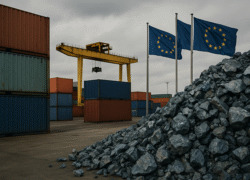
Europe is confronting a growing strategic challenge as it tries to secure the raw materials that underpin its economy, defence sector, and climate goals. The European Commission plans to open a consultation before the end of the year on whether the bloc should establish strategic reserves of critical minerals. The goal is to ensure that temporary disruptions abroad no longer threaten production lines at home, particularly in industries tied to clean energy and advanced technology.

The idea reflects a shift in Brussels’ thinking. For years, policy discussions focused on boosting mining, refining, and recycling within the EU. But as geopolitical tensions have intensified, policymakers have realised that domestic production alone cannot provide full protection. Without a safety reserve to cushion sudden supply shocks, Europe’s clean-energy transition and defence manufacturing could face serious risks.

The sense of urgency is easy to understand. Europe remains deeply dependent on imports for the metals and minerals needed for batteries, wind turbines, semiconductors, and precision weapons. China continues to dominate refining of rare earths and magnet materials, Indonesia controls nickel processing, and most cobalt still comes from the Democratic Republic of Congo. When Beijing introduced new export restrictions on gallium and germanium last year, it exposed how fragile Europe’s position can be. Even as the EU promotes its internal extraction and recycling targets for 2030, the gap between ambition and real industrial capacity remains wide.

By comparison, other major economies have long prepared for such contingencies. The United States maintains a formal stockpile of critical materials managed by the Defense Logistics Agency, while Japan’s state-owned resource corporation has operated a reserve system for rare metals for decades. Both countries can draw on these stores to protect their industries in times of shortage. Europe, meanwhile, is still debating how to create a similar mechanism. Officials in Brussels are exploring how a shared reserve might be organised, how it could be financed, and which materials deserve priority treatment. Yet the discussion remains in its infancy, slowed by differences between member states and by the absence of clear budget commitments.

The consequences of delay are already visible in several industrial sectors. Europe’s wind-energy producers rely heavily on high-performance magnets made with neodymium and dysprosium, most of which are processed in China. Recycling projects are beginning to emerge in Scandinavia and Central Europe, but they remain far from meeting demand. Industry groups warn that even a brief disruption in magnet supply could stall turbine production within months, threatening the continent’s renewable-energy targets.

Battery manufacturing tells a similar story. Although new lithium and nickel mines are being planned in Portugal, Finland, and France, progress is slow due to lengthy permitting and funding constraints. Recycling offers part of the solution, with new facilities in Poland and Germany preparing to recover metals from used batteries, yet these operations are only beginning to scale. Demand for electric-vehicle components continues to grow faster than Europe’s ability to produce or recycle the necessary inputs.

Analysts say the shortfall is not simply technical but financial. The EU would need at least ten billion euros in public investment to stimulate private capital at a scale sufficient for the next decade. Brussels has identified dozens of “strategic projects” under its critical-materials policy, but most are still at an early stage of development. Without dedicated funding, the vision of a resilient European supply chain risks remaining on paper.

The debate over stockpiles is as much about design as it is about urgency. Proponents argue that reserves could serve as a vital insurance policy, giving Europe room to manoeuvre during crises. Skeptics caution that poorly planned stockpiles could distort markets or lock in inefficient spending. Many experts believe the most realistic outcome will be a selective system focused on the most essential materials—those with limited substitutes or high defence relevance—combined with continued efforts to expand domestic processing and recycling.

For now, the European Commission hopes its forthcoming consultation will produce consensus on how to balance speed, cost, and environmental responsibility. The bloc’s competitors have decades of experience managing mineral reserves; Europe has a framework but few tangible assets. Whether it can close that gap will depend on how quickly intentions are translated into warehouses filled with the minerals that keep its industries running.

As one industry observer put it, Europe’s challenge is not just to mine faster but to think further ahead. In a world where access to raw materials defines strategic power, the continent’s ability to build a credible safety buffer may well determine how secure its future truly is.


Sources: CIJ.World analysis based on public data from the European Commission, WindEurope, the International Energy Agency, Reuters, and other professional reports.

More Whistleblowers Contact UK Regulator as Financial Misconduct Reports Rise

The number of people coming forward with concerns about misconduct in the United Kingdom’s financial industry has increased notably in the third quarter of 2025. According to the latest figures from the national financial regulator, more than four hundred reports were submitted between July and September, reflecting a steady rise in activity compared with both the previous quarter and the same period last year.

The regulator also confirmed that several hundred of the cases were reviewed and closed during the three-month period. Only a small portion of these investigations led to formal enforcement measures or restrictions on certain firms or individuals, but a larger share prompted follow-up action, such as targeted supervision, information requests or on-site reviews. A smaller group of submissions, although not directly connected to immediate harm, were retained for future monitoring and analysis.

Most of the people providing information chose to include their contact details, which allowed the regulator to engage further and clarify details of each case. The majority of disclosures were filed through the authority’s online reporting platform, which has become the preferred route for individuals to raise concerns safely and discreetly. While the regulator cannot reveal the identities of whistleblowers or the companies involved, its quarterly summaries show how these reports are used to guide oversight and identify emerging risks within the market.

The continued rise in reporting has been interpreted by analysts as a sign of growing trust in the system and greater awareness of regulatory protections for those who speak out. Compliance experts say this trend suggests that financial firms are operating in an environment where internal accountability is more closely scrutinised, and where whistleblowing is increasingly seen as a legitimate part of good governance. Some professionals point out that firms which treat internal reporting merely as a formal requirement, rather than as an early warning tool, risk facing more serious reputational and legal problems later on.

Looking ahead, the next update on whistleblowing trends is expected early in 2026. Market observers will be watching whether the upward pattern continues and how the regulator translates the information into practical enforcement or supervision. For the financial sector, the figures serve as a reminder that openness and transparency are not just regulatory obligations but essential foundations of market integrity.

Source: CIJ EUROPE analysis based on official data from the UK Financial Conduct Authority – Whistleblowing Quarterly Data Q3 2025

Europe Re-Arms Its Citizen Soldiers: Croatia Leads a New Phase of Military Service Revival

A wave of defence reforms has swept across Europe over the past fourteen months as governments reassess their manpower policies amid ongoing instability from Russia’s war in Ukraine. Several EU member states have revived, expanded, or modernised forms of conscription and reserve training once regarded as Cold War relics.

Croatia has become the most recent to act. On 24 October 2025 its parliament voted to reinstate compulsory military service, ending a seventeen-year suspension and signalling a decisive shift in national defence thinking. The new system requires men aged between eighteen and thirty to complete an eight-week training programme designed to instil discipline, physical readiness and crisis-response skills. Women may take part on a voluntary basis. Registration begins at eighteen, with call-ups starting for those turning nineteen in 2026. Conscripts will earn a monthly stipend of roughly €1,100, and those objecting on moral or religious grounds can opt for civil protection or community service of similar duration. Students may defer their training until the age of twenty-nine. Sessions will be held at army facilities in Požega, Knin and Slunj.

The Croatian government has framed the measure as an investment in civic resilience rather than militarisation. Officials argue that the country’s youth should possess the basic skills needed to respond in emergencies and contribute to national stability. The bill passed with an overwhelming majority, reflecting how public and political sentiment has hardened since the start of Russia’s full-scale invasion of Ukraine.

Croatia’s move places it within a wider continental shift. Denmark, Finland, Germany, Sweden, Lithuania, the Netherlands and Latvia have all updated their service systems in the past year, albeit in different ways. In mid-2025 Denmark extended its draft to women so that anyone turning eighteen after 1 July 2025 will enter the same assessment process as men. The reform, which lengthens training from four to eleven months starting next year, makes Denmark the first European country with fully gender-inclusive conscription. Copenhagen says the new approach will modernise its armed forces and tap a wider pool of motivated recruits.

Germany has taken a separate route. On 27 August 2025 the government approved a bill to create a six-month voluntary service track aimed at strengthening reserves and attracting young people to military careers. Ministers have left open the possibility of broader compulsory measures if recruitment falls short, but for now the focus remains on building enthusiasm through choice.

In Finland, conscription has long been universal for men and optional for women, but the government has decided to increase its reserve capacity by raising the upper age limit from 60 to 65. The change, introduced in May 2025, will expand the wartime pool by an estimated 125,000 trained personnel by 2031. It reinforces Finland’s tradition of national defence while adjusting to demographic realities.

Sweden is following a similar path of gradual reinforcement. A government review released in July 2025 recommended allowing former officers to remain on call until the age of seventy instead of forty-seven. At the same time, higher defence budgets and better pay for conscripts are intended to make service more sustainable as the country expands its intake.

In Lithuania, the draft remains in force but authorities have refined its implementation. Men aged eighteen to twenty-three serve nine months, with annual call-up lists and clearer rules for student deferments published early in the year. The changes are administrative rather than legislative, but they underscore the country’s determination to maintain a functioning rotation of trained citizens.

The Netherlands has opted for expansion without compulsion. A manpower plan unveiled in March 2025 seeks to double total personnel numbers, relying heavily on reserves and volunteers rather than a reinstated draft. The initiative reflects both manpower shortages and a recognition that defence preparedness now requires broader social engagement.

Latvia, which restored national service in 2024, continued strengthening its programme throughout 2025, adding professional soldiers and running nationwide readiness drills. The plan foresees full participation by 2027, consolidating a mixed model of conscripts and professionals suited to the region’s security conditions.

Across all these cases, NATO has maintained a supportive but non-prescriptive stance. Secretary-General Mark Rutte told leaders at the Alliance’s June 2025 summit in The Hague that each country must choose its own model of service but ensure that its forces remain fully staffed and prepared. The organisation’s new readiness target of 300,000 troops depends on consistent recruitment pipelines across the alliance, and member states are responding in their own ways.

Finland’s defence minister has called his country’s reform a way to give more citizens a role in national defence. Denmark’s leadership describes its gender-inclusive draft as a modernisation of both society and the military. In Germany, officials acknowledge that relying exclusively on professional soldiers may no longer be sustainable. In the Baltics, leaders are even more forthright, presenting national service as a civic obligation rather than a political choice.

Public attitudes are shifting accordingly. In Croatia, surveys show strong backing for a short, skills-based form of training that can be applied both in uniform and in civilian emergencies. Young people increasingly regard such preparation as a civic contribution rather than an outdated duty. Across Europe, national service is being redefined not as conscription for war but as a mechanism for resilience in an unpredictable world.

Croatia’s first class of recruits will begin medical examinations before the end of 2025 and start training in early 2026. Denmark’s new intake of men and women will follow soon after, and Germany’s voluntary corps is expected to be reviewed later in the year. Together these reforms mark a generational turning point: Europe is once again linking citizenship to the defence of its shared security.

As one senior NATO official observed privately, modern defence is not measured only in weapons but in willingness. Croatia’s brief two-month training course may appear modest, yet its symbolic impact is considerable. Across the continent, the revival of national service embodies a rediscovered conviction that Europe’s strength ultimately depends on the readiness of its own citizens.


Sources: CIJ.World analysis based on official data from the Croatian Ministry of Defence, NATO, European Commission, Reuters, and national defence ministries across the EU.

Várhelyi Dispute Deepens EU’s Political Divide

A political confrontation is widening inside Brussels after thirty-five Members of the European Parliament urged European Commission President Ursula von der Leyen to request the resignation of Hungarian Commissioner Olivér Várhelyi. The demand follows allegations that Hungary’s intelligence services may have used their diplomatic representation in Brussels years ago to gather information on EU institutions, during a period that overlaps with Várhelyi’s tenure as ambassador to the European Union.

Várhelyi, who has held the health and animal welfare portfolio since 2024, denies any knowledge of recruitment or surveillance activities and has said he was unaware of wrongdoing while leading the Hungarian mission. Von der Leyen has confirmed that she discussed the matter with him and reiterated that she continues to have confidence in her commissioners unless credible evidence proves otherwise.

The letter, endorsed by parliamentarians from several political families, captures a growing sense of unease about the presence of a senior Hungarian official in the EU executive. Várhelyi has long been a close ally of Prime Minister Viktor Orbán, and his earlier role as enlargement commissioner was frequently criticised by MEPs who accused him of mirroring Budapest’s political positions. His continued place in the Commission has therefore come to symbolise the tension between European institutions and member states that challenge the bloc’s liberal principles.

Lawmakers have appealed to von der Leyen to use her authority under EU treaties to remove a commissioner if confidence is lost. Parliament itself, however, lacks any legal power to dismiss an individual member of the College and can only act collectively through a no-confidence motion against the entire Commission. Even so, the intervention has significant political impact, signalling the readiness of mainstream parties to defend institutional integrity at a moment of intensifying ideological conflict within the Union. More than sixty academics from across Europe have echoed these concerns, arguing that any connection between a serving commissioner and national intelligence operations, however indirect, would undermine the principle of independent service to the EU.

The episode arrives at a delicate time for von der Leyen, whose leadership faces increasing scrutiny ahead of a mid-term reshuffle in 2026. Her supporters say she must preserve unity among twenty-seven often divided governments, while critics contend that she has been too lenient with Budapest in exchange for political stability inside the Council. Either interpretation reflects the mounting strain between national politics and European governance.

The dispute over Várhelyi’s future also fits into a broader realignment within the EU. Prime Minister Orbán has positioned himself as a leading voice in the Patriots for Europe alliance, a grouping of nationalist and sovereigntist parties that now ranks among the Parliament’s largest forces. Slovak leader Robert Fico is in discussions to join the bloc, and Czech politician Andrej Babiš could follow if his new government is confirmed in Prague. Together, these figures promote a Europe of sovereign nations that resists deeper integration and seeks to reduce Brussels’ influence over environmental and migration policy.

In that context, pressure for Várhelyi’s removal serves both as an accountability measure and as a political statement. For pro-integration voices, it is a stand in defence of institutional independence; for the sovereigntist camp, it represents another attempt by Brussels to marginalise dissenting governments. Each side sees the case as a defining test of authority and vision for the Union’s future.

If von der Leyen were to demand Várhelyi’s resignation, such a move could reassure those calling for higher ethical standards but would risk provoking a fierce response from Hungary, which could retaliate by blocking consensus on key Council decisions. If she refrains from action, she may face accusations of weakness from Parliament and civic organisations concerned about double standards. Whichever route she chooses, the affair has exposed how fragile political trust has become within the EU’s institutions.

A parliamentary debate on the issue is expected in early November. Although any resolution would carry no binding authority, it could shape the atmosphere surrounding future appointments and heighten scrutiny of the Commission’s internal checks and balances. The outcome of this controversy will likely extend beyond one commissioner’s career, influencing how Europe defines accountability and autonomy inside its governing structures.

The allegations themselves remain under review, yet the political consequences are already visible. The dispute has deepened divisions between advocates of a stronger European executive and those pressing for a return to national primacy. What began as a question of ethics now stands as a reflection of the Union’s broader crossroads: whether it can sustain shared institutions in an era when sovereignty and integration are once again competing visions of Europe’s destiny.


Source: CIJ.World strict editorial neutrality analysis based on verified reporting from news services and official statements from the European Council, the Party of European Socialists, and the Patriots for Europe political alliance.


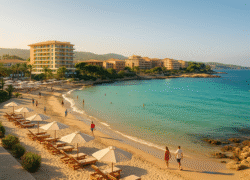
Travel 2025: Early Bookings, Premium Stays, and Purpose-Driven Journeys Redefine the Global Holiday Market

Holidaymakers across Europe and beyond are locking in their summer 2025 travel plans earlier than ever, marking a decisive return to structured, confident travel planning. According to new data from REWE Group’s travel division DERTOUR, the average booking now takes place around 135 days before departure—roughly a week earlier than last year and close to a month earlier than before the pandemic.

“Travellers are showing a clear preference for security and availability,” said Markus Orth, CEO of DER Touristik Central Europe. “We’re seeing record levels of early reservations across nearly all key destinations.”

The data shows that this new phase of consumer behaviour is coupled with a shift toward higher-end stays. Roughly one in three travellers now opt for five-star accommodation, while all-inclusive holidays have reached record highs in demand. Turkey, Greece, and Egypt continue to dominate short- and mid-haul choices among European travellers, with Egypt posting a 23 percent rise in bookings compared to last year.

Global research from Booking.com and the Mastercard Economics Institute reinforces these trends. The 2025 reports suggest travellers are prioritising what analysts call “purpose-driven journeys” — trips focused on wellness, cultural authenticity, and sustainability. More than half of respondents said they consider the environmental and social impact of their travels, while interest in wellness retreats and health-focused experiences has surged.

“People are looking for experiences that add value to their lives,” said Natalia Lechman, Senior Travel Analyst at Mastercard. “They’re still prepared to spend, but they want that spending to align with their personal values — wellness, authenticity, or sustainability.”

Mastercard’s latest global data also points to a strong performance across Asia-Pacific, with Tokyo and Osaka ranking among the world’s most dynamic destinations for 2025. Analysts attribute this partly to favourable exchange rates, which continue to attract long-haul visitors from Europe and the Americas.

However, the outlook is not without challenges. Inflationary pressure, higher energy costs, and regional instability remain concerns for travel operators. In parts of southern Europe, hotels and airlines are already reporting capacity constraints as early bookings outpace supply. Analysts warn that such imbalances could lead to rising package prices in the latter half of the year.

Despite these headwinds, optimism prevails. Global booking volumes remain strong, trip lengths are gradually increasing, and the overall mix of travellers appears more balanced. “It’s a return of optimism,” Orth said. “But it’s an informed optimism — people are booking smarter, earlier, and with clearer expectations.”

For travellers, the message is straightforward: spontaneity is giving way to strategy. Those who plan early secure both value and choice. For the industry, the early-booking trend requires sharper forecasting, better inventory control, and an ability to meet a growing demand for quality and purpose — not just price.

Source: REWE Group, Booking.com and Mastercard

Complaints Rise Slightly Across UK Financial Sector in First Half of 2025

Consumer complaints about financial products in the UK rose modestly in the first six months of 2025, according to new figures from the Financial Conduct Authority. The data shows that financial firms received around 1.85 million complaints between January and June, up from 1.78 million in the previous six-month period. Although the overall volume has remained relatively steady since 2021, the latest figures highlight ongoing challenges for banks, insurers and investment providers in maintaining customer satisfaction.

The banking and credit card sector recorded the largest increase in complaints, with a rise of just over seven percent. Issues related to current accounts and payments remained particularly prominent. The number of complaints concerning investment products also climbed, up by roughly ten percent, indicating continued frustration among consumers over performance, advice quality and transparency. The pensions and retirement segment experienced a smaller but still notable rise of around five percent, driven in part by an increase in cases involving trust-based pension schemes.

In contrast, the number of complaints related to home finance, including mortgages, declined by about six percent. Complaints in the insurance sector were largely unchanged, edging down by less than one percent. Despite this slight drop, insurance continues to account for one of the largest overall shares of consumer complaints, particularly regarding claims management and policy cancellations.

The total compensation paid by firms during the period reached approximately £283 million, marking an increase of around twenty percent compared to the previous half-year. The proportion of cases upheld in favour of consumers also rose slightly, to nearly fifty-eight percent. This suggests that while firms are resolving a greater number of complaints, a significant share of customers continue to experience service or product-related issues that require formal redress.

Under current UK regulations, companies that handle more than 500 complaints in a six-month period must publish their complaint data. Around 290 firms met this threshold in early 2025, together accounting for the vast majority of all reported cases. Their data, released by the FCA, includes information about complaint volumes, resolution times and how often customer grievances are upheld. More than 3,000 regulated firms reported at least one complaint during the period, underscoring the breadth of consumer engagement across the financial services industry.

While the overall complaint numbers have shown little movement in recent years, their persistence points to deep-seated challenges that continue to affect consumer confidence. The figures suggest that problems such as digital banking errors, complex pension structures and delayed responses remain areas requiring closer attention. By publishing this data twice a year, the regulator aims to encourage transparency, help consumers make informed choices and push firms to raise service standards in an industry still working to rebuild public trust.

Source: CMS

Montenegro to Boost Regional Power Links with Major Grid Upgrade

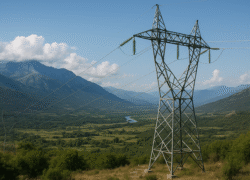
Montenegro’s electricity transmission operator, Crnogorski Elektroprenosni Sistem (CGES), is preparing a significant upgrade to one of the Balkans’ most important power corridors. The project aims to double the capacity of the 220 kV line that connects Bosnia and Herzegovina, Montenegro and Albania — a move expected to strengthen regional energy cooperation and support the growing share of renewable energy in the Western Balkans.

The initiative focuses on modernising the line running from Trebinje through the Perućica hydropower plant and Podgorica to the border with Albania. By replacing aging components with new high-performance conductors, the corridor’s transmission capacity could rise from around 300 MW to as much as 600 MW. This would enable greater cross-border electricity flows and reduce energy losses, improving efficiency across the regional grid.

To support the investment, the European Bank for Reconstruction and Development (EBRD) is considering a sovereign-guaranteed loan of up to €15 million to CGES. The total project cost is estimated at about €17 million. The Bank’s involvement would fill a funding gap in Montenegro’s financial market and provide technical cooperation aimed at improving CGES’s governance and readiness for closer market integration with neighbouring countries.

Beyond expanding capacity, the project is designed to help Montenegro connect more renewable energy sources to its grid — particularly hydropower, wind and solar installations currently in development. The upgrade is also expected to reduce CO₂ emissions through lower transmission losses and more stable operations.

CGES operates Montenegro’s high-voltage network of over 1,500 kilometres of transmission lines and maintains vital connections with neighbouring systems in Serbia, Kosovo, Bosnia and Herzegovina, Albania and Italy. Its undersea cable link to Italy remains one of the country’s key strategic assets, reinforcing Montenegro’s position as a regional energy hub.

The planned improvements to the Bosnia–Montenegro–Albania corridor align with the region’s broader goals of energy market integration and EU alignment. Once complete, the upgraded link will enhance the reliability of Montenegro’s power network and provide a more resilient backbone for renewable generation across the Western Balkans.

Source: Deloitte

LATEST NEWS