Poland’s data centre industry braces for key challenges in 2025

Poland’s rapidly growing data centre industry faces a transformative year ahead, driven by surging energy demands, advancements in artificial intelligence (AI), and a heightened focus on sustainability. According to experts from Data4, a leading operator in the sector, 2025 will bring both opportunities and challenges as the industry adapts to evolving technological and environmental demands.

The rise of generative AI tools is pushing the limits of computing power, leading to unprecedented energy demands. Data4 predicts the Polish data centre market, valued at PLN 6 billion by 2028, will need to balance technological advancements with sustainable operations.

“As AI applications grow, so does energy consumption, with some innovations using up to ten times the power of traditional services like search engines,” said Adam Ponichtera, Director of Data4’s Polish operations. “The challenge is to support this growth while reducing environmental impact and collaborating with local communities.”

Emerging Trends in Poland’s Data Centre Landscape

Data4 experts have identified several key trends that will shape the industry in 2025:
1. Large-Scale Campuses: Developers are expected to build mega campuses, often near renewable energy sources, to process vast data volumes for AI and real-time analytics. These facilities, boasting capacities of up to 1 GW, are designed to meet growing demand while minimizing carbon footprints.
2. Advanced Cooling Systems: Cooling remains critical, with direct liquid cooling (DLC) technology gaining traction as a solution for energy efficiency and thermal management.
3. Energy Autonomy: Operators are exploring self-sufficient energy strategies, including small modular nuclear reactors (SMRs) and high-capacity batteries, to enhance energy resilience and sustainability.
4. Heat Reuse Innovations: Waste heat recovery is evolving, with projects like Data4’s bio-circular data centre in Marcoussis, France, which repurposes heat to grow algae for industrial products.
5. Digital Twins: Virtual simulations are optimizing energy use in data centres, enhancing the performance of cooling and power systems while reducing consumption.
6. Sustainable Construction: Lifecycle analysis and low-carbon materials, such as BREEAM-certified concrete, are becoming standard practices in new data centre developments.

As data centres become more prominent in Poland’s urban landscapes, operators are emphasizing transparency and local engagement. Warsaw, a strategic hub for connections between Western Europe, Eastern Europe, and Scandinavia, hosts nearly 60% of Poland’s data centre business.

“Data centres are essential for a digital economy, yet their operations remain unfamiliar to many citizens,” Ponichtera noted. “This is an opportunity to foster partnerships, create jobs, and promote public understanding of their role.”

Poland’s data centre expansion depends on a skilled workforce. Attracting and retaining talent from diverse sectors remains a priority for operators in 2025. As the industry matures, companies must invest in training and development to ensure sustainable growth.

Poland’s data centre industry is poised for significant evolution in 2025, balancing rapid technological growth with sustainability and community engagement. By embracing innovative practices and fostering collaboration, the sector is set to meet the demands of a digital-first economy while minimizing its environmental impact.

New office construction in Prague faces challenges; upgrades to older buildings may offer relief

Prague’s office market is navigating a period of sluggish construction and rising rents, while developers and landlords focus on upgrading older properties to meet tenant demands. According to a recent survey by Colliers, only one new office building was completed in the city during the third quarter of 2024, contributing to a slight year-on-year vacancy increase to 8.1%. Prime rents in the city center have risen to approximately EUR 29.00 per square meter per month.

The only new office space delivered in Q3 2024 was the refurbished Riveroff Office House, located near the PORT7 project in Prague 7. While its completion marked the culmination of a protracted development process due to ownership changes, its impact on the vacancy rate was negligible, as the building will primarily serve its current owners.

In total, 69,500 m² of new office space across seven projects has been completed in Prague this year. However, the outlook for 2025 is muted, with only 23,400 m² expected to be delivered—one of the weakest performances in the market’s history.

“Despite these challenges, the market shows growth potential, with several projects in the pipeline across established office locations,” said Josef Stanko, Director of Market Research at Colliers. “However, issues such as financing, permitting, and pre-leasing remain significant obstacles for developers.”

The Prague office market now encompasses approximately 3.95 million m², reflecting only a 1% year-on-year growth. Vacancy rates rose by 74 basis points over the past year but are expected to decline as new supply remains limited and market activity increases.

Colliers notes a focus on upgrading older properties, either through ongoing refurbishments or by temporarily withdrawing them from the market for extensive renovations. This trend aims to meet modern tenant requirements, including sustainability and ESG standards.

“The recent rise in vacancy is temporary,” explained Stanko. “Specific factors, such as the reorganization of a large tenant, impacted the rate during Q3. With current leasing activity and limited new supply, we anticipate vacancy to decrease in the near term.”

Tenant activity remains robust, with gross leasing uptake reaching 132,600 m² in Q3 2024. However, 64% of this involved renegotiations and subleases, leaving net demand at 48,200 m².

“While demand exists, the market struggles to meet the needs of large tenants seeking specific combinations of location and timing,” noted Stanko. “As a result, many companies are delaying relocations and remaining in their current premises.”

Rental prices continue to climb, particularly for new office projects incorporating advanced technologies and ESG-friendly features. Prime rents in the city center are now EUR 29.00 per m² per month, while sought-after areas like Karlín, Brumlovka, and Smíchov average EUR 19.50. Outlying districts, such as Nové Butovice and Chodov, remain more affordable at EUR 16.50.

“New office prices are rising the fastest, driven by the cost of technological innovations and growing ESG demand,” concluded Stanko. “Despite higher prices, demand for such spaces is increasing.”

Prague’s office market faces short-term challenges, but ongoing upgrades and a cautious approach to new developments may stabilize vacancy rates and rental growth. As tenants seek modern, sustainable spaces, developers will need to balance innovation with affordability to meet evolving market demands.

Panattoni breaks ground on Panattoni Park Sochaczew

Panattoni is set to expand its footprint in the Mazovia region with the launch of Panattoni Park Sochaczew, a new industrial park spanning nearly 28,000 sqm. Construction is scheduled to begin in the first quarter of 2025, with Pilkington Automotive Poland confirmed as the park’s first tenant. The automotive glass manufacturer is set to move into the state-of-the-art facility by November 2025.

Situated in the western part of Mazovia, Panattoni Park Sochaczew will benefit from its strategic location near key transportation routes, including the DK50 national road and proximity to the DK92, A2 (12 km), and A1 (50 km) motorways. The park is conveniently located 55 km from Warsaw and 75 km from Łódź, making it an ideal hub for both national and international logistics operations.

“Sochaczew is a standout logistics location in Mazovia, offering seamless connections to Warsaw and other major regions across Poland,” said Michał Samborski, Head of Development at Panattoni. “Here, we aim to create modern facilities that not only foster business growth but also adhere to the highest sustainability standards.”

The park’s inaugural tenant, Pilkington Automotive Poland, a global leader in automotive glass production, will relocate its existing warehouse in Sochaczew to the new facility. The move is expected to enhance the company’s logistics operations, streamline distribution, and improve storage capabilities. The new site will employ approximately 100 people and serve as a distribution center for Poland, Central and Eastern Europe, as well as export markets in Africa.

“We are highly impressed by Panattoni’s professionalism and organizational efficiency throughout this process,” said Janusz Kobus, Vice President of Pilkington Automotive Poland. “Their ability to adapt the project timeline to meet our business needs has been instrumental in facilitating our relocation and ensuring uninterrupted operations.”

Panattoni Park Sochaczew is designed with flexibility in mind, allowing spaces to be customized to meet the diverse needs of tenants across various industries. The facility will include high-quality warehouse and office spaces, ensuring optimal conditions for tenants to grow their businesses.

Committed to sustainability, the development will pursue a BREEAM Excellent certification, featuring energy-efficient solutions such as LED lighting, skylights for natural light, advanced fire safety systems, water-saving technologies, and ample parking for cars and trucks. A spacious maneuvering area will further enhance operational efficiency.

Panattoni Park Sochaczew reflects the company’s ongoing commitment to delivering high-quality, sustainable industrial developments tailored to the needs of modern businesses. By combining strategic locations, flexible design, and environmental responsibility, Panattoni continues to solidify its position as a leader in industrial real estate.

New residential project Pri Mlynoch enhances Bratislava’s Nivy District

A modern residential development, Pri Mlynoch, is set to redefine urban living in the heart of Bratislava’s Nivy district. Developed by IURIS GROUP, a prominent real estate company known for its high-quality projects, Pri Mlynoch combines sleek design, smart technology, and convenient location to create a unique living experience for residents.

Pri Mlynoch is situated in the vibrant Nivy area, known for its rapid urban development and excellent connectivity. The project offers easy access to public transportation, major city routes, and nearby amenities such as shopping centers, schools, and healthcare facilities. Its location provides a blend of city-center convenience and residential tranquility.

Designed to cater to the needs of modern urban dwellers, Pri Mlynoch features high-quality materials and cutting-edge technology. Highlights include:
• Smart Home Technology: Equipped with energy-efficient and user-friendly smart systems, enhancing residents’ comfort and reducing energy consumption.
• Exterior Shading Solutions: Thoughtfully integrated to provide comfort during warmer months and contribute to sustainable living.
• Comprehensive Amenities: The development is surrounded by essential services and recreational facilities, ensuring residents have everything they need close at hand.

IURIS GROUP has been a major player in Bratislava’s real estate sector since 1990, with a portfolio that includes successful projects like N!DO 1 and 2, Amber, and Octopus Habitat. Pri Mlynoch continues the company’s legacy of delivering high-quality, sustainable, and community-focused developments.

“We are excited to introduce Pri Mlynoch as a new benchmark for residential living in Bratislava,” said a representative from IURIS GROUP. “This project reflects our commitment to innovation, quality, and enhancing urban lifestyles.”

As the Nivy district undergoes a transformation into one of Bratislava’s most sought-after areas, Pri Mlynoch is expected to play a significant role in its revitalization. The development aligns with the district’s vision of integrating modern living with sustainable urban planning.

Exclusive brands at Piłsudski Square: Moliera2 debuts at Metropolitan Warszawa

Moliera2, a leading name in Poland’s luxury market, has secured a prime lease at the iconic Metropolitan Warszawa, enhancing Warsaw’s growing reputation as a global luxury retail hub. The brand will occupy over 1,300 square meters of combined office and retail space, marking a significant expansion in its operations.

Metropolitan Warszawa, designed by Sir Norman Foster, is renowned for blending modernity with sophistication. Its 3,000 square meters of street-level retail and service spaces host prominent tenants, including Redford & Grant, showcasing collections from top-tier fashion houses. Moliera2 now joins this illustrious roster, bringing its portfolio of luxury brands such as Christian Louboutin, Manolo Blahnik, Aquazzura, Khaite, and Paco Rabanne.

The lease includes approximately 650 square meters of office space in Building 3, where Moliera2’s workspace will feature views of its historic first boutique in the nearby Ballet School building. On the ground floor of Building 1, the brand will establish its flagship multi-brand store in a 650-square-meter space with a striking 50-meter dual-sided façade. This location connects two luxury retail anchors: the Hermès boutique at the Raffles Europejski Hotel and the Redford & Grant store.

“Metropolitan Warszawa has long been a cornerstone of Warsaw’s luxury retail scene. With Moliera2’s addition, we’re witnessing a transformation akin to Europe’s major fashion capitals. This area is evolving into a premier destination, offering not just exclusive shopping but also refined dining and unique entertainment,” said Joanna Kowalska-Szymczak, CEO of EBRU Capital, asset managers for Metropolitan Warszawa.

Moliera2’s expansion aligns with Warsaw’s emergence as a dual tourist and business hub, boosting foot traffic to luxury retailers. According to CBRE’s report on Warsaw’s retail streets, the tourism boom directly benefits the city’s high-end shopping districts.

Marcin Michnicki, CEO of Moliera2 S.A., shared his excitement: “Metropolitan is a real estate icon, and this partnership will create a top-tier destination for luxury fashion. Once the planned renovations are completed by 2025, we envision a space where customers can enjoy premium products and unmatched service in a serene setting.”

Located on Piłsudski Square near the Royal Route and Saxon Garden, Metropolitan Warszawa is more than a luxury shopping address. It offers premier office spaces, cyclist facilities, EV charging stations, and underground parking. The building boasts a BREEAM Excellent rating and has achieved WiredScore Platinum certification for digital connectivity, along with a WELL Health-Safety Rating for its superior safety standards.

With a ten-year lease secured, Moliera2’s presence at Metropolitan Warszawa cements the building’s status as a nucleus of luxury and innovation in Poland. This collaboration not only underscores the brand’s ambitious growth strategy but also signals a new era for Warsaw as a European luxury retail destination.

Leroy Merlin leases 8,800 sqm at CTPark Bucharest West

CTP announced that Leroy Merlin Romania, one of the leading players in the DIY market, has leased 8,800 sqm within CTPark Bucharest West, strengthening its logistics operations in one of Europe’s most significant industrial hubs.

Leroy Merlin, part of the French ADEO Group, is one of the largest DIY retailers in Romania, operating an extensive network of 22 stores in 16 cities. Through this new lease, Leroy Merlin will continue its expansion and enhance its logistics capabilities, supporting its mission to serve customers in Romania more efficiently.
Ionuț Anghel, Regional Development Manager CTP Romania, said: “We are delighted to support Leroy Merlin’s expansion to CTPark Bucharest West, the largest industrial park in Europe. This collaboration highlights our commitment to providing top-tier spaces and solutions for leading companies like Leroy Merlin, seeking to optimize their operations and expand their presence in Romania. CTPark Bucharest West is more than just an industrial park – it’s a place where businesses thrive thanks to the facilities and community we have built here”.
Ionut Vasile, Supply Chain Leader at Leroy Merlin Romania, said: “We have decided to expand our logistics operations at CTPark Bucharest West primarily for strategic reasons. The demand for Leroy Merlin products in Romania is on the rise, and customers’ growing preference for diversity and quality at competitive prices is increasingly evident. Therefore, we need a suitable space that can accommodate both current and future volumes. Specifically, this expansion will help us optimize fulfilment processes for our kitchen and sanitary product ranges and allow us to prepare in advance for the gardening season—an area that has been exceptionally well-received this year and is projected to achieve similar success in 2025”.

With approximately 857,000 sqm of existing space and a planned total of nearly 1.5 million leasable square meters, CTPark Bucharest West is the largest industrial park in Europe. Strategically located on the A1 motorway, just a few kilometres from Bucharest, the park offers excellent access to a growing population and international markets through swift connections to the Port of Constanța on the Black Sea.

More than just a logistics hub, CTPark Bucharest West is a modern, integrated business ecosystem. Through the unique Clubhaus concept, the park serves as a community hub that supports not only the operational efficiency of its tenant companies but also the well-being of its more than 2,500 employees. Clubhaus provides facilities such as meeting and training spaces, a canteen, a supermarket, an amphitheatre, outdoor exercise areas, and an on-site medical office. These features position the park as a preferred destination for companies in logistics, production, and distribution sectors.

Cushman & Wakefield advised Leroy Merlin on this lease agreement.

HIH Invest secures PARK ONE as operator for underground car park in Nuremberg

HIH Invest Real Estate GmbH has announced a long-term lease agreement with Munich-based operator PARK ONE for the underground car park at Rosa-Luxemburg-Platz in Nuremberg. The agreement, set to commence after the completion of renovations in spring 2025, marks PARK ONE’s first venture in Nuremberg.

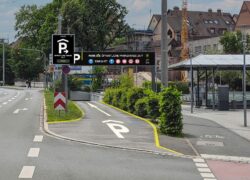
The underground facility, located beneath Rosa-Luxemburg-Platz, features 268 parking spaces, including e-charging stations. A unique aspect of the car park is its integration with sections of Nuremberg’s historic city wall, offering a blend of modern convenience and historical preservation. Renovation work on the car park began in 2024 to incorporate advanced parking technology and customer-friendly design elements.

Carina Orthen, Head of Letting Management Munich at HIH Invest, emphasized the early collaboration with operators to tailor the renovation process:
“We engaged potential operators before the renovations began to ensure their requirements, such as the placement of electric charging stations and color schemes, were incorporated. We are thrilled to welcome PARK ONE as an experienced and innovative operator.”

Founded in 2009, PARK ONE manages 40 locations across Germany with a focus on cutting-edge technology and customer-centric service. Andreas Mahnert-Lueg, managing director and owner of PARK ONE, expressed enthusiasm for the partnership: “Opening our first location in Nuremberg at Rosa-Luxemburg-Platz is an exciting milestone. With advanced parking technology and dedicated on-site managers, we aim to make parking a seamless and pleasant experience. This commitment sets us apart and highlights our dedication to customer satisfaction.”

The car park is strategically located near Nuremberg Central Station, a multiplex cinema, and the Natural History Museum, ensuring high accessibility and convenience for visitors. The renovations aim to meet modern demands while preserving the historic features of the property, adding a unique touch to the city’s infrastructure.

With this agreement, HIH Invest continues its strategy of enhancing urban spaces by combining innovation with heritage, reinforcing its position as a leader in sustainable and forward-thinking real estate development.

Brno approves new Zoning plan and CZK 24 billion budget for 2025

In a landmark decision, representatives of Brno approved a new zoning plan and a record CZK 24 billion budget for the coming year. The zoning plan, which has been under development for over two decades, was passed with 54 votes in favor and no opposition, marking the city’s first comprehensive update in 30 years. The plan will come into effect in February 2025, offering a roadmap for Brno’s urban development while safeguarding key green spaces and historic areas.

The new zoning plan paves the way for significant development, including the utilization of over 100 brownfields and the potential to build homes for up to 170,000 new residents. However, the city’s expansion, which currently houses 400,000 inhabitants, will depend on the parallel development of transport, technical infrastructure, and civic amenities. Flood control measures will also be streamlined under the new framework.

“This zoning plan represents a milestone for Brno,” said Mayor Markéta Vaňková (ODS). “The additional two and a half years of preparation have resulted in a document that balances growth and environmental protection. While we couldn’t satisfy every request due to conflicting interests, the overall plan is robust and future-oriented.”

The plan divides the city into stabilized areas, where significant reconstruction is not anticipated, and areas of change, where development will be encouraged with an emphasis on green spaces.

Councillor Petr Bořecký (ANO) highlighted the plan’s focus on environmental protection, while opposition councillors, including Jana Drápalová (Zelení) and Břetislav Štefan (SOCDEM), commended the enhanced safeguards for greenery. However, some concerns remain. Representative Jiří Kment (SPD) questioned whether the plan might give developers excessive leeway, while Matěj Hollan (Žít Brno), who abstained, expressed reservations about potential procedural errors during the plan’s preparation.

Representatives credited the extensive work of the Office of the Architect of the City of Brno (KAM) and the Municipal Department of Spatial Planning and Development. “Thousands of objections and demands were addressed, but it’s impossible to accommodate everyone,” said Jan Tesárek, KAM’s director. He assured residents that changes and legal challenges would be addressed post-approval.

Alongside the zoning plan, Brno’s representatives approved a CZK 24 billion budget for 2025, up from CZK 19.5 billion this year. Revenues are projected at CZK 19.9 billion, with a loan of CZK 4.3 billion earmarked for key investments, including a multifunctional arena.

The opposition raised concerns about the city’s growing debt. “Increasing indebtedness for projects like the arena is concerning,” said opposition members from the Greens.

The combined budget for Brno and its 29 city districts totals CZK 25.8 billion in expenditures, with revenues of CZK 21 billion.

Brno’s new zoning plan and budget signal an ambitious future, balancing growth, environmental considerations, and financial challenges. While questions remain about implementation, the city’s leadership believes the decisions made today will shape a brighter tomorrow for residents and businesses alike.

Czech Senate approves amendment to address issues with construction digitization

The Senate has passed an amendment aimed at resolving challenges in the digitalization of construction proceedings, which have plagued builders and officials since the system’s launch in July. The amendment, set to take effect immediately after its publication in the Collection of Laws, will allow building authorities to continue using their pre-digitalization management systems until 2028. The proposal now awaits the President’s signature.

The amendment provides a three-year transitional period, enabling building authorities to rely on their existing systems while also offering builders the option to submit project documentation in digital form. The newly developed digital construction management system is expected to be operational by January 2028.

Transport Minister Martin Kupka (ODS) defended the transitional measures, stating that the current digitized systems suffer from significant deficiencies that fail to meet the requirements of the Building Act or the initial tender documentation. “This period brings certainty to the state, ensuring we develop a properly contested system that will withstand scrutiny,” Kupka explained.

Regional Development Minister Petr Kulhánek (for STAN) emphasized that the amendment introduces clear legal protections for both builders and officials, ensuring compliance with the law even while operating outside the flawed digital system.

Issues with the digitized construction management systems led to the dismissal of Deputy Prime Minister for Digitalization and Minister for Regional Development Ivan Bartoš (Pirates) in September. The controversy also prompted his party’s departure to the opposition.

In October, the government initiated a new procurement process for a digitized construction system while allowing temporary use of older systems. The updated system will focus on addressing the deficiencies of the current setup and will align with spatial planning and geoportal requirements during its phased implementation.

While 45 of the 70 senators present supported the amendment, it faced criticism from some quarters. Pirate Senator Adéla Šípová questioned the need for a three-year workaround, expressing regret that the previous system was effectively scrapped rather than improved.

A proposal by Senator Michael Canov (SLK) sought to limit the scope of municipal building authorities’ competence, particularly removing residential buildings from their purview and assigning them to local authorities instead. However, Kulhánek rejected the proposal, arguing that it would not adequately address the broader issues.

The transitional period will consist of two phases: the first, lasting until mid-2025, focuses on spatial planning and the national geoportal. The second, extending through 2027, addresses the full digitization of construction proceedings. By January 2028, a completely new and robust digital system is expected to be in place, promising a more reliable and streamlined process for all stakeholders involved.

This amendment is seen as a critical step in stabilizing the construction process while laying the groundwork for an improved digital future.

Source: CTK
Photo: CTK

Empresa Media and TV Barrandov buildings sold for CZK 759 million in high-stakes auction

In a dramatic auction, the Empresa Media building and the TV Barrandov studio were sold for a combined CZK 759 million, fetching three times their starting prices. The sales, conducted to settle debts linked to media magnate Jaromír Soukup, mark a significant shift for these high-profile properties.

The Empresa Media property, located on Mikulecká Street in Prague 4-Braník, was acquired by Prague City Hall for CZK 649 million. The site includes land and additional buildings, with a starting bid set at CZK 201 million.

Meanwhile, the Barrandov TV studio, situated in the iconic Barrandov film studios in Hlubočepy, was sold for CZK 110 million to a company owned by businessman Tomáš Chrenek. The studio had an initial auction price of CZK 43 million.

Both sales were executed through involuntary auctions initiated by the Brno-venkov Executor’s Office to satisfy claims held by the IFIS Investment Fund. These proceedings also aim to finance the reorganization of Empresa Media and Barrandov Television Studio, approved as part of their insolvency process.

Councillor Adam Zábranský (Pirates) confirmed the city’s acquisition of the Braník property and highlighted its potential for diverse uses.

“We were notified about the auction just a month ago, but this acquisition offers numerous opportunities. The buildings’ internal layout is versatile, allowing for potential apartments, commercial spaces, or even educational facilities,” Zábranský told the Czech News Agency.

He added that the city is considering transforming the site into a high school or similar educational facility, which would address pressing local needs. A detailed study will be commissioned to evaluate the best uses for the property.

The Empresa Media and Barrandov TS properties were previously owned by Jaromír Soukup, a prominent media figure. Recently, entrepreneur Jan Čermák acquired Empresa Media, Barrandov Television Studio, and Media Master from Soukup as part of ongoing insolvency proceedings. The court has approved a reorganization plan for these companies to address their financial challenges.

The sale of these landmark properties represents a significant development in Prague’s real estate and media landscape. For Prague City Hall, the acquisition of the Braník site could provide a vital opportunity to repurpose the property for community benefit. For the Barrandov TV studio, its future under the ownership of Tomáš Chrenek’s company remains to be seen, though its connection to the storied Barrandov film studios adds a layer of intrigue to the transaction.

With plans now underway to determine the next steps for these properties, the auctions mark both an end and a new beginning for Empresa Media and TV Barrandov’s physical footprints.

Source: CTK
Photo: CTK

LATEST NEWS