BaseLinker Index: Polish e-commerce sales rise by 10.8% year-on-year in December

Companies included in the BaseLinker Index, a key measure of the Polish e-commerce market, reported a 10.8% year-on-year (y/y) increase in sales for December 2024. The number of transactions rose by 8.3%, while the average order value grew by 2.3% y/y to PLN 183.3, according to BaseLinker, the creator of the index.

“December proved to be a strong month for Polish e-commerce retailers, with rising order volumes and higher shopping cart values. A notable highlight was the 13.8% increase in cross-border sales, reflecting growing international interest in Polish products,” said Łukasz Juśkiewicz, head of strategy at BaseLinker. He attributed the cross-border success to the accessibility of Polish goods on marketplace platforms and the popularity of seasonal promotions like Cyber Monday and last-minute Christmas shopping.

Key Performance Insights
• Domestic Sales Growth: 10.2% y/y
• Cross-Border Sales Growth: 13.8% y/y
• Cross-Border Share of Sales: 17.3% of total sales for Polish sellers

Juśkiewicz highlighted that categories such as “supermarket,” “health and beauty,” and “home and garden” saw the most significant sales growth in December.

Compared to November 2024, the BaseLinker Index showed a modest 0.9% month-on-month increase in sales, driven by a 4.7% rise in transaction volume. However, the average order value decreased by 3.6% during this period, suggesting smaller individual purchases in the pre-Christmas shopping rush.

The BaseLinker Index, which tracks the overall condition of the Polish e-commerce sector, reached 155 points in December 2024, up from 154 points in November and 140 points in December 2023. The index was launched in January 2022, with an initial value of 100 points serving as a baseline for subsequent readings.

The companies included in the index represent a robust segment of Polish e-commerce, meeting criteria such as managing online sales through BaseLinker and achieving at least PLN 250,000 in monthly Gross Merchandise Value (GMV). In January 2024, the index expanded to include new, large enterprises that began using BaseLinker in 2022 and 2023.

The strong December performance underscores the resilience of Polish e-commerce amid evolving market dynamics and highlights opportunities for growth in both domestic and international sales.

Source: BaseLinker and ISBnews
Polish mixed-use projects enter maturity phase with focus on flexibility and community needs

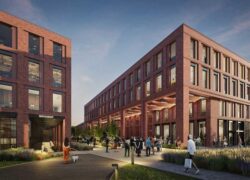
Poland’s mixed-use real estate market has reached a new stage of maturity, evolving beyond the traditional combination of offices, retail, and services into more complex and flexible developments. These projects are increasingly tailored to the needs of local communities while addressing the challenges of sustainable urban development, according to the latest report by Colliers, Mixed-use 2.0: Adapting Projects to Changing Needs.

Mixed-use projects are gaining momentum in Poland’s large cities, where efficient urban space utilization is a growing priority. The majority of existing facilities are located in urban (63%) and inner-city (32%) areas, with 89% of new developments also concentrated in these zones. Colliers reported a 40% increase in mixed-use projects under construction since 2022, with supply expected to grow steadily in the coming years.

Revitalized historic buildings play a pivotal role in these projects, with 95% of existing or partially completed developments incorporating such elements as of Q3 2024. This integration of heritage with modern structures provides both aesthetic and sustainable advantages.

Anna Radecka-Łysiak, Associate Director in Colliers’ Retail Department, highlights the challenges developers face: “Creating a mix of functions that meets user needs and complements the city’s landscape is critical for achieving timeless and sustainable investments. Authenticity and individual identity are also key in fostering a sense of belonging.”

While existing mixed-use projects are predominantly retail- and office-focused, new developments are increasingly prioritizing residential and hotel functions. Colliers attributes this shift to changing societal preferences, driven in part by the COVID-19 pandemic and the growing popularity of “15-minute cities” that emphasize proximity to essential services.

Currently, two-thirds of mixed-use projects include residential components, with all developments under construction featuring premium housing options. Residential spaces not only cater to changing lifestyles but also provide financial stability for developers by supporting early-stage funding and generating consistent demand for onsite retail, dining, and services.

Office spaces remain a key element of mixed-use projects but are being reimagined as part of larger urban ecosystems. Flexible designs and features that promote health and well-being are becoming standard. Tenants increasingly seek offices equipped with smart technologies, such as automated lighting, air quality sensors, and energy management systems. Certifications like LEED, BREEAM, and WELL are now common, reflecting sustainability priorities.

Offices integrated with retail, services, and recreational spaces enhance the overall appeal of mixed-use developments, offering a comprehensive work-life balance for employees.

Catering remains a cornerstone of mixed-use projects, accounting for 36% of the tenant mix. Unique dining concepts and food halls, such as Food Town at Norblin Factory and Powiśle Power Station, have successfully attracted both locals and tourists. However, market saturation poses risks, as seen with the closure of Food Hall PZO in Warsaw.

Retail offerings are also becoming more specialized, with an emphasis on artisanal and premium brands. While the share of retail tenants decreased from 27% in 2022 to 24% in 2024, this shift reflects a qualitative improvement aimed at creating unique customer experiences.

The share of services in mixed-use projects has more than doubled between 2022 and 2024, increasing from 5% to 10%. Health and beauty services experienced the largest growth, while sectors such as real estate, tourism, and medical services are also expanding. The medical services sector, in particular, is forecasted to grow by 8-10% annually, with a strong concentration in Warsaw and other major cities.

Entertainment, though a smaller component at 5%, remains integral to the multidimensional appeal of mixed-use projects. These offerings go beyond traditional retail and services, creating vibrant spaces that attract diverse customer groups.

Poland’s mixed-use projects are redefining urban development by integrating residential, office, retail, and recreational spaces in ways that respond to evolving community needs. With a focus on sustainability, flexibility, and user-centric design, the sector is poised for continued growth and innovation, setting a benchmark for urban development across Europe.

Source: Colliers

The World of Work in 2025: A new era of productivity and happiness

The workplace landscape is undergoing a significant transformation as businesses embrace hybrid working models and prioritize employee well-being and productivity. Predictions for 2025 indicate that companies will focus more than ever on creating environments that foster happiness and efficiency, driven by advancements in technology and changing workforce expectations.

Despite persistent conversations about a “Return to Office” trend in late 2024, the reality is far more nuanced. Hybrid working has become the norm for many businesses, enabling employees to work from various locations. Companies are now moving beyond the debate of where employees work, focusing instead on measurable outputs and business objectives.

Mark Dixon, CEO of International Workplace Group (IWG), emphasizes the role of hybrid working in driving productivity, stating that success hinges on good management and clear KPIs rather than office presence. Studies support this view, with 75% of employees reporting higher productivity under hybrid models.

The hybrid model is expected to grow as businesses re-evaluate their real estate strategies, resizing office spaces to reduce costs and provide greater flexibility. This shift not only aligns with employee preferences but also offers companies a competitive edge in attracting and retaining top talent.

In 2025, the impact of hybrid working will extend to economic revitalization, with commuter towns benefiting from increased local work activity. Former commuter hubs are transforming into vibrant communities as employees balance working from home, local offices, and occasional city-center visits.

The adoption of technology is reshaping workplace dynamics. Tools like AI-based inventory systems, electronic shelf labels, and advanced resource management platforms are empowering businesses to optimize operations and reduce costs.

For smaller businesses, the demand for scalable, flexible workspaces is rising. IWG reports that SMEs, now contributing roughly half of global GDP, are driving the need for professional work environments in suburban areas. This trend is set to grow as more companies seek local office solutions to complement hybrid working models.

Generation Z, set to comprise a third of the global workforce by 2025, is redefining workplace norms. Their expectations for flexibility, work-life balance, and digital integration are shaping employer strategies. Companies unwilling to adapt to these preferences risk losing access to emerging talent.

The financial and time-saving benefits of hybrid working further underscore its appeal. Employees can save substantial amounts by reducing daily commutes, with potential savings reaching hundreds of thousands of dollars over a career.

Hybrid working is also helping to bridge gender gaps in leadership. By offering flexibility, it enables women to take on senior roles while balancing family responsibilities, leading to greater representation in executive positions.

Meanwhile, the focus on employee wellness is intensifying. Hybrid arrangements are becoming as desirable as traditional benefits, with businesses incorporating fitness programs, mental health initiatives, and flexible schedules to support their teams.

Governments are also stepping in to protect work-life balance, with laws like the “right to disconnect” gaining traction worldwide. This trend reflects a broader recognition of the need to shield employees from overwork in a digitally connected era.

Hybrid working is reshaping urban centers, prompting developers to reimagine traditional office spaces. Mixed-use developments are emerging, blending workspaces with residential, retail, and leisure facilities. Examples like London’s Canary Wharf and Atlanta’s Star Metals district highlight this shift as cities adapt to reduced commuter footfall and evolving worker preferences.

As businesses navigate the evolving workplace landscape, hybrid working is emerging as a cornerstone of modern employment. “In 2025, we will see increasing time and focus from business and HR leaders on improving the productivity, happiness, and loyalty of their people,” says IWG’s Mark Dixon.

The transition to hybrid work represents more than a response to current challenges—it offers a blueprint for a sustainable, resilient, and employee-focused future.

Source: IWG
Photo: Mark Dixon, CEO of International Workplace Group (IWG)

Eiffage Immobilier Polska sells first Polish PRS investment to Heimstaden

Eiffage Immobilier Polska has sold its first Private Rented Sector (PRS) development, Białostocka 5D, to Heimstaden, one of Europe’s largest institutional rental operators. Located in Warsaw’s Praga-Północ district, the project was built by Eiffage Polska Budownictwo and represents the first “forward purchase” agreement signed by Eiffage Immobilier Polska.

“One of the main pillars of our development strategy in Poland is a strong focus on the PRS and PBSA (Purpose-Built Student Accommodation) sectors, particularly through build-to-rent projects, which we view as the most promising direction,” said Tymon Nowosielski, President of Eiffage Immobilier Polska. “The Białostocka 5D project was our first step toward realizing these ambitions. Successful delivery of such projects requires close collaboration with a trusted partner, and this transaction confirms that Heimstaden was an excellent choice,” he added.

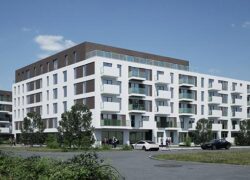
The Białostocka 5D development offers 185 rental units ranging from 25 m² to 78 m² (1-4 rooms) across a total area of nearly 8,000 m². The top-floor apartments feature terraces with panoramic views of Warsaw, including the National Stadium, the Old Town, and the Koneser Praga Centre. The development includes an underground garage with 49 parking spaces, four of which are equipped with electric vehicle chargers. Over 100 bicycle racks, tenant gardens, and a green courtyard with a connected patio enhance the community-focused environment. Additionally, the project includes 2,300 m² of space for three public service units.

Designed by the Foroom architectural studio, the building complements the northern frontage of Białostocka Street with a C-shaped layout. Its design harmonizes with the surrounding area, featuring a white façade that matches the existing streetscape and a brick motif reflecting the neighboring Koneser Praga Centre. The façade is further animated by a checkerboard pattern of windows and balconies, creating a visually dynamic structure.

Białostocka 5D is situated in the heart of Warsaw’s Praga-Północ district, adjacent to Galeria Wileńska and directly across from the Koneser Centre. Its proximity to Warszawa Wschodnia railway station and nearby tram and bus stops ensures excellent connectivity to the rest of the city. The project aligns with Eiffage’s strategy of responsible urban densification, contributing to sustainable development in Warsaw’s growing metropolitan landscape.

The successful completion and sale of Białostocka 5D underscore Eiffage Immobilier Polska’s commitment to innovative, high-quality developments that meet the needs of both tenants and urban communities. This project marks a significant milestone in the company’s expansion into the PRS market in Poland.

Panattoni launches speculative development at Wrocław Campus 2

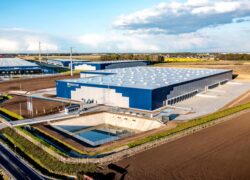
Panattoni is advancing its footprint in Lower Silesia with the speculative development of the next phase of its Wrocław Campus 2 logistics complex. By June 2025, approximately 30,000 square meters of space will be completed, forming part of a larger hall that will eventually span 130,000 square meters. The entire Wrocław Campus 2 project will total 160,000 square meters upon completion.

“Lower Silesia is the heart of Polish logistics and industry, consistently attracting global investors thanks to its strategic location and dynamic infrastructure development. Panattoni has been a key player in fostering the region’s growth for many years,” said Damian Kowalczyk, Development Director at Panattoni.

Wrocław Campus is one of Panattoni’s largest developments in Lower Silesia, where the company has already delivered 2.3 million square meters of modern industrial space. The first phase of the Wrocław Campus, spanning 185,000 square meters, was sold in 2023 to P3 Logistic Parks, marking one of the largest industrial real estate transactions in Poland. Following that success, Panattoni completed the initial 30,000-square-meter hall of the second phase earlier this year. Construction is now underway on the next hall of the campus.

Strategically located in the southern part of Wrocław, Wrocław Campus 2 benefits from its position in one of Europe’s most advanced logistics zones, close to major production facilities, including the massive LG complex. “This location offers tremendous potential, providing logistical and production support to suppliers serving these hubs. With direct access to the A4 and A8 motorways, the site ensures efficient distribution to major European markets like Germany and Austria, reaching over 100 million customers,” noted Kowalczyk.

Wrocław Campus 2 is being developed to meet the highest standards of sustainable construction, aiming for BREEAM Excellent certification. The facility will feature intelligent energy management systems, water-saving fixtures, and green zones, ensuring lower operating costs and a reduced environmental footprint. Electric vehicle charging stations will also be installed to enhance tenant convenience and promote eco-friendly practices.

Panattoni’s continued investment in Lower Silesia underscores its commitment to shaping the region into a logistics and industrial powerhouse, further solidifying its position as a leader in Poland’s industrial real estate market.

Nhood Services Poland to advise Arkada Holding on residential project in Bydgoszcz

Nhood Services Poland, a prominent investment advisory firm in the real estate market, has entered into a partnership with Arkada Holding to provide project management services for a planned residential development in Bydgoszcz. The collaboration involves supporting the preparation of a 25,000-square-meter residential project, focusing on planning and securing the necessary administrative approvals.

“We chose to work with Nhood Services Poland because of their team’s extensive experience in managing large and complex projects,” said Maciej Wawrzkowicz, CEO of Arkada Holding.

The project is seen as both ambitious and intricate. “The Bydgoszcz investment is a fascinating and challenging undertaking. We are pleased that Arkada Holding has entrusted us with this cooperation. Our team brings strong expertise and a wealth of experience in project management,” commented Marcin Stokowiec, Head of Development at Nhood Services Poland.

Nhood Services Poland specializes in providing end-to-end support to investors and developers, offering top-tier advisory services throughout all stages of the investment process. Their reputation for excellence in managing complex projects has positioned them as a trusted partner in the real estate sector.

Arkada Holding, part of Arkada Invest Capital Group, has over 25 years of experience in the residential and office real estate market. The company’s portfolio includes completed residential projects and office developments, highlighting its long-standing presence and expertise in the industry. This partnership marks a significant step toward realizing Arkada Holding’s latest residential vision in Bydgoszcz.

CBRE: Significant growth in office market rental activity expected in 2025

Tenant activity in the office market surged in the fourth quarter of 2024, with expectations for 2025 indicating a marked increase in rental transactions, including large leases exceeding 20,000 m², according to CBRE’s Head of Office Sector, Radosław Pawlak. This uptick in demand is likely to encourage investors to initiate new office projects.

“In 2024, tenant activity on the office market was subdued, which led to reduced investor interest and a lack of funds willing to acquire buildings. As a result, the availability of sought-after, modern office spaces in prime locations across Poland’s largest cities has begun to dwindle. Particularly for tenants seeking large office spaces, choices are increasingly limited,” Pawlak commented.

A Reversal in Market Trends

The final quarter of 2024 marked a turning point, with tenant activity rising significantly and year-end transactions intensifying. This increased demand is expected to continue in 2025, spurring a noticeable rise in rental transactions, including major leases. “We’re seeing funds return to the Polish market, driven by improved financing conditions, including interest rate cuts in the eurozone. Developers have prepared land banks, setting the stage for new projects,” Pawlak noted.

Recent examples of market revival include the high-profile sale of Warsaw UNIT to Swedish company Eastnine AB, one of the largest transactions in Europe. Pawlak predicts more such deals, including a growing presence of Scandinavian investors.

Demand for Modern Spaces and Longer Leasing Periods

The limited supply of modern office spaces, caused by reduced developer activity in recent years, is driving interest among investment funds in prime locations. At the same time, tenants are taking longer to finalize leases for newly built offices, carefully tailoring spaces to their operational needs. Current leases often span 7–10 years, reflecting the higher costs of customizing offices for specific organizational requirements.

This shift aligns with changing work habits. The 2024 European Office Occupier Sentiment Survey revealed an increase in employees working from offices for three or more days a week, rising from 37% to 43% in just a year. Pawlak observed similar trends in Poland, where hybrid work patterns are shifting toward more time spent in the office.

Repurposing Older Office Buildings

Another trend shaping the Polish office market is the transformation of older office buildings for alternative uses, particularly those in prime locations but less appealing to tenants. An example is Wrocław’s Sky Tower, which is being considered for conversion into a hotel. Such projects highlight the industry’s adaptability in maximizing the value of older properties.

As the Polish office market heads into 2025, rising demand, increased leasing activity, and evolving work habits are expected to shape its trajectory, with both tenants and investors seizing opportunities in this dynamic landscape.

Source: CBRE and ISBnews

Rhenus cecomes majority shareholder of Bulk Cargo – Port Szczecin

Rhenus Group has acquired an additional 58.5% stake in Polish port operator Bulk Cargo – Port Szczecin, bringing its total ownership to 98.5% and making it the majority shareholder, the company announced.

“The Szczecin port is a critical hub for European waterways and plays a significant role within the Rhenus network. Its potential for environmentally friendly supply chains serving Poland, the Czech Republic, and eastern markets is enormous. For 30 years, Rhenus has supported Polish customers and will continue to develop efficient logistics solutions for them,” said Michael de Reese, Director of the Rhenus Port Logistics division.

The Szczecin and Świnoujście Seaports Authority has already made significant investments in the port, including deepening the waterway and reinforcing the quay walls. Rhenus plans to build on these improvements by further enhancing the port’s infrastructure, equipment, and transshipment technology.

Rhenus initially acquired a 40% stake in Bulk Cargo – Port Szczecin in 2022. The group has a long-standing presence in Poland, with operations in Szczecin spanning over three decades. It employs 3,500 people across its Polish subsidiaries.

As Szczecin’s largest terminal operator, Bulk Cargo handles approximately 4 million tons of goods annually. The terminal features 11 berths and a 3.5-kilometer-long waterfront. Services at the Baltic port include the transshipment of bulk and general cargo using specialized equipment, warehousing, and forwarding via inland waterways, road, and rail. Historically, the port was a key hub for coal and ore shipments supporting Polish mines, steel mills, and coke plants. Today, it has evolved into a versatile, multifunctional port capable of handling bulk, general, and liquid cargo.

Rhenus Group is one of the world’s leading logistics providers, with annual revenue of €7.5 billion. Operating in over 70 countries, the group employs 40,000 people at 1,320 locations globally.

Source: Rhenus Group and ISBnews
Photo: Rhenus Group

German housing crisis persists despite signs of a turnaround in construction

The housing crisis in Germany remains a pressing issue, even as the construction industry shows signs of a potential turnaround. After five years of decline, real construction volume is projected to grow by 2% in 2026. However, a decrease of nearly 4% is expected in 2024, followed by a further decline of just under 1% in 2025. Despite the anticipated recovery, the construction volume will still lag significantly behind the peak levels of 2021, with residential construction remaining particularly affected.

According to the German Institute for Economic Research (DIW Berlin), the total construction volume in 2026 is expected to be 7% below 2021 levels, with residential construction down by 10%. New residential construction, in particular, will likely remain 25% below its 2021 volume. Martin Gornig, a DIW researcher, notes that while residential construction appears to have stabilized, the gap between construction demand and output remains alarmingly large, highlighting the deep challenges facing the sector.

Residential Construction: The Struggling Pillar of the Industry

The German construction industry has faced significant setbacks in recent years due to rising interest rates and escalating construction costs, which have made financing projects increasingly difficult. These factors have led to a sharp drop in orders and permits, with nominal construction volume falling in 2024 for the first time since the financial crisis. In real terms, declines have been ongoing since 2021, with residential construction hit the hardest. Many households have been deterred from building homes due to prohibitive costs or an inability to afford projects altogether.

The commercial construction sector has also faced challenges, with economic weakness slowing the development of factories and office buildings. Civil engineering infrastructure projects, however, have been a rare bright spot, helping to stabilize construction volume.

Study author Laura Pagenhardt explains that “many households were deterred from construction projects by the high costs or simply could no longer afford them,” underscoring the significant impact of rising financial pressures on the sector.

2025: Stabilization but No Immediate Recovery

While the situation is expected to stabilize in 2025, an economic rebound is unlikely in the short term. Although interest rates have recently fallen slightly, broader economic concerns—such as uncertainties in the labor market and stagnant income growth—are likely to keep household spending cautious, particularly in the first half of the year. Civil engineering is expected to continue growing at a steady rate, but residential construction will only begin to recover in 2026.

A Call for Immediate Action on Social Housing

While some political measures, such as increased depreciation for investments in new residential construction, have shown early signs of success, they fall short of addressing the acute housing shortage. Efforts to limit construction cost increases and streamline administrative procedures have also been initiated, but they are insufficient to resolve the current crisis.

“The measures taken so far are necessary but not enough to overcome the acute housing crisis,” argues Gornig. To bridge the gap, the study advocates for an immediate action program for social housing construction. This initiative would focus on providing additional federal funding to municipalities facing severe housing shortages and creating a legal framework for accelerated implementation of social housing projects.

Such measures, the authors argue, are essential to tackling the deep-rooted challenges of the German housing crisis and aligning construction output with the growing demand for affordable housing. Without swift and targeted action, the gap between housing needs and construction output is likely to persist, prolonging the strain on the housing market.

Matexi Polska targets record PLN 500 million revenue in 2025

Matexi Polska anticipates a substantial expansion in operations this year, aiming to achieve record revenues of approximately PLN 500 million, driven by an expected increase in the transfer of completed apartments. The company also plans to achieve its highest-ever sales of nearly 500 apartments and prepare over 400 units within the Private Rented Sector (PRS).

In 2024, Matexi Polska, which operates in Warsaw and Kraków, sold 318 apartments, a decline from 461 in 2023. The company handed over 282 apartments to buyers last year. Despite the challenging market environment, including high loan costs and limited government support, Matexi launched five new projects—three in Warsaw (Wolot Wola, Żelazna 54, and XYZ Place) and two in Kraków (Port Departments and Lirników Takt). These projects resulted in development agreements valued at nearly PLN 400 million, reflecting only a 10% decline compared to 2023.

“We positively assess 2024. Key markets in Warsaw and Kraków maintained a balance between demand and supply, and property price increases aligned with inflation levels,” said President Mirosław Bednarek. He highlighted the company’s resilience and the trust of its customers in the Matexi brand despite demanding market conditions.

In 2024, Matexi Polska invested nearly PLN 200 million in acquiring new plots in Warsaw’s Mokotów and Wola districts, as well as Kraków’s Podgórze Duchackie. The company plans to focus on securing building permits for these locations in 2025 while continuing to expand its market presence.

Looking ahead, Matexi Polska is optimistic about a potential recovery in the primary real estate market, spurred by anticipated reductions in interest rates, which could boost mortgage accessibility. The company also expects increased activity from institutional lease funds. In 2025, Matexi plans to sign nearly 500 preliminary and development contracts with individual clients and deliver over 400 units under the PRS model. Its land bank currently includes projects for more than 3,000 apartments, including flagship investments such as XYZ Place and Splot Wola, solidifying its position as a market leader in Poland.

“We are planning further land acquisitions in metropolitan areas and expect an acceleration in the transfer of completed premises, which will significantly boost our revenue,” Bednarek added.

Matexi Polska is the Polish arm of Matexi Group, Belgium’s largest residential development company, with a portfolio exceeding 35,000 completed projects. Operating in Poland since 2010, Matexi Polska has established itself as a key player in the country’s real estate market.

Source: Matexi Polska and ISBnews
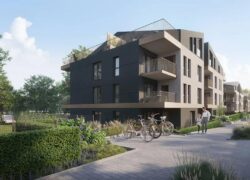
Photo: Takt-Lirnikow, Lirników Street in Krakow’s Duchacki Podgórze district by Matexi Polska

LATEST NEWS