Česká Spořitelna puts Budějovická headquarters on the market ahead of move to new Smíchov campus

Česká spořitelna, the largest bank in the Czech Republic, has officially begun the process of selling its headquarters in Budějovická, as it prepares to relocate to a newly developed campus in Smíchov, Prague. The move, expected to take place around 2028, marks a significant shift in the bank’s real estate strategy, as it plans to completely vacate its existing office buildings near the Budějovická and Roztyly metro stations.

According to Hospodářské noviny, the bank has already listed the properties for sale, a move confirmed by Česká spořitelna spokesperson Filip Hrubý. The tender process is being managed by real estate advisors from Knight Frank, who have already received interest from several major investors and developers. David Sajner, COO of Knight Frank, noted that both Czech and foreign investors have expressed interest, though he declined to disclose further details. The majority of interested parties come from the development sector, with potential buyers looking to repurpose or modify the existing buildings.

Among the key bidders is the Penta group, which is negotiating the purchase alongside DBK, the operator of the Budějovická shopping center. Other interested parties include Czech Mint Investments, while Passerinvest Group previously explored investment opportunities in the properties.

The total value of the real estate involved in the transaction is estimated in the billions of Czech crowns. The sale includes properties located on Budějovická, Poláčková, Olbrachtova, and Antal Stašek streets, which currently house several thousand Česká spořitelna employees.

With interest from major players in the Czech real estate market, the sale of Česká spořitelna’s Budějovická headquarters is set to be one of the most significant commercial real estate transactions in Prague in the coming years.

Source: Česká Spořitelna and E15

Catella APAM secures landmark letting at Leeds Valley Park

Catella APAM, acting on behalf of the Greater Manchester Pension Fund (GMPF), has successfully leased 25,000 sq ft at Leeds Valley Park, marking a significant transaction in West Yorkshire’s industrial market. The 10-year lease agreement, secured at a market-leading rate, underscores the rising demand for premium warehouse and manufacturing space in the region.

Leeds Valley Park, a strategically located business hub, continues to attract high-calibre tenants due to its modern facilities and excellent connectivity. Situated just minutes from Junction 7 of the M621 and Junction 44 of the M1, the park provides optimal access for businesses operating across the North of England. It features six detached, high-specification warehouse and manufacturing units, designed to meet the evolving needs of industrial occupiers.

The latest tenant, a leading food ingredient specialist, has chosen Leeds Valley Park to enhance production and logistics operations. The move reflects the company’s commitment to operational excellence and future growth, leveraging the park’s infrastructure to expand capacity and streamline supply chain efficiency.

Adam Handley, Asset Manager at Catella APAM, emphasized that the letting demonstrates strong market demand for well-located, high-quality industrial spaces. He highlighted that the rent achieved reflects the property’s exceptional specifications and strategic positioning, reinforcing Leeds Valley Park’s status as a premier business destination.

The transaction was facilitated through a collaborative effort involving joint agents Carter Towler, Avison Young, and CBRE, while the tenant was represented by GV&Co. Paul Mack, Director at GV&Co, expressed confidence that the new facility will serve as a key platform for the occupier’s continued growth, while Josh Holmes, Director at Carter Towler, noted that multiple parties were interested in the space, further demonstrating the site’s appeal.

With industrial and logistics demand on the rise, the successful letting of Unit 4 at Leeds Valley Park reinforces the estate’s reputation as a prime location for expanding businesses, contributing to the region’s economic growth and industrial resilience.

Labour market index declines in January amid structural challenges in Poland’s employment sector

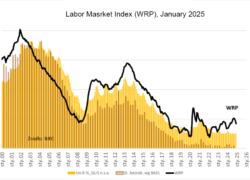
The Labour Market Index (LMI), an early indicator of future changes in unemployment levels, fell by 1.3 points in January 2025. Despite this monthly decline, 2024 was marked by a general upward trend in the index, suggesting a slight increase in unemployment over time. However, the overall scale of unemployment remains low, positioning Poland among the countries with the lowest unemployment rates in the European Union. The greater challenge lies not in joblessness itself but in labour shortages, low female workforce participation, early retirements, and a mismatch between available workers and employer needs.

Since mid-2022, the registered unemployment rate has remained relatively stable, fluctuating within a narrow band. In December 2024, it stood at 5.1%, rising by 0.1 percentage points from the previous month. While most components of the LMI suggest a decline in unemployment, only one factor—the number of people leaving the unemployment register due to securing jobs—indicates a potential increase in the unemployment rate.

The number of newly registered job offers plays a crucial role in reducing unemployment. In December 2024, Polish labour offices recorded 19% more job offers than in the same month the previous year. However, compared to November 2024, the number of new postings fell by 13%, indicating a slowdown in labour market activity. Year-over-year data suggests that fewer job offers are gradually entering the market, further complicating employment prospects.

Another significant factor influencing the labour market is the decline in newly registered unemployed individuals. While this reduces the overall unemployment stock, it also limits turnover, making it harder for job seekers to find work. Long-term unemployment remains an issue, as fewer job opportunities mean less movement within the labour market. In December 2024, the inflow of unemployed individuals decreased by 7% compared to the previous month and was also 7% lower year-on-year.

Business sentiment toward hiring remains pessimistic, with more companies planning job cuts than those considering workforce expansion. The energy and clothing industries anticipate the largest layoffs. Out of 22 industries surveyed by the Central Statistical Office (GUS), only two—transport equipment manufacturing and the electronics and optics sector—plan to increase employment in the short term.

The weak inflow of job offers, low vacancy creation, and declining unemployment registrations are making it increasingly difficult for district labour offices to facilitate job placements. In December 2024, the number of people leaving unemployment due to securing a job dropped by nearly 6% month-over-month and by just over 4% year-over-year. This suggests growing inefficiencies in job matching, further complicating Poland’s already strained labour market.

HIH Invest secures 2,600 sqm of high-street retail spaces in London and Glasgow

HIH Invest Real Estate has successfully secured new leases for high-street retail spaces in London and Glasgow, bringing in renowned international brands. Among the latest tenants are Urban Revivo, MANGO, New Balance, and Holland & Barrett, marking a significant step in strengthening the retail presence in prime shopping districts. These properties belong to funds managed by HIH Invest.

In London, the Chinese fashion brand Urban Revivo has signed a lease for 516 square metres on the ground floor of 8-12 Neal Street, located in the bustling Covent Garden shopping district in the West End. This will be the brand’s first flagship store outside Asia and signals the company’s expansion into the EMEA region. The deal also restores full occupancy to the property. Cushman & Wakefield advised HIH Invest, while Savills represented Urban Revivo in the negotiations.

In Glasgow, HIH Invest has secured multiple retail lettings in prime locations. At 61-79 Buchanan Street, MANGO took occupancy of 928 square metres in September 2024, while New Balance secured a 586-square-metre unit in January 2025. Additionally, Holland & Barrett signed a ten-year lease for 565 square metres at 36-48 Argyle Street, with occupancy set for September 2025. Both Buchanan Street and Argyle Street are among the busiest shopping areas in downtown Glasgow, attracting high footfall and housing other major retailers.

Frances Graham, Asset Manager International at HIH, emphasized the significance of these lettings, highlighting the resilience of their properties in a challenging market. She noted that the deals underscore both the prime quality of the sites and HIH’s proactive asset management.

Frank Kindermann, Managing Director of Asset Management, further commented that securing ten-year leases in the current market is a major achievement. He expressed pride in attracting prestigious, high-value tenants, reinforcing HIH Invest’s strong position in the retail sector.

HIH Invest Real Estate maintains a pan-European presence, with offices in Vienna, Amsterdam, London, and six other cities across Europe, solidifying its role as a leading asset manager in prime real estate markets.

Photo: Buchanan Street, Glasgow

Scope 3 Carbon Emissions: The hidden challenge in corporate sustainability

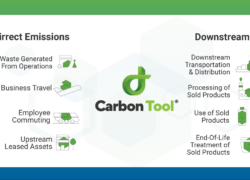
Scope 3 carbon emissions remain one of the most difficult yet critical aspects of corporate sustainability, often representing the largest share of a company’s carbon footprint. Unlike Scope 1 emissions, which stem from direct company activities, and Scope 2 emissions, which cover indirect emissions from purchased energy, Scope 3 emissions encompass all other indirect CO₂ emissions across a company’s value chain.

These emissions originate from a wide range of business activities, including purchased goods and services, employee commuting, transportation and distribution, and even the use of sold products. Given their vast scope, they are classified into 15 reporting categories, making them a complex yet essential component of sustainability strategies and regulatory compliance efforts, particularly under frameworks such as the Corporate Sustainability Reporting Directive (CSRD).

Despite their significance, tracking Scope 3 emissions presents major challenges for businesses. One of the biggest hurdles is data inconsistency, as companies often struggle to obtain accurate carbon emissions data from their supply chain partners. Additionally, the lack of standardization in carbon measurement methodologies creates discrepancies in reporting and benchmarking, making it difficult to compare performance across industries. The process itself is also resource-intensive, requiring businesses to collect, verify, and analyze vast amounts of carbon data—an effort that, without automation, is time-consuming and prone to errors.

To address these challenges, Carbon Tool offers an innovative digital platform that simplifies the measurement, management, and reduction of Scope 3 emissions. Through centralized tracking, automation, and supplier engagement features, it streamlines the complex process of reporting indirect carbon emissions. Businesses using Carbon Tool benefit from efficient carbon data collection, allowing them to gather emissions-related information with greater accuracy and consistency. The platform also provides comprehensive carbon footprint analysis, helping companies measure emissions across their entire value chain and gain actionable insights for reduction strategies.

One of the standout features of Carbon Tool is its supplier collaboration function, which enables seamless data-sharing and enhances transparency, preventing double counting of emissions. Additionally, the platform offers customizable carbon reporting, with automated dashboards and real-time analytics that simplify compliance efforts. By automating carbon data collection, companies can reduce errors, optimize resources, and improve operational efficiency while ensuring their sustainability efforts align with global regulatory requirements.

As businesses face increasing pressure to reduce their carbon footprints, solutions like Carbon Tool play a crucial role in helping them navigate the complexities of Scope 3 emissions reporting. By integrating real-time tracking, automation, and compliance-ready analytics, companies can enhance sustainability efforts, meet regulatory expectations, and drive meaningful carbon reduction across their entire value chain.

Source: Carbon Tool

European logistics real estate market shows signs of recovery, yield decline signals trend reversal

The European logistics real estate investment market is showing signs of recovery, with average prime net initial yields declining for the first time since Q2 2022. Investor confidence is gradually returning, particularly in the Benelux region, Spain, and Eastern European markets like Poland and Romania, where yield compression is most evident. However, the decline remains moderate, with the European average dropping by just four basis points from 5.65% to 5.61%.

According to Tobias Kassner, Head of Market Intelligence and Sustainability at GARBE, the latest GARBE PYRAMID MAP indicates an incipient trend reversal in logistics real estate investment. While geopolitical and economic uncertainties continue to influence investor sentiment, demand remains strong for assets in prime locations with long-term leases. Sustainability and energy availability are also playing a key role in investment decisions, as ESG compliance remains a top priority.

The GARBE PYRAMID MAP, which analyzes 121 key logistics submarkets in 25 European countries, reveals that yields remained stable or declined in 111 regions. In 46 of these areas, net initial yields fell by 10 to 20 basis points in the second half of 2024. In 65 regions, yield levels were unchanged, while only ten locations, including seven in Germany, recorded a modest yield increase.

Kassner noted that investor confidence in logistics real estate is returning, as pricing adjustments are largely complete and values have stabilized. This, combined with lower key lending rates, led to an increase in European investment volumes in 2024. However, ongoing geopolitical uncertainties continue to temper overall market momentum.

Established markets such as Germany, Italy, France, and the United Kingdom remained stable, with only minimal yield fluctuations. However, other European regions experienced more dynamic movements. In Spain, significant yield compression occurred in Madrid, Barcelona, and Valencia, while similar trends emerged in the Dutch cities of Rotterdam, Eindhoven, Tilburg, and West Brabant. Eastern European markets, which generally have higher yield levels, also saw declines of up to 20 basis points in Warsaw, Gdańsk, and Bucharest, though most reductions were closer to 10 basis points. Markets with already low yields, including the Czech Republic and Slovakia, remained largely stable.

A joint forecast by GARBE and Oxford Economics projects a continued decline in prime yields, with an expected reduction of 10 to 20 basis points in 2025. Assuming stable geopolitical and financial conditions, this trend is likely to persist in the coming years. Yield compression is expected to occur most rapidly in Germany, the Netherlands, and France, while Italy, the UK, and the Czech Republic are predicted to experience slower changes.

Kassner emphasized that accurate market assessments are essential for identifying opportunities and risks. While understanding current conditions is crucial, he highlighted the importance of forward-looking insights to develop effective investment strategies in the evolving logistics real estate landscape.

Further information can be found on the link below:

CTP expands Clubco co-working amid Czech office shortage

The Czech office market is experiencing a historic supply shortage, particularly in premium locations where new office developments have slowed significantly. In response, flexible coworking spaces are emerging as a modern solution, offering dynamic work environments suited to evolving business needs. CTP, Europe’s largest listed developer, owner, and manager of industrial and logistics properties by gross lettable area (GLA), is addressing this shift through its rapidly expanding Clubco coworking network.

Since its launch in 2021, Clubco has grown to nearly 7,000 sqm, with further expansion of more than 4,000 sqm planned in 2025, including its first entry into the Slovak market. The concept has gained popularity by combining flexibility, modern design, and advanced technology, catering to a broad spectrum of professionals and businesses. Currently, Clubco operates three centres in Brno, Ostrava, and Nupaky near Prague, offering fully equipped offices, state-of-the-art conference rooms, and relaxation zones.

The increasing demand for flexible office solutions has encouraged CTP to expand Clubco beyond the Czech Republic, with plans to introduce the concept in Slovakia, where the company has long developed industrial CTParks. Each coworking space is designed to meet specific regional needs, ensuring tailored solutions for businesses, freelancers, and entrepreneurs.

In Brno, Clubco is located within the premium Vlněna business park, making it CTP’s largest coworking centre. In 2025, it will expand by 2,000 sqm, introducing a podcast studio, an event space for up to 80 people, a gaming lounge, and 32 new offices. The addition of spacious terraces will enhance both work and networking experiences.

In Ostrava, Clubco is integrated into the IQ Ostrava office complex, catering to small and medium-sized enterprises (SMEs) and freelancers. Following a 700-sqm expansion in September 2024, the centre now spans over 2,200 sqm, offering new offices, conference rooms, and outdoor terraces for relaxation.

In Nupaky (Prague-East), Clubco has introduced the first coworking space on the outskirts of Prague, providing a flexible alternative for professionals looking to avoid daily commutes to the city centre. Designed for entrepreneurs and small businesses, the space accommodates up to 100 people and includes 10 private offices, three meeting rooms, a shared kitchen, and cutting-edge technological facilities.

According to Adriana Sniegonová, manager of Clubco Brno, the growing interest in coworking spaces reflects the increasing demand from businesses, startups, freelancers, and even students. She emphasized that Clubco offers more than just office space, providing comprehensive services that enhance employee productivity and well-being.

Sustainability is also a key focus, with all Clubco centres certified to the BREEAM In Use Excellent environmental standard. CTP integrates energy-efficient technologies, photovoltaics, and eco-friendly operations to ensure the long-term sustainability of its coworking spaces.

For Kateřina Camerino, manager of Clubco Ostrava, coworking is about more than just a workspace—it’s about fostering creativity, productivity, and community engagement. Each Clubco location offers unique features, ensuring an inspiring and high-performance environment tailored to the evolving needs of modern professionals.

Patron Capital and INBRIGHT expand German light industrial portfolio with two new acquisitions

Patron Capital, a pan-European investor specializing in property-backed investments, and its partner INBRIGHT, a developer and asset manager, have acquired two new properties in Mainz and Hamburg as part of their €250 million light industrial investment programme in Germany. The acquisitions reinforce their strategy to create a portfolio of sustainably focused industrial assets in key locations.

The Mainz property, purchased from Aurelis Real Estate, offers more than 150,000 sq ft (14,000 sq m) of net rentable space on a 186,000 sq ft (17,300 sq m) plot in the Hechtsheim district, a prime location for logistics, pharmaceutical, and manufacturing businesses. With excellent connectivity to major motorways (A63, A60), Frankfurt Airport, and public transport, the area is also part of Germany’s leading biotech cluster, home to major companies and research institutions. The building is fully occupied by tenants from various industries. Patron and INBRIGHT plan to enhance its ESG credentials through renovations, roof upgrades, and sustainability-focused improvements to secure its long-term value.

The Hamburg acquisition is located at Porgesring 22 in the Billbrook district. The property spans 82,000 sq ft (7,600 sq m) of net rentable space on a 114,000 sq ft (10,600 sq m) plot. It will be leased back to the current owner until March 2025, after which a comprehensive refurbishment will begin. Planned upgrades include structural modifications, energy efficiency enhancements, additional ramps, removal of partition walls, and the transformation of ground-floor offices into showroom areas to better suit modern occupiers’ needs.

These acquisitions follow an earlier purchase in Cologne’s Marsdorf area, bringing the joint venture’s portfolio to three assets, with further acquisitions in the pipeline.

Christoph Ignaczak, Senior Partner and Investment Director at Patron Capital, highlighted the sector’s strong and stable growth, particularly in key economic hubs like Mainz and Hamburg. With over €200 million allocated for investments, the firm is actively seeking new opportunities to develop assets that align with modern tenant demands and sustainable practices.

Sebastian Pijnenburg, Managing Director of INBRIGHT Development, emphasized the strategic importance of these acquisitions amid a challenging real estate market. He noted that INBRIGHT’s focus on environmental and social sustainability aligns with growing ESG requirements while creating attractive, future-ready spaces for tenants.

The Mainz transaction was brokered by VALVEO, while BNP and Gerlach GLS advised on the Hamburg acquisition. These deals mark another step in Patron Capital and INBRIGHT’s expansion into the German light industrial sector, reinforcing their commitment to sustainable and strategic real estate investments.

LIP Invest strengthens management team with David Zimmermann amid fund expansion

LIP Invest, a leading provider of special real estate funds in Germany’s logistics sector, has expanded its management team by appointing David Zimmermann as an authorised signatory. This move reinforces the company’s strategic focus on growth and investor relations, further strengthening its position in the market.

As Director Institutional Clients, Zimmermann oversees more than 60 existing investors while driving the distribution of new fund products and the acquisition of additional institutional investors across the DACH region. A 38-year-old capital market expert and banking economist, he joined LIP at the beginning of 2024 after spending 20 years at Sparkasse Miltenberg-Obernburg, where he served as Head of Investments and Deputy Head of Trading. His expertise includes strategic investment management, private banking, and institutional client advisory.

Sebastian Betz, Managing Director and Partner at LIP Invest, emphasized Zimmermann’s dedication and impact within the company, highlighting his pivotal role in investor relations. Given his commitment and leadership, LIP saw it as a natural step to integrate him more closely into company management.

LIP’s logistics fund portfolio continues to expand, now comprising 61 properties with a total rental area exceeding 1.4 million square metres. The company’s latest logistics fund has already secured its first investors, benefiting from a pipeline of over €300 million in assets. With logistics real estate remaining a highly attractive asset class for German investors, the fund remains open to institutional participants, including insurance companies, pension funds, banks, savings banks, church institutions, and foundations.

As LIP Invest continues to grow its institutional client base and fund portfolio, Zimmermann’s appointment reflects its commitment to strengthening leadership and enhancing investor engagement in a competitive real estate market.

Photo: Sebastian Betz, David Zimmermann, Bodo Hollung – LIP Invest

Supreme administrative court overturns zoning decision for Šantovka Tower in Olomouc

The Supreme Administrative Court (Nejvyššího správního soudu – NSS) has ruled that the planned Šantovka Tower in Olomouc will lose its zoning decision, citing a systemic risk of bias among city officials. The verdict, which upholds a cassation complaint filed by the Public Defender of Rights, mandates that the Regional Court in Ostrava review the case and cancel the contested zoning decision. Once annulled, the building permit process will restart under a different administrative authority outside Olomouc.

The Šantovka Tower, a 74-meter residential high-rise featuring 90 apartments, is part of a broader Šantovka district development project planned by the Redstone Group, owned by businessman Richard Morávka. The project, situated on a three-hectare site near the city center, is linked to the existing Galerie Šantovka shopping center. Following the court’s decision, representatives of the Redstone Group declined to comment, stating that they would first review the NSS’s full reasoning before issuing a statement.

Concerns over the tower’s potential impact on Olomouc’s historic skyline have fueled legal challenges for years. The original lawsuit was filed in 2019 by then-Ombudsman Anna Šabatová in the public interest and was later continued by her successor, Stanislav Křeček. The case argued that the Olomouc City Hall’s construction office was systemically biased in favor of the project. Křeček welcomed the NSS’s ruling, emphasizing that public-sector decision-making must remain impartial and free from conflicts of interest.

The case has already faced multiple legal battles, with the regional court rejecting the lawsuit twice. However, the NSS ruled that the level of systemic risk of bias exceeded acceptable limits, making it impossible for Olomouc officials to objectively decide on the project. According to the court, all decision-making officials of the Olomouc construction office should have been excluded from the process, and the case should have been handled by an independent authority.

A key argument in the ruling was that Olomouc city employees were assessing a project tied to a cooperation agreement between the city and the investor, signed in 2010. The developer regularly referenced this agreement, urging the city to uphold its commitments and even hinting at potential legal consequences for non-compliance. The court found that the city’s financial and contractual ties to the project created an economic interest in its approval, undermining the impartiality of officials.

Bias, as assessed from an independent external perspective, raised serious concerns about the fairness of the decision-making process. The NSS highlighted the building’s controversial height and location near the historic city center, noting that the intense public debate surrounding the project would have inevitably influenced local officials. These factors collectively exceeded the threshold of systemic bias, leading to the court’s decision to overturn the zoning permit.

Following the ruling, the Regional Court in Ostrava is now tasked with annulling Olomouc City Hall’s decision, after which a new administrative authority will re-evaluate objections to the project. While the verdict does not outright prevent the construction of Šantovka Tower, it forces the developer to restart the permitting process under stricter scrutiny.

Olomouc City Hall acknowledged the ruling but refrained from further comment, stating that they would wait for the full judgment before determining their next steps. The case marks a significant legal precedent in urban planning disputes, reinforcing the importance of impartiality in zoning and development decisions.

Source: NSS and CTK

LATEST NEWS