Passerinvest leads the way in sustainable waste management at Brumlovka

Passerinvest Group has taken a major step toward optimizing the management and operation of its properties by introducing a comprehensive waste management system at Brumlovka. Since October 2024, all waste generated across 11 office and commercial buildings, as well as public spaces, has been centrally managed. This initiative aims to increase efficiency, reduce traffic congestion caused by waste collection, and ensure precise data tracking for waste disposal. Crucially, none of the waste from Brumlovka ends up in landfills—all of it is either recycled or sent for energy recovery.

The transformation began in early 2024 with a carefully structured tender process. One of the key criteria was ensuring that waste collection was carried out exclusively by vehicles equipped with integrated weighing systems. AVE CZ Waste Management s.r.o. won the contract and now transports approximately 53 tonnes of waste per month, with every load dynamically weighed to provide precise data on waste volumes from each building. This data allows Passerinvest to refine its waste management strategy and further optimize collection and disposal processes.

The benefits of this centralized waste management approach extend beyond sustainability. By consolidating collection services, Passerinvest has achieved a 16% reduction in waste disposal costs compared to the previous system, where individual buildings managed waste separately. More significantly, the new system has reduced the number of collection vehicles operating within Brumlovka, easing traffic congestion and cutting greenhouse gas emissions.

“While financial savings are certainly a factor, our primary motivation was the ability to track waste production with greater accuracy,” said Petr Klauda, Property Manager at Passerinvest Group. “By gathering detailed data, we can make more informed decisions about waste reduction and efficiency improvements, leading to long-term operational savings.”

Preparing for Future Waste Regulations

Passerinvest’s new system is also designed to comply with upcoming legislation that will restrict landfill disposal to just 10% of total waste by 2035. The company has already established sorting processes to ensure waste is either recycled or converted into energy. “One of the key priorities during the tender process was securing a service provider with expertise in ESG initiatives,” said Petr Bečán, Property Manager & ESG at Passerinvest Group. “We have also introduced advanced reporting tools that provide precise, verifiable waste data, moving beyond rough estimates.”

An additional focus of Passerinvest’s waste strategy is education. As part of its regular engagement with tenants, the company will provide training on sustainable waste management practices, helping businesses and employees contribute to the initiative.

Tackling Waste at the Source: The Paper Towel Problem

A recent waste audit conducted at one of Brumlovka’s buildings revealed that nearly 50% of mixed municipal waste could be sorted further, with 25% consisting of discarded paper towels. This discovery has led to the launch of a pilot recycling program, developed in partnership with a hygiene product distributor. The program uses specialized presses to recycle paper towels in alignment with circular economy principles.

“These analyses are incredibly valuable,” said Petr Bečán. “By identifying inefficiencies, such as excessive paper towel waste, we can implement targeted solutions. Our goal is to expand these recycling initiatives across all buildings in Brumlovka as part of our broader effort to reduce unsorted waste.”

Passerinvest’s proactive approach to waste management is setting a new benchmark for sustainability in commercial real estate. By leveraging technology, data-driven insights, and tenant education, the company is proving that efficient waste management can go hand-in-hand with environmental responsibility and cost savings.

Germany’s debt brake reform: A push for intergenerational fairness

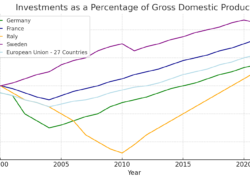
Germany is facing increasing pressure to reform its strict debt brake rules, with policymakers advocating for changes that balance fiscal responsibility and long-term investment. The current framework, which significantly limits government borrowing, has been criticized for hindering public investment and placing an unfair burden on future generations. Experts argue that a revised intergenerational debt rule is necessary to ensure economic stability, infrastructure development, and sustainability while preventing excessive debt accumulation.

The debt brake, introduced into Germany’s Basic Law in 2009, restricts the federal government’s structural new debt to 0.35% of GDP annually, allowing for minor flexibility in economic downturns. The Federal Constitutional Court further tightened its application in a landmark ruling in November 2023, making it harder for governments to justify exceptions. Supporters of the rule argue that keeping debt levels low ensures economic resilience and prevents future financial crises. However, critics contend that it prevents essential investments in infrastructure, digitalization, education, and climate protection, ultimately harming future generations rather than securing their prosperity.

A proposed reform introduces four key changes aimed at balancing fiscal discipline with economic growth. The first change suggests a nominal expenditure rule, allowing debt to grow in line with nominal potential GDP growth rather than being arbitrarily capped. This adjustment would stabilize Germany’s debt ratio at around 60% of GDP, aligning it with European fiscal norms while ensuring the state can act during economic downturns. The second change calls for reintroducing a Golden Rule, which would exempt public investment from debt limits, ensuring net investment remains positive to prevent deterioration of public infrastructure. Meanwhile, public consumption spending would shrink proportionally to demographic changes, optimizing government expenditure efficiency.

The third aspect of the reform focuses on implicit sovereign debt, including long-term liabilities in social security and climate adaptation costs. Currently, Germany’s aging population and increasing climate-related obligations pose significant financial risks. Under the proposed rules, these liabilities should decrease in line with declining employment potential to prevent overburdening younger generations. The final pillar of the reform addresses equity in government spending, ensuring that investments benefit all social groups, particularly those in structurally weaker regions. This measure aims to secure equal opportunities and a fairer distribution of public resources.

The debate over reforming the debt brake has gained momentum as even traditionally conservative parties, including the CDU/CSU, acknowledge the need for adjustments. With Germany’s economic future at stake, policymakers face a crucial decision: maintain a rigid fiscal policy that limits growth or adopt a modernized debt rule that balances sustainability with economic progress. Whether this reform moves forward depends on political consensus, but one thing is clear: Germany must rethink its approach to public debt if it wants to ensure prosperity for future generations.

Source: DIW Berlin

Rent prices soar across Europe in 2024: Is buying a home a better alternative?

Rent prices across European capitals have surged dramatically in 2024, forcing many residents to reconsider whether living in the city center is still financially viable. With the cost of leasing rising faster than wages, more people are questioning whether purchasing a home, despite the challenges of securing a mortgage, is a better long-term solution. However, with home prices also climbing in many markets, the decision remains complex.

Throughout the past year, major cities such as London, Paris, Berlin, Madrid, and Amsterdam have recorded rent increases ranging from 10% to 25%, with some central districts experiencing even steeper hikes. In London, the average monthly rent for a one-bedroom apartment in the city center now exceeds GBP 2,500 (EUR 2,900), a 15% increase from 2023. Berlin has also seen unprecedented rent spikes, with costs jumping by 20%, putting additional pressure on young professionals and students. Paris, already among the most expensive cities in Europe, has witnessed rental price growth of over 18%, prompting many residents to relocate to more affordable commuter towns. The reasons behind this sharp increase vary, with supply shortages, inflation, high demand from returning remote workers, and the dominance of short-term rental platforms all playing a role in reducing the availability of long-term rental properties.

The Central European housing market has faced similar challenges, with cities like Warsaw, Prague, and Budapest experiencing their own rental crises. Warsaw has seen an influx of young professionals and international investors, pushing up demand for both rentals and home purchases. In Prague, rental prices have surged by over 15% in the past year, making it increasingly difficult for local residents to secure affordable housing. Budapest, known for its historically lower housing costs, has also recorded significant rental price growth, leading many renters to consider alternative locations or homeownership as a solution.

As rental costs continue to climb, many individuals and families are evaluating the benefits of taking out a mortgage instead of continuing to rent. Mortgage rates across Europe have been fluctuating, with some stabilizing at lower levels compared to 2023, making homeownership a more attractive option for those who qualify. In Germany, interest rates on mortgages have declined to 3.5%-4%, while in France, they now average 3.2%, allowing more first-time buyers to enter the market. Spain and Italy have seen rates settle between 3.8%-4.5%, providing slightly better conditions for prospective homeowners than during the height of the inflation crisis.

Despite the appeal of homeownership, affordability remains a significant challenge, particularly in capital cities where property prices have soared. Many potential buyers struggle with the need for large down payments, often requiring 20-30% of the property value, and must meet strict lending criteria imposed by banks. For many, securing a mortgage is still out of reach, leading to a growing trend of migration toward suburban areas and smaller regional cities where housing costs are more manageable.

Across Europe, suburban and secondary cities are becoming increasingly attractive as people seek relief from high urban rental prices. The demand for housing in areas surrounding Paris, London, Berlin, and Madrid has surged, driving up home prices in well-connected commuter towns. In Poland, cities like Łódź and Wrocław have become more popular among those priced out of Warsaw. In the Czech Republic, Brno and Ostrava are seeing an influx of new residents searching for more affordable housing options compared to Prague. Similarly, in Hungary, Debrecen and Szeged have gained traction as alternatives to Budapest, offering lower living costs while still providing strong job opportunities.

For many renters considering homeownership, the decision ultimately depends on their financial situation, job stability, and long-term plans. If mortgage rates continue to decline and housing supply increases, buying a home may offer greater financial security and investment potential. However, for those uncertain about their future living arrangements or unable to afford a large down payment, renting still provides the flexibility and lower upfront costs that many value.

As the housing crisis deepens across both Western and Central Europe, governments and financial institutions are under increasing pressure to address affordability concerns and ensure access to fair housing options. Whether renting or buying, finding affordable housing in European capitals is becoming increasingly challenging, making 2025 a pivotal year for the region’s real estate market.

Polish housing market poised for continued growth: 8% in 2025, 10% in 2026-2027

The Polish housing market is set to continue its upward trajectory, with an expected growth of approximately 8% in 2025, followed by an acceleration to 10% annually in 2026-2027, according to Marta Petka-Zagajewska, Director of the Macroeconomic Analysis Office.

“The negative trend in housing loans, which had slowed the market in previous years, was effectively reversed in 2024, marking an 8% increase in activity. We anticipate a similar rate of expansion in 2025. While we don’t expect the high-paced dynamics of the past decade, primarily due to monetary policy constraints, we foresee a stabilization of interest rates at around 3.5%, allowing for an accelerated housing market growth of approximately 10% per year by 2026-2027,” Petka-Zagajewska stated during a briefing with journalists.

Despite recent fluctuations, structural factors indicate substantial room for continued growth in Poland’s real estate sector. Housing availability per capita remains below EU averages, highlighting an ongoing undersupply of residential units. Currently, Poland has approximately 420 apartments per 1,000 inhabitants, significantly lower than the EU average of over 500.

“One of the key drivers of housing demand is the mortgage market, which has doubled in size over the last eight years,” Petka-Zagajewska added. This indicates that more Poles are relying on mortgage financing to purchase homes, reflecting an increasing appetite for property ownership despite challenges such as inflationary pressures and fluctuating interest rates.

A critical factor influencing the housing market’s performance is the monetary policy stance of Poland’s central bank. Interest rates, which had been restrictive in previous years, are expected to stabilize at around 3.5%, creating a more predictable borrowing environment. As a result, demand for housing loans is likely to remain strong, further supporting market expansion.

PKO Bank Polski, Poland’s largest banking institution, continues to play a leading role in financing housing purchases. As of the end of 2023, the bank’s total assets reached PLN 501.5 billion, reinforcing its dominance in the mortgage lending sector. Since its listing on the Warsaw Stock Exchange (WSE) in November 2004, PKO Bank Polski has been an integral part of the WIG20 index, reflecting its importance in Poland’s financial landscape.

Looking ahead, the anticipated growth rate of 10% per year in 2026-2027 is expected to be driven by a combination of economic stability, improved mortgage conditions, and increasing housing demand. While challenges such as land availability, construction costs, and regulatory factors remain, the fundamental need for housing in Poland remains strong, ensuring continued expansion of the real estate sector.

As economic confidence improves and interest rates stabilize, Poland’s housing market is well-positioned for a robust period of growth, making it an attractive sector for both domestic and foreign investors in the coming years.

Source: ISBnews

Berlin Hyp successfully issues EUR 1.5 billion dual tranche Pfandbrief, including green bond

Berlin Hyp has successfully issued a dual tranche Pfandbrief with a total volume of €1.5 billion, combining a €1 billion conventional Pfandbrief with a €500 million Green Pfandbrief. The issuance attracted strong investor demand, underscoring the market’s confidence in Berlin Hyp’s financial strength and its commitment to sustainable finance.

The four-year conventional Pfandbrief, set to mature in February 2029, carries an interest coupon of 2.625%, while the seven-year Green Pfandbrief, maturing in November 2032, offers a 2.750% coupon. Both bonds are rated Aaa by Moody’s, with reoffer yields of 2.693% and 2.862%, respectively.

The issuance saw overwhelming investor interest, with the order books opening at 8:45 a.m. on Tuesday. Syndicate banks, including ABN AMRO, Barclays, BayernLB, Commerzbank, Credit Agricole, DekaBank, DZ BANK, Erste Group, HSBC, JP Morgan, LBBW, Natixis, Nordea, UBS, and UniCredit, initially set the spread at mid-swap +35 basis points for the four-year bond and mid-swap +45 basis points for the Green Pfandbrief. Hauck Aufhäuser Lampe Privatbank acted as co-lead manager.

By 10:00 a.m., orders had already surpassed €5 billion, with strong demand concentrated on the four-year bond, which accounted for €3 billion of orders. By 11:00 a.m., the reoffer spreads were fixed at mid-swap +28 and mid-swap +39 basis points. When the books closed at 11:15 a.m., the final order volume reached €6.2 billion, with €3.6 billion allocated to the four-year Pfandbrief and €2.6 billion to the seven-year Green Pfandbrief.

The issuance attracted participation from more than 170 investors, with over 50% of the bonds placed internationally. Investors from Nordic countries showed particularly strong interest. The largest investor group was banks, which accounted for 52% of orders for the four-year bond and 58% for the seven-year Green Pfandbrief. Funds followed with 29% and 31%, while savings banks contributed 12% and 19%, respectively.

Teresa Dreo-Tempsch, Board Member responsible for capital market business at Berlin Hyp, expressed satisfaction with the successful placement, emphasizing that the dual tranche structure and the inclusion of an ESG-labeled bond resonated well with investors.

“We are very pleased with the strong demand for this issuance. The high oversubscription and quality of the order book demonstrate investors’ trust in Berlin Hyp. By offering a combination of four-year and long seven-year maturities, alongside the ESG focus of the Green Pfandbrief, we effectively aligned with market preferences. I would like to thank our investors for their continued confidence and support,” said Dreo-Tempsch.

Berlin Hyp’s latest dual-tranche issuance not only strengthens its position in the covered bond market but also reinforces its commitment to sustainable finance, further integrating green financing into its capital market strategy.

Slovakia urges European commission to toughen measures against unfair supermarket practices

Slovakia is calling on the European Commission to intensify its crackdown on unfair supermarket practices, arguing that current regulations fail to protect local farmers and food producers from predatory pricing and abusive supply chain tactics used by large retailers. The Slovak government has formally requested a review and reinforcement of the EU’s Unfair Trading Practices Directive (UTP), citing concerns over the dominance of multinational supermarket chains in the country’s retail sector.

Unfair Practices Hurting Slovak Farmers and Suppliers

Slovak officials argue that big retail chains are using their market power to impose unfavorable conditions on local producers, such as delayed payments, excessive discount demands, and forced contributions to promotions. The government is pushing for stricter EU-wide enforcement to ensure that suppliers, particularly small and medium-sized agribusinesses, are not exploited in negotiations with dominant supermarket players.

Minister of Agriculture Richard Takáč has warned that unfair trading practices are undermining Slovakia’s food security and local production capacity. “Slovak farmers and food producers are struggling to compete against large supermarket chains that dictate prices, impose unfair contract terms, and prioritize cheaper foreign imports,” Takáč stated. “Without stronger regulation at the EU level, we risk further dependence on external food sources and the decline of domestic agriculture.”

Slovakia Wants Tougher EU Rules

Slovakia’s proposal to the European Commission calls for more stringent penalties for violations, stricter enforcement mechanisms, and greater transparency in pricing and contract negotiations between supermarkets and suppliers. The government is also advocating for a shorter payment deadline for perishable goods, ensuring that farmers and food producers receive faster and fairer compensation for their products.

In addition, Slovakia is urging more oversight on supermarket pricing strategies, arguing that unfair price squeezing is driving local farmers out of business. The government wants the Commission to consider limits on excessive discounting strategies that hurt domestic suppliers while benefiting large multinational retailers.

Supermarket Chains Push Back

Major supermarket operators in Slovakia have rejected the government’s claims, arguing that their pricing and procurement policies align with EU regulations. They warn that stricter controls on retail pricing and supplier agreements could lead to higher consumer prices and reduced product diversity in stores.

“We operate within EU competition rules and provide fair opportunities for suppliers across Europe,” a spokesperson for a major retail chain stated. “Further restrictions could harm competition and ultimately increase prices for Slovak consumers.”

EU’s Response and Next Steps

The European Commission has acknowledged Slovakia’s concerns and has committed to assessing the effectiveness of current UTP enforcement. The Commission’s Directorate-General for Agriculture and Rural Development (DG AGRI) is currently reviewing compliance reports from member states, with a decision expected later this year on whether additional measures will be introduced.

Slovakia’s push for tighter supermarket regulations comes amid broader EU discussions on fair competition in food supply chains, as several member states have raised similar concerns about the power imbalance between large retailers and small suppliers.

If Slovakia’s efforts gain traction, the EU could introduce stricter controls on supermarket practices, increase penalties for violations, and enforce stronger protections for local producers, potentially reshaping the retail landscape across Europe.

Cyber attacks on Czech bank clients surge by nearly 18,000 in 2024

The number of cyber attacks targeting clients of Czech banks rose significantly in 2024, reaching 87,407 cases, an increase of 17,722 incidents compared to the previous year. The total financial damage caused by these attacks climbed slightly to CZK 1.39 billion, although the average loss per victim decreased by CZK 3,500 to CZK 15,952. These findings were presented by the Czech Banking Association (ČBA) at a press conference, where it was also revealed that banks successfully prevented losses totaling CZK 7.95 billion through enhanced security measures.

According to Dušan Baran, Executive Director of the ČBA, these figures reflect the effectiveness of banks’ security protocols and their investment in advanced technologies, including artificial intelligence (AI), which is playing an increasingly crucial role in detecting and preventing fraudulent transactions.

While cyberattacks on bank clients surged, the overall number of cybercrime cases recorded by police declined by 6%, with 18,495 cases reported in 2024, averaging 51 incidents per day. Ondřej Pence from the Czech Police Prevention Department emphasized that public awareness remains a key deterrent to cybercrime. He highlighted the importance of information-sharing within families, which helps protect individuals from falling victim to fraud.

AI was also the focus of the #nePINdej! campaign, an educational initiative by the ČBA aimed at enhancing digital security awareness. Between September and December 2024, 176,921 people participated in the CyberTest, marking a 12% increase in engagement compared to the previous year. The average test score remained at 73%, with the highest success rate (80%) recorded among individuals aged 26 to 55. The most vulnerable group continues to be young people aged 12 to 17, who scored an average of 68%, highlighting their increased risk of cyber threats.

A recent ČBA and Ipsos survey found that younger users are less cautious when opening email attachments and check their bank accounts less frequently, making them a primary target for cybercriminals. In response, the Czech Banking Association launched CyberGame, a nationwide cybersecurity competition aimed at students in 7th to 9th grades of elementary schools and multi-year grammar schools. More than 10,000 students from 410 classes across the country participated.

Zdeňka Hildová, Director of ČBA Educa, explained that the competition was designed to help young people recognize online risks in a fun and interactive way. With cybercriminals increasingly targeting younger users, initiatives like CyberGame aim to equip students with the knowledge and skills to stay safe online while fostering greater awareness of digital security threats.

Source: ČBA Educa, Ipsos and CTK

Czech Senate rejects new solar power plant controls and urban building restrictions

The Czech Senate has rejected proposed changes to the Energy Act—known as Lex RIZ III—which included stricter individual inspections of solar power plants and a controversial limitation on urban building regulations. The amendment, originally intended to introduce rules for electricity storage and aggregation, will now be reassessed by the Chamber of Deputies, which had inserted the disputed provisions.

Senators opposed the requirement for individual profitability evaluations of solar power plants with an output above 30 kilowatts, commissioned in 2009 and 2010. Additionally, efforts by Miloš Vystrčil and Zdeněk Nytra (both ODS) to restrict inspections to plants generating more than 145 kilowatts were unsuccessful. While Nytra estimated the measure would affect 500 to 3,000 operators, the Czech Solar Association later clarified that approximately 1,350 power plants would be impacted.

Parliamentary proponents of the controls argue that they would help the state reduce financial support for renewables in 2025. Critics, however, claim that the measures change regulations mid-course, create administrative burdens for plant operators, and could lead to arbitration disputes. They also warn of potential conflicts with EU regulations and risks to the Czech Republic’s climate commitments. Miroslav Plevný (STAN) described the new controls as a “harsh restriction and arbitrary interference in the business environment.”

Another contested provision of the amendment sought to eliminate territorial requirements for urban development in cities like Prague, Brno, and Ostrava, which currently have municipal building regulations. If implemented, cities would no longer be able to mandate underground technical infrastructure, public lighting, traction lines, or tree planting in new developments. The Senate unanimously recommended removing this restriction, following a proposal by senators from ODS, STAN, and ANO.

The government has allocated CZK 8.5 billion for renewable energy support this year, the same as in 2024. Under current rules, the Ministry of Industry and Trade (MIT) had projected a CZK 31.2 billion budget for 2025. Prime Minister Petr Fiala (ODS) previously stated that if reductions in financial aid fail, the state will cover the cost this year.

The push for stricter solar power plant controls was led by Finance Minister Zbyněk Stanjura (ODS), who insists that the measures align with European and Czech legal frameworks. He argued that increased scrutiny is necessary to prevent operators from receiving excessive state subsidies. Industry and Trade Minister Lukáš Vlček (STAN) supported the Finance Ministry’s efforts, stating they were legitimate and necessary. The amendment also extends state support for high-efficiency cogeneration electricity sources with installed capacities above 5 MWe, provided they were commissioned by 31 December 2012, until the end of 2029.

Beyond the solar power provisions, the amendment aims to introduce consumer protections, including an independent price comparator for electricity and gas. The Energy Regulatory Office (ERÚ) will manage the platform, enabling customers to compare utility offers. Additionally, the law is designed to enhance grid stability, facilitate the integration of renewable energy, and encourage investment in energy storage.

The amendment was the final agenda item in the Senate’s January session, with the next meeting scheduled within a month. The Chamber of Deputies will now decide whether to revise or uphold the contested provisions.

Source: CTK

Genesis Property appoints Ionel Purice as CEO to lead future growth

Genesis Property, one of Romania’s leading office building owners, has appointed Ionel Purice as Chief Executive Officer (CEO). With over 15 years of experience in the construction industry, including five years within Genesis Property, Purice has played a key role in shaping the company’s strategic vision, driving innovation, and enhancing workplace experiences.

Before assuming the CEO position, Purice led Genesis Development, part of the Genesis Property Group founded by entrepreneur Liviu Tudor. In this role, he oversaw major construction projects and led the transformation of YUNITY Park, an innovative business campus designed to redefine modern work and living environments. His expertise spans complex real estate developments, including large-scale shopping centers and residential projects, with responsibilities covering construction management, project execution, budget oversight, and process optimization.

Liviu Tudor, President and Founder of Genesis Property, emphasized that Purice’s appointment marks a strategic milestone for the company. He highlighted Purice’s visionary leadership, stating that his ability to turn challenges into opportunities will drive Genesis Property’s continued growth and industry leadership. Tudor expressed confidence that under Purice’s guidance, the company will explore new horizons and maintain its commitment to innovation, sustainability, and excellence.

As CEO, Ionel Purice will be responsible for steering Genesis Property’s long-term strategic direction. Working alongside Liviu Tudor, he will oversee the company’s major developments, ensuring its continued expansion and leadership in Romania’s real estate sector. He emphasized his commitment to strengthening the company’s core values and reinforcing its market position. Purice described Genesis Property as having a strong foundation built on vision and dedication, and he aims to further establish it as a trusted leader in Romania’s commercial real estate industry.

A key priority for Genesis Property under Purice’s leadership will be the completion of YUNITY Park’s final phase, a landmark business campus that blends workplace innovation with lifestyle-focused amenities. The first two phases, completed in 2023, represented an investment of over €30 million, while the upcoming Innovation Center, set for completion this year, will add an additional €20 million investment. The project features a 1,500-seat open-air amphitheater, two kilometers of pedestrian walkways, cascading water mirrors, an urban forest, and creative meeting spaces, creating an integrated work-life environment for professionals.

With Purice at the helm, Genesis Property is set to continue its transformation, reinforcing its role as a pioneer in Romania’s real estate market through cutting-edge developments and sustainable growth initiatives.

PORR begins construction on new section of Prague’s ring road

Prague’s ring road, a major infrastructure project designed to ease traffic congestion and provide a motorway bypass for the Czech capital, is moving forward with the construction of a new section. PORR, in partnership with two companies from the French VINCI Construction Group, has begun work on the Běchovice–D1 segment under a 50/50 consortium agreement. The project carries a contract value of approximately EUR 385 million.

Karl-Heinz Strauss, CEO of PORR, emphasized the project’s significance, calling it one of the largest road construction developments currently underway in the Czech Republic. He highlighted the economic and logistical importance of the Prague Ring Road, noting that PORR’s expertise in international motorway construction will play a crucial role in its successful completion.

Once fully completed, the 83-kilometre Prague Ring Road will function as a six-lane motorway, streamlining traffic flow throughout the city. It will connect nine major motorways leading from Prague to neighbouring regions and countries, helping to redistribute suburban and transit traffic more efficiently.

The Běchovice–D1 section, expected to be completed within four years, will be particularly crucial for relieving congestion in eastern Prague. Current projections indicate that by 2030, between 70,000 and 80,000 vehicles will use this route daily, significantly reducing pressure on Prague’s main traffic arteries.

The complex engineering scope of the project includes 19 bridges spanning nearly 2 kilometres and two cut-and-cover tunnels. Given its proximity to residential areas, the construction process requires meticulous planning. Excavation alone is expected to reach 4 million cubic meters of material, requiring alternative transport routes for material delivery and removal to minimize disruptions for local communities.

To address environmental concerns and reduce noise pollution, extensive protective measures are incorporated into the project. These include green belts, earth embankments, and 4 kilometres of noise barriers to ensure minimal impact on surrounding neighbourhoods.

As the largest infrastructure investment in Prague’s transport network, the ring road project is set to play a key role in modernizing the city’s transportation system, improving regional connectivity, and supporting economic growth in the Czech Republic.

LATEST NEWS