Germany approves record-low number of new apartments in over a decade

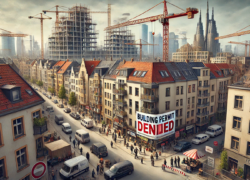
Germany’s housing crisis has deepened as new data reveals that the country approved the construction of the fewest apartments in over a decade last year. The Federal Statistical Office (Destatis) reported that the number of building permits issued in 2024 fell sharply, highlighting the growing challenges facing the construction sector amid rising costs, regulatory hurdles, and economic uncertainty.

The decline in approvals marks the lowest level since 2012, underscoring the struggle to meet the government’s ambitious housing targets. In total, only around 230,000 new apartments received construction permits in 2024, a drop of 28% compared to the previous year. The slowdown is particularly concerning as Germany faces an acute housing shortage, with demand for affordable homes far outpacing supply, especially in major cities like Berlin, Munich, and Hamburg.

Experts attribute the downturn to a combination of factors, including soaring construction costs, high interest rates, and stricter environmental regulations. Inflation in building materials and labor shortages have made it increasingly difficult for developers to complete projects within budget, leading many to delay or cancel plans. Additionally, financial constraints caused by tighter lending conditions have discouraged investment in residential projects.

The situation presents a major setback for the federal government, which had set a target of building 400,000 new homes per year to address the housing shortage. The sharp drop in approvals signals that this goal remains far out of reach, raising concerns about rising rents and worsening affordability for millions of Germans.

“The figures are alarming and show that urgent action is needed to revive the housing market,” said Andreas Gey, a housing market analyst at the German Institute for Economic Research (DIW). “Without significant policy intervention, we risk seeing an even greater shortfall in new housing in the coming years, which will further drive up prices and put pressure on low- and middle-income households.”

In response to the crisis, the German government has pledged to introduce new incentives for developers, including tax breaks and subsidies for energy-efficient housing projects. However, industry leaders argue that more comprehensive measures, such as streamlining approval processes and reducing bureaucratic hurdles, are necessary to stimulate construction activity.

Meanwhile, housing advocacy groups warn that the slowdown in new developments will worsen homelessness and force more people into precarious living conditions. Calls for rent control measures and increased public investment in social housing have intensified as the crisis escalates.

With Germany’s housing shortage reaching critical levels, policymakers face mounting pressure to implement reforms that can accelerate construction and ensure that new housing supply keeps pace with demand. Whether the government’s planned measures will be enough to reverse the trend remains to be seen, but the latest figures highlight the urgent need for action to prevent a long-term housing crisis.
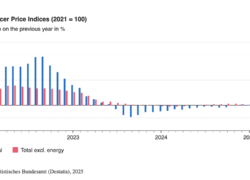

Producer prices in Germany see modest increase in January 2025

The Federal Statistical Office (Destatis) has reported that producer prices of industrial products in Germany were 0.5% higher in January 2025 compared to the same month in 2024. This marks a slowdown from the 0.8% increase recorded in December 2024. On a month-to-month basis, producer prices fell slightly by 0.1% from December 2024 to January 2025.

The primary driver of the year-on-year increase in producer prices was the higher cost of non-durable consumer goods. Additionally, capital goods and durable consumer goods also recorded price increases, whereas energy and intermediate goods experienced a decline. When excluding energy prices, producer prices increased by 1.2% year-on-year and by 0.3% compared to the previous month.

Energy prices in January 2025 continued their downward trend, falling by 1.0% compared to the same period last year. Compared to December 2024, energy costs declined by 0.9%, with the most significant impact coming from falling electricity prices, which dropped by 1.8% year-on-year and 2.5% from the previous month. Natural gas distribution costs also decreased by 1.9% compared to January 2024 and 2.8% from December 2024. Similarly, district heating was 1.5% cheaper on both an annual and monthly basis. However, the cost of mineral oil products increased, rising 0.7% year-on-year and 4.4% compared to the previous month. Heating oil prices surged by 1.9% from January 2024 and saw a significant 10.1% jump from December 2024, while motor fuel prices rose by 0.5% year-on-year and 5.6% month-on-month.

Non-durable consumer goods recorded the most substantial price increase, rising by 3.0% year-on-year and 0.5% compared to December 2024. Food prices saw a significant uptick, with butter prices surging by 39.8% year-on-year, though they declined slightly by 0.3% from the previous month. Other notable increases included confectionery, which rose by 24.0% compared to January 2024, and beef prices, which climbed 18.0% on an annual basis. On the other hand, sugar prices saw a sharp decline of 33.8% compared to the previous year, while pork and cereal flours were 8.8% and 4.1% cheaper, respectively.

Durable consumer goods were 1.1% more expensive than in January 2024, with a 0.4% increase compared to December 2024. Capital goods followed a similar trend, increasing by 1.9% year-on-year and 0.8% month-on-month. Machinery prices climbed by 1.9% compared to January 2024, while the cost of motor vehicles, trailers, and semi-trailers increased by 1.4%.

Intermediate goods, however, saw a slight decline in prices, falling by 0.1% year-on-year. Compared to December 2024, prices remained unchanged. Notably, glass and glass products were 4.8% cheaper than a year earlier, with flat glass prices experiencing a sharp 16.4% decline. Feed for farm animals also saw a decrease of 1.3% compared to January 2024. Meanwhile, the cost of basic chemicals remained unchanged year-on-year.

Certain intermediate goods recorded price increases. The prices of stone, gravel, sand, clay, and kaolin rose by 3.4% compared to January 2024, while plaster products for construction purposes saw a 4.6% increase. Additionally, the prices of electric transformers climbed 2.3%, and wiring and wiring devices became 1.0% more expensive.

The wood industry also recorded a mixed trend. While the overall price of wood and wood products rose by 2.5% compared to January 2024, coniferous timber experienced a significant increase of 11.4%. Conversely, non-coniferous timber prices fell by 5.7%, and particle boards declined by 1.1%.

In the metals sector, prices rose by a marginal 0.1% compared to January 2024 but declined by 0.1% from the previous month. Copper and semi-finished copper products saw a sharp increase of 9.4% year-on-year. In contrast, basic iron, steel, and ferro-alloys were 8.9% cheaper than in January 2024, while concrete reinforcing bars saw a 2.6% price drop year-on-year.

The latest data indicate that while certain consumer goods continue to see price increases, declines in energy and select industrial commodities have helped to temper overall inflationary pressures in the German economy.

Czech Financial Administration uncovers CZK 540 Million tax evasion in gambling sector

The Financial Administration of the Czech Republic has successfully prevented tax evasion in the gambling sector amounting to CZK 540 million. Through a specialized financial department, authorities identified discrepancies in financial flows within casinos and gambling operators for the years 2021 and 2022. The findings were made public in a press release yesterday.

The tax evasion was uncovered through a detailed analysis of gaming data, which revealed unusual player behavior and suspicious financial transactions. During an inspection of a gambling operator, the authorities detected irregularities that led to an additional tax assessment of CZK 340 million. The audit further uncovered errors in the reporting of fees and commissions, resulting in an extra tax obligation of CZK 200 million.

“Gambling is a highly regulated sector with significant tax revenues, which is why it is crucial for us to systematically minimize opportunities for illegal practices. This achievement demonstrates that our efforts have a tangible impact on market fairness and tax collection,” stated Otakar Sladkovský, Director of the Specialized Tax Office.

Although gambling tax is a relatively smaller contributor to the state’s overall tax revenues, it remains an important source of income. Last year, gambling taxes generated CZK 20.6 billion, reflecting a 12.5 percent increase compared to the previous year. Of this amount, CZK 14.2 billion was allocated to the state budget, while the remaining funds were distributed among municipal budgets. In total, tax revenues for the previous year, excluding compulsory insurance premiums, amounted to CZK 1.42 trillion.

The Financial Administration’s latest success underscores its commitment to enforcing tax compliance and ensuring a level playing field in the gambling industry. Authorities continue to strengthen oversight and employ advanced data analysis to detect fraudulent activities and safeguard public finances.

Source: CTK

Czech Banking Association predicts 2.1% GDP growth in 2025 amid risks of trade wars

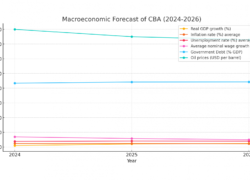
The Czech Banking Association (CBA) has revised its economic forecast for 2025, predicting a 2.1% increase in GDP, signaling a gradual economic recovery following last year’s 1% contraction. Growth is expected to accelerate to 2.4% in 2026, but risks related to global trade wars could dampen the outlook by 0.3 percentage points per year, the association warned.

Despite the overall optimistic trajectory, the latest forecast marks a downgrade from the 2.3% growth previously projected for 2025 and the 2.6% forecast for 2026 in November. The CBA attributes the adjustment to external risks, particularly ongoing geopolitical tensions and trade protectionism that could disrupt supply chains and impact exports.

Inflation is expected to remain at last year’s level of 2.4% in 2025, before slowing slightly to 2.2% in 2026. The CBA maintains its expectation that household consumption will be the primary driver of economic growth, projecting a 2.6% increase in 2025, followed by 2.7% in 2026. Investments, which declined by 1.9% last year, are also anticipated to recover, further stimulating economic expansion.

“There is broad consensus among CBA members that the Czech economy will continue to accelerate. We anticipate GDP growth surpassing 2% this year and potentially reaching 2.5% in 2026. However, this scenario assumes that large-scale trade wars do not emerge, as they pose a real risk to global economic stability,” said Pavel Sobíšek, Chief Economist at UniCredit Bank.

Even with the possibility of trade wars slowing growth by 0.3 percentage points, Sobíšek emphasized that it should not significantly disrupt the Czech economy’s overall recovery.

The labor market is expected to remain stable, though unemployment is set to rise slightly to 4.1% in 2025, up from 3.8% last year. However, the CBA predicts a modest decline to 4% in 2026, as employment in other sectors compensates for job losses in export-driven industries.

“The unemployment rate should not rise significantly from current levels. The risk for the labor market is a prolonged decline in export-oriented industries, which may not be fully offset by job creation in other sectors such as services and public administration,” explained Jan Bureš, Chief Economist at Patria Finance.

Wages, meanwhile, are expected to continue growing but at a slower pace. The CBA anticipates nominal wage growth slowing to 5.8% in 2025, down from 6.9% last year. However, real wages—adjusted for inflation—should increase by 3.3% this year, marking progress toward pre-pandemic salary levels, which the association expects to be fully restored by 2026.

According to the forecast, real wages will only surpass their 2021 peak in 2027, underscoring the long-term economic impact of the pandemic, inflation, and global uncertainty.

The Czech National Bank (CNB) is expected to continue easing monetary policy, with the key interest rate projected to decline from 3.75% to 3.25% by the end of 2025. The downward trend should continue into 2026, when the rate is expected to reach 3%.

The Czech koruna is also forecast to strengthen, with the exchange rate expected to fall below CZK 25 per euro by the end of the year, continuing its appreciation trend into 2026.

“Trade wars pose a negative risk to the koruna, though this could be partially offset by U.S. efforts to pressure Russia to end its aggression in Ukraine,” noted Jaromír Šindel, Chief Economist at the CBA.

The CBA’s projections align closely with the CNB’s latest estimates, which forecast 2.0% GDP growth for 2025, but are slightly more conservative than the Ministry of Finance’s January outlook of 2.3% growth.

Similarly, inflation expectations are largely in agreement, with the CNB predicting 2.4% inflation in 2025, while the Ministry of Finance projects a slightly lower rate of 2.3%.

While the Czech economy is set for moderate expansion, external risks—particularly trade wars—pose potential threats. Should global protectionism escalate, it could disrupt supply chains, impact exports, and dampen growth prospects.

However, the combination of rising household consumption, wage recovery, and a resilient labor market provides a solid foundation for economic stability. With gradual monetary easing and strengthening currency trends, the Czech economy appears well-positioned to navigate uncertainties while maintaining steady growth in the years ahead.

Source: CTK

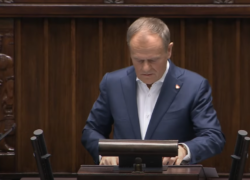
Prime Minister Donald Tusk calls for unity amid political divisions and geopolitical challenges

Polish Prime Minister Donald Tusk addressed the Sejm with a passionate appeal for national unity, urging all political forces to work together in guiding Poland through what he described as a dangerous period in history. His speech followed the rejection of a motion of no confidence against Minister for Equality Katarzyna Kotula, a move widely regarded as politically motivated by the opposition. Tusk strongly defended Kotula, denouncing the accusations against her as ideologically driven and symptomatic of broader political prejudices against equality and democracy.

The motion of no confidence, put forward by opposition parties, accused Kotula of policies that allegedly undermined traditional values. However, the Prime Minister dismissed these claims, asserting that the real reason behind the attempt to remove her from office was the opposition’s long-standing resistance to policies promoting gender equality and social justice. He pointed out that the opposition’s rhetoric was rooted in deep-seated aversion to progressive social policies, rather than substantive criticisms of Kotula’s performance as minister.

“The only reason this motion of no confidence has come up is because of your attitude towards women, gender equality, and women’s safety. It is not a question of merit, but a deep-rooted aversion to equality and democracy,” said Tusk, addressing the members of the opposition party Law and Justice (PiS).

Tusk praised Kotula’s dedication to public service, describing her as a responsible and professional politician committed to the government’s policies. He emphasized that, despite holding strong views, she had acted with moderation and integrity, countering opposition claims that she was divisive. He also criticized the opposition’s lack of commitment, highlighting the empty benches in the Sejm when the motion was introduced, which he called symbolic of the weakness of their accusations. Ultimately, the Sejm rejected the motion, allowing Kotula to remain in office.

Beyond defending his minister, Tusk used his speech to address broader concerns about Poland’s political climate, warning against escalating political divisions and emphasizing the need for a unified national strategy. He pointed to geopolitical threats, particularly in light of the ongoing war in Ukraine, as a reason why Poland’s leaders must put aside differences and focus on the country’s stability and security.

“We cannot expose Poland to any risk. We must take advantage of every slightest opportunity to ensure that Poland emerges from this crisis more secure, not more threatened. This depends on all of us—on extinguishing unnecessary emotions and on understanding the essence of the Polish raison d’état,” Tusk stressed.

He warned that the current divisive political climate was weakening Poland at a time when international stability was in jeopardy. He emphasized that national security concerns should transcend political rivalries, calling on leaders from all sides to engage in constructive dialogue. To facilitate this, he announced that during Monday’s meeting of the National Security Council, he would present a set of key policy points aimed at forming a cross-party consensus on Poland’s national interests.

Tusk also expressed concern over the increasing radicalization of public debate, condemning hate speech and political extremism. He warned that incendiary rhetoric and political aggression were not only causing deep social fractures, but also playing into the hands of foreign adversaries. He called for an end to political tactics that intensify hostility within Polish society.

“I don’t know how you feel about it. But I want to tell you that this type of behavior—exacerbating conflict, stirring up aggression, destroying people here in Poland—is really, objectively speaking, part of a dream scenario written in Moscow,” Tusk stated, making a direct reference to Russia’s influence on European politics.

He urged all political factions to take responsibility for ensuring stability and cooperation, rather than fueling division. He emphasized that, in the current international context, Poland needed political unity more than ever.

At the conclusion of his speech, the Prime Minister issued a final appeal for unity, urging all political representatives to put Poland’s national security and future prosperity above partisan interests. He stressed that, despite ideological differences, the country’s leaders had a shared duty to protect Poland’s interests during a historically challenging period.

“I still believe that this time Poles will act wisely—and, above all, that their representatives, the political forces, will do the same. I strongly urge you to think in this way. There is still a chance that we can guide Poland through this very dangerous time together,” Tusk implored.

The next major political test will come on Monday at 1:30 p.m., when President Andrzej Duda has convened a meeting of the National Security Council—coinciding with the third anniversary of Russia’s invasion of Ukraine. Tusk expressed hope that this meeting would provide a platform for meaningful discussions that could lay the groundwork for a common national strategy, strengthening Poland’s position on the international stage.

“At the meeting of the National Security Council, I will present several key points which, I believe, could form the basis for a general, universal agreement in Poland in favor of the Polish raison d’état at this absolutely historic moment,” he announced.

With tensions running high both domestically and internationally, Tusk’s call for unity will now be tested as Poland’s political leaders decide whether to heed his appeal or continue down a path of division.

Unemployment in Croatia rises to nine-month high amid economic uncertainty

Unemployment in Croatia has reached its highest level in nine months, with the number of registered unemployed rising to 97,341 in January 2025. This marks an increase of 5,778 people compared to December, highlighting a concerning trend at the beginning of the year. Data released by the Croatian Bureau of Statistics, as reported by RTTNews and TradingEconomics, confirms the ongoing labor market challenges facing the country.

The unemployment rate climbed to 5.4% in January, up from 5.1% in December, marking the highest level since April 2024, when it stood at 5.6%. While the latest figures indicate a recent spike in unemployment, they also reflect a notable year-on-year improvement, as the rate stood at 6.8% in January 2024. This suggests that, despite short-term fluctuations, the Croatian labor market has demonstrated some resilience over the past year.

The rise in unemployment at the start of 2025 is largely attributed to seasonal employment patterns in Croatia, a country whose economy is heavily reliant on tourism and service industries. During the summer months, thousands of temporary jobs are created in hospitality, retail, and transport sectors, leading to a significant drop in unemployment. However, as the winter season sets in, many of these jobs come to an end, resulting in higher jobless figures during the first quarter of the year.

Another factor contributing to the rise in unemployment is the economic slowdown that has affected several industries, including manufacturing and construction. Rising inflation, energy costs, and global uncertainties have also played a role in limiting business expansion and hiring. Despite government efforts to support employment through various stimulus packages, subsidies, and vocational training programs, the current economic climate continues to present challenges for both employers and job seekers.

Labor market experts suggest that unemployment may remain elevated in the coming months, particularly if economic growth does not accelerate. However, optimism remains for a rebound in the second quarter of the year, when tourism-driven hiring is expected to pick up ahead of the peak travel season. Additionally, new foreign investments in infrastructure, technology, and green energy projects could help boost employment opportunities in the long run.

The Croatian government continues to monitor the situation closely, with policies aimed at encouraging job creation and labor market flexibility. Measures such as incentives for startups, job retraining programs, and investment in digital transformation are seen as key tools in tackling unemployment and ensuring long-term stability in the labor force.

While the rise in unemployment raises concerns, it is not entirely unexpected given historical labor market trends. The key challenge will be ensuring that job seekers find stable and sustainable employment opportunities, particularly in industries less dependent on seasonal fluctuations. As Croatia navigates its economic path in 2025, the ability to adapt to shifting labor demands and global trends will be crucial in maintaining economic stability and workforce resilience.

Neom: Saudi Arabia’s futuristic mega-city takes shape in the Northwest

Neom, the ambitious $500 billion mega-city project in northwestern Saudi Arabia, is steadily transforming the desert landscape into one of the most advanced urban developments in the world. Announced by Crown Prince Mohammed bin Salman in 2017, Neom is at the heart of Vision 2030, the kingdom’s strategic plan to diversify its economy beyond oil. Designed as a hub for technology, innovation, tourism, and sustainability, Neom is being built along the Red Sea coast in Tabuk Province, covering an area of 26,500 square kilometers, making it 33 times larger than New York City.

At the core of Neom’s vision is The Line, a 170-kilometer-long, car-free city that will accommodate nine million residents in a linear urban structure. Unlike traditional cities, The Line will have two parallel skyscrapers stretching across the desert, with a futuristic design that integrates smart infrastructure, renewable energy, and artificial intelligence. With no roads or personal vehicles, The Line will rely on high-speed rail, ensuring that any journey across the city takes no more than 20 minutes. The development also prioritizes walkability and green spaces, aiming to preserve 95% of the surrounding natural environment.

In addition to The Line, Neom includes several other major projects. Oxagon, envisioned as the world’s largest floating industrial complex, is set to redefine advanced manufacturing and logistics, utilizing robotics, AI, and renewable energy. Positioned along the Red Sea, Oxagon is designed to be fully automated and powered by clean energy, ensuring zero-carbon emissions while enhancing global trade routes through its strategic port location.

Trojena, Neom’s mountainous tourism destination, is set to host the 2029 Asian Winter Games, making it the first city in the Middle East to hold such an event. Trojena will feature artificial lakes, luxury resorts, and year-round adventure sports, including skiing and water activities, powered entirely by renewable energy. The project aims to attract visitors seeking high-end ecotourism experiences, blending cutting-edge architecture with natural landscapes.

Another key component of Neom is Sindalah, an exclusive luxury island destination expected to welcome visitors by 2024. Featuring high-end resorts, golf courses, and a world-class marina, Sindalah will cater to elite tourists and yacht enthusiasts from around the globe. The island is positioned to rival Maldives and Monaco, offering high-end retail, fine dining, and entertainment venues.

Neom is also pioneering advancements in sustainable energy, biotechnology, and AI-driven urban planning. The city will be fully powered by renewable sources, including solar, wind, and green hydrogen, in line with Saudi Arabia’s commitment to carbon neutrality. Its urban planning integrates smart technologies, where AI and robotics will handle services such as security, healthcare, and infrastructure maintenance.

Despite its futuristic vision, Neom has faced challenges and controversy, particularly concerning displacement of local communities and human rights concerns. The Saudi government has worked to address these issues, emphasizing the economic and employment opportunities Neom will create, with an expected 380,000 jobs across various industries.

The scale and ambition of Neom make it one of the most significant projects in modern urban development. As construction progresses, global investors, tech leaders, and environmentalists are closely watching whether Neom will successfully redefine the future of urban living and sustainability. With its unprecedented vision, Neom aims to become a global model for smart cities, merging technology, nature, and human innovation in ways never seen before.

Photo: Giles Pendleton FRICS

Bratislava City Council approves zoning changes for Nové Lido development

The Bratislava City Council has officially approved amendments to the zoning plan for Nové Lido, a long-anticipated urban expansion that will reshape the right bank of the Danube. Based on an urban study from 2016, the changes will allow for a denser, more structured development, aligning with the vision of Nové Lido as an extension of Bratislava’s city center.

For nearly two decades, Nové Lido has been designated for development. Under the previous zoning plan, developers already had permission to construct up to 718,000 square meters of floor space. However, the newly approved amendments refine the district’s urbanism, introducing block-based architecture that enhances functionality and integrates housing, civic amenities, and public spaces in a more cohesive manner. The redevelopment will create a vibrant mixed-use district, featuring residential areas, green spaces, and improved transport connections to key Bratislava neighborhoods, including Petržalka, Staré Mesto, and Ružinov.

The project also envisions a comprehensive waterfront zone, offering spaces for sports and recreation, a city beach, and designated waterways for boating and small sports vessels. Despite these developments, the floodplain forest between the dam and the Danube will be preserved, with only minimal interventions to maintain accessibility while protecting the area’s natural ecosystem. Developers have pledged to keep as many existing trees as possible to maintain the environmental integrity of the site.

As part of their agreement with the city, developers will invest €75 million in public spaces and hand over at least 97 rental apartments, valued at approximately €25 million, to the ownership of Bratislava. These contributions will facilitate the creation of a waterfront park, a pedestrian promenade, and a bridge across the Danube linking M.R. Štefánik Square with Nové Lido’s central plaza. In addition, the project includes a primary school, which will be financed through a €26.5 million development fee, and the construction of a central park along with a bridge over Einsteinova Street to connect Nové Lido with Petržalka.

Beyond the commitments to public spaces, developers are set to invest an additional €95 million in transport infrastructure. This will include new road connections to Petržalka, along with the construction of roundabouts, sidewalks, and cycle paths that will be integrated into the city’s existing transport network. A key feature of the infrastructure plan is a 600-meter-long boulevard, which will be designed to accommodate a future tram extension, ensuring long-term accessibility and connectivity within the district.

The Nové Lido project represents one of the most significant urban expansions in Bratislava’s modern history, transforming the right bank of the Danube into a fully integrated, sustainable, and well-connected district. The newly approved zoning changes reflect a balance between economic development, environmental preservation, and public benefit, ensuring that the next phase of construction aligns with the city’s long-term urban vision. With developers contractually committed to significant public and infrastructure investments, Nové Lido is poised to become a dynamic extension of Bratislava’s city center, offering residents and visitors modern living spaces, extensive green areas, and improved connectivity across the capital.

Immocap adjusts new Istropolis plans as construction nears

After nearly five years of planning, Immocap is preparing to break ground on the long-awaited New Istropolis development. The project, which has undergone significant revisions since its initial unveiling in 2020, is now moving forward with a smaller community hall and the removal of the originally planned hotel.

Martin Šramko, CEO of Immocap, discussed these changes, the current state of the real estate market, and the broader vision for the project in an interview with INDEX. The real estate executive explained that market conditions, public feedback, and sustainability goals played key roles in reshaping New Istropolis.

The New Istropolis project was first presented in 2020, but progress was slowed by a lengthy permitting process and the impact of external global factors such as the COVID-19 pandemic, the war in Ukraine, rising energy costs, and inflation. Now, with a zoning permit secured, Immocap has reached an important milestone and expects to start construction this summer.

Despite delays, the vision for New Istropolis remains ambitious, combining public spaces, modern energy solutions, and a revitalized cultural hub. One of the most significant changes, however, is the downsizing of the planned community hall.

“Our, as well as the city’s, surveys showed that the optimal capacity for the hall is 3,000 people standing and 1,800 seated,” said Šramko, explaining why the venue was scaled down from its original design. While it will still be a key cultural and event space, the adjustments were made to better fit demand and ensure sustainability.

Key Adjustments and Project Enhancements

Since 2020, New Istropolis has undergone several key changes:
• Downsized Community Hall: Originally designed for a larger audience, the hall will now accommodate 3,000 standing and 1,800 seated guests to better reflect current demand.
• Removal of Hotel Component: The original masterplan included a hotel, but market trends and changing priorities led to its removal from the development.
• Enhanced Public Spaces: The updated design features two large squares and an inner-block park, offering more green and social spaces for the community.
• Introduction of the House of Technology: This addition strengthens the project’s focus on innovation and education, positioning New Istropolis as a hub for technological and business growth.
• Sustainable Energy Solutions: The project will introduce Slovakia’s first-ever central energy system, where buildings will share and exchange energy, making it one of the most sustainable developments in Central Europe.

“We made sure to meet the most stringent ESG criteria (environmental, social, and governance standards),” Šramko added, emphasizing that the project will be one of the most innovative and energy-efficient in the region.

Located in Bratislava’s Nové Mesto district, New Istropolis aims to revitalize the area while preserving its cultural and community significance. The project is expected to transform the former Trade Union House site into a modern, multi-functional district, with a focus on sustainability, public engagement, and urban connectivity.

As Immocap prepares to break ground later this year, the adjustments to the masterplan reflect both economic realities and a forward-thinking approach to urban development. The company remains optimistic that New Istropolis will become a landmark project that blends cultural heritage with contemporary city living.

With construction set to begin in the summer of 2025, Bratislava is one step closer to welcoming a new era for Istropolis—one designed with both the past and future in mind.

Photon Energy Group reports strong revenue growth and doubling of EBITDA in 2024

Photon Energy Group has reported a 26.3% increase in revenue for 2024, reaching CZK 2.24 billion, alongside a 135.5% year-on-year surge in EBITDA to CZK 219 million. The company also reduced its net loss to CZK 342 million, compared to CZK 396 million the previous year.

The fourth quarter of 2024 saw a 124.1% year-on-year revenue increase, totaling CZK 630 million. However, EBITDA remained negative at CZK -28.4 million, compared to CZK -26.2 million in Q4 2023, with the net loss increasing slightly to CZK 164 million.

Photon Energy’s full-year results aligned with the lower end of its revenue guidance of EUR 90-100 million (CZK 2.3 – 2.5 billion). However, its operating EBITDA was 12.7% below expectations, mainly due to lower margins in its PV components segment, one-time restructuring costs, and losses from asset sales in Australia.

CEO’s Perspective and Market Outlook

“The past year was a period of dynamic revenue growth and improved EBITDA, driven by higher electricity sales, strong capacity market revenues, and increased PV sales,” said Georg Hotar, CEO of Photon Energy Group. However, he acknowledged that financial results were impacted by inventory liquidation, restructuring costs, and delays in key projects. Looking ahead, Hotar remains optimistic, noting that 2025 presents new opportunities for market expansion, though growth will depend on regulatory developments and market conditions.

Key Developments in 2024

Photon Energy’s full-year performance was affected by several factors:
• A SEK 22.6 million reversal in Q4, initially recorded as income from a photovoltaic project sale in Poland, due to delayed project completion to 2025.
• Higher-than-expected restructuring and severance costs of CZK 6.3 million.
• Depreciation and amortization costs of SEK 7.5 million, linked to balance sheet adjustments and working capital revisions.

Operational Highlights in Q4 2024

The company’s electricity generation in Q4 2024 totaled 23.4 GWh, marking a 6.6% decline year-on-year, primarily due to the sale of 14.5 MWp of power plants in Australia. Despite improving energy market conditions, sharp regulatory-driven price drops in Romania affected earnings, with energy prices falling from EUR 130/MWh in September to EUR 50/MWh in October and November.

Key project developments included:
• The commissioning of a 3.2 MWp photovoltaic plant in Romania.
• Near completion of 5.1 MWp solar projects in Hungary, set for commissioning in Q1 2025.
• Finalized sale of 14.5 MWp of Australian power plants, generating net cash proceeds of NOK 150.7 million.
• A significant increase in PV component sales and a reduction of excess inventory, driven by Photon Energy’s new Technology Distribution sales team.
• Expansion of the company’s operations & maintenance (O&M) portfolio, which now exceeds 1.0 GWp in generation capacity.

Financial Performance and Cost Trends

Revenue from power generation in Q4 2024 increased by 23% year-on-year to NOK 84.7 million, while total revenue surged by 157% to CZK 545.5 million. However, raw material and consumable costs rose by 75.6% to CZK 327.3 million, reflecting increased business volumes in PV distribution, New Energy, and engineering services.

Other expenses climbed to CZK 231.7 million, due to costs related to engineering projects, capacity market participation, and wholesale electricity trading.

Despite rising costs, operating cash flow remained strong, with CZK 161.5 million generated in Q4 and CZK 500.9 million for the full year. As of 31 December 2024, the company held cash reserves of SEK 211.9 million, up from SEK 146.6 million a year earlier.

Future Outlook

Photon Energy Group is focused on enhancing its market position and financial performance in 2025, with an emphasis on expanding renewable energy assets, optimizing operational efficiency, and adapting to regulatory shifts in key markets. While financial headwinds remain, the company is confident in capitalizing on emerging opportunities in the renewable energy sector.

LATEST NEWS