REWE plans nationwide expansion of ZooRoyal pet stores in Germany

REWE is set to expand its ZooRoyal pet supply stores across Germany, moving beyond its established e-commerce, food retail, and DIY store presence. Following the successful operation of four pilot stores in the Hamburg area, the company has decided to roll out the concept nationwide starting in 2026. The expansion will be carried out in urban areas, with the stores operated by independent REWE retailers.

The decision comes after the pilot stores in Norderstedt, Hamburg-Niendorf, Hamburg-Stellingen, and Elmshorn exceeded expectations. Over the past two years, REWE has tested various product assortments, store layouts, services, and marketing strategies to refine the concept. Customer response has been positive, with footfall increasing steadily and surveys indicating high satisfaction with the range and store design.

The pet supply market in Germany continues to grow, with 45% of households owning at least one pet. Industry forecasts project that total revenue in the sector will reach €8 billion by 2030, making it a strategic growth area for REWE. The company aims to establish a high double-digit number of ZooRoyal stores in the coming years to strengthen its omnichannel retail strategy.

ZooRoyal, which has over 25 years of experience in the pet supply industry, operates under the cooperative principle, meaning that stores are managed by independent REWE retailers with extensive retail expertise. The company’s strong online presence has been complemented by the success of its physical stores, demonstrating that customers continue to seek out specialist pet retailers for their needs.

REWE Group Management Board member Peter Maly emphasized that the expansion aligns with the company’s strategy to provide pet supplies across multiple retail formats, including online, food retail, DIY stores, and specialist pet stores. ZooRoyal Managing Director Marcel Bersch added that the positive results from the pilot stores confirm the strong demand for physical pet supply stores, and that the company is eager to bring ZooRoyal locations closer to customers across Germany.

The search for suitable store locations is already underway in all REWE regions, as the company prepares for the national rollout. The expansion reflects the growing demand for pet products and REWE’s commitment to broadening its retail offering within this sector.

InPost secures refinancing, enhancing financial flexibility

InPost S.A. has successfully completed the refinancing of its existing debt, increasing its total financing from PLN 2.75 billion to PLN 4.20 billion. The move strengthens the company’s long-term financial stability while providing greater flexibility for future investments.

The refinancing does not stem from an immediate funding need but rather serves as a strategic financial resource to support growth opportunities. The revised debt structure includes an expanded PLN 2.70 billion Revolving Credit Facility (RCF), up from PLN 0.80 billion, and a PLN 1.50 billion Term Loan, replacing the previous PLN 1.95 billion term loan. The financing arrangement is set for a five-year term, with two optional one-year extensions available for the RCF.

The interest margin is linked to InPost’s leverage ratio and is currently set at 1.5% plus a floating interest rate based on WIBOR 3m or 6m. Additionally, the refinancing includes a Sustainability-Linked Loan mechanism, which will be introduced within 12 months. The new financing package was secured under more favorable terms than the previous loan, further strengthening the company’s financial position.

Market interest in the refinancing exceeded expectations, demonstrating strong banking sector confidence in InPost’s resilient business model and long-term growth potential. The successful completion of the refinancing underscores the company’s strategic approach to financial management and its ability to navigate evolving market conditions.

EU tourism reaches record high in 2024, surpassing 3 billion nights

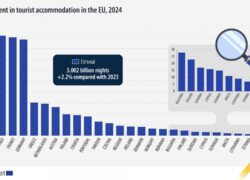
The European Union recorded its highest-ever tourism figures in 2024, with the total number of nights spent at tourist accommodation establishments exceeding 3 billion. This marks a 2.2% increase compared to 2023, amounting to an additional 65.4 million nights. The surge was largely driven by a strong final quarter of the year, which saw a notable rise in overnight stays across almost all EU countries.

The data, published by Eurostat, highlights a significant increase in international tourism. In 2024, nights spent by international guests rose by 4.9% (+67.2 million), indicating growing demand for travel within and to the EU. However, domestic tourism remained relatively stable, recording a slight decrease of 0.1% (-1.8 million nights), suggesting that while international travel rebounded, local tourism demand did not see the same level of growth.

Spain, Italy, France, and Germany emerged as the top destinations, collectively accounting for 61.6% of total nights spent in the EU. Spain led the ranking with 500 million nights, followed by Italy (458 million), France (451 million), and Germany (441 million). On the other end of the spectrum, Luxembourg (3.4 million), Latvia (4.7 million), and Estonia (6.6 million) registered the lowest number of overnight stays.

Strongest Growth in Malta and Latvia, Declines in Luxembourg and France

Compared to 2023, tourism nights increased the most in Malta, which saw a 14.4% growth, followed by Latvia with a 7.4% rise. Other countries also recorded steady gains, reinforcing the overall upward trend in EU tourism. However, a few countries experienced declines. Luxembourg saw the biggest drop, down 2.7%, followed by France (-0.6%), Belgium (-0.2%), and Sweden (-0.1%).

Final Quarter Drives Record Growth

The last quarter of 2024 played a crucial role in the year’s overall record-breaking performance. During this period, the total number of nights spent in the EU increased by 5.1% compared to Q4 2023, reflecting a significant uptick in demand for travel towards the end of the year.

Most EU countries saw an increase in overnight stays during Q4 2024, with Malta experiencing the highest growth (+16.5%), followed by Latvia (+12.5%), Italy (+11.1%), and Croatia (+10.2%). Ireland was the only country to record a decline, with a 1.8% drop compared to the same period in 2023.

With the tourism sector showing strong recovery and growth, 2024 marked a historic high for the EU travel industry, demonstrating renewed confidence in travel, increased international mobility, and a strong year-end performance that set new records for the sector.

Source: Eurostat

UK mergers and acquisitions activity declines in Q4 2024, but domestic deals surge

The UK’s mergers and acquisitions (M&A) activity declined in the fourth quarter of 2024, reflecting a slowdown in overall deal volume, particularly in cross-border transactions. The total number of completed M&A transactions involving UK companies fell to 402, down from 464 in Q3 2024, marking a noticeable dip in activity. Monthly figures further illustrate this downward trend, with 186 deals in October, 151 in November, and just 65 transactions in December. This decline signals a cautious approach from investors amid economic uncertainties, financing constraints, and high borrowing costs.

Despite the overall slowdown, domestic M&A transactions—where UK companies acquire other UK-based businesses—saw a significant rise in value. The total worth of these deals surged to £8.6 billion in Q4 2024, a sharp increase of £6.7 billion compared to Q3 2024 (£1.9 billion). This is the highest quarterly value since Q2 2021, indicating that domestic businesses are focusing on strategic acquisitions within the UK market rather than expanding abroad.

Two major domestic acquisitions contributed to this surge: Nationwide Building Society’s acquisition of Virgin Money UK Plc and Barratt Developments Plc’s takeover of Redrow Plc. These high-profile deals highlight continued confidence in the UK financial and real estate sectors, despite broader economic challenges. The rise in domestic transactions suggests that businesses are leveraging consolidation opportunities and looking to strengthen their market positions in a competitive landscape.

Decline in Outward and Inward M&A Activity

While domestic M&A showed resilience, cross-border transactions involving UK companies declined significantly. Outward M&A, which includes UK companies acquiring foreign businesses, saw a drop to £1.4 billion in Q4 2024, a £2.5 billion decrease from Q3 2024 (£3.9 billion). This marks the lowest level of outward investment since Q3 2013, indicating a slowdown in international expansion plans by UK firms.

The decrease in outward M&A can be attributed to global economic uncertainties, currency fluctuations, and higher costs associated with overseas acquisitions. Many UK companies have opted to prioritize stability within their domestic operations rather than pursue riskier international deals. The combination of inflationary pressures, geopolitical tensions, and fluctuating interest rates has contributed to this more conservative investment approach.

Similarly, inward M&A activity, which involves foreign companies acquiring UK businesses, also experienced a sharp decline. The total value of these transactions fell to £4.5 billion in Q4 2024, a significant £5.9 billion drop from Q3 2024 (£10.4 billion). Foreign investors have become increasingly cautious about entering the UK market due to uncertainty surrounding economic growth, regulatory changes, and ongoing financial market volatility.

The slowdown in inward M&A suggests that the UK is facing stronger competition from other global markets in attracting foreign investment. While the UK remains a key destination for international business, investors are carefully assessing market stability, taxation policies, and long-term growth prospects before committing to large-scale acquisitions.

Market Conditions and Business Sentiment

The Bank of England’s quarterly business report provided further insights into the investment landscape. The report indicated that business investment intentions remained weak, with many companies adopting a wait-and-see approach due to ongoing economic uncertainties and financing challenges. While some firms are looking to increase investment in 2025, the majority remain cautious, particularly in sectors affected by high capital expenditure costs, limited access to credit, and squeezed profit margins.

Larger corporations continue to have better access to financing, as banks compete to lend to financially stable, creditworthy businesses. However, small and medium-sized enterprises (SMEs) are struggling to secure funding, often turning to secondary lenders or alternative financing options. Startups and early-stage companies face even greater challenges, as many do not meet the stringent credit criteria set by major banks.

Despite these headwinds, some sectors have demonstrated resilience, particularly in financial services and real estate, as evidenced by the major domestic M&A deals in Q4. While businesses remain cautious, there is potential for an investment rebound in 2025, particularly if economic conditions improve and financing becomes more accessible.

Outlook for 2025

Looking ahead, the UK’s M&A landscape will likely be shaped by macroeconomic trends, including interest rate movements, investor sentiment, and global market stability. While domestic transactions have shown strength, the slowdown in cross-border M&A raises concerns about the UK’s attractiveness as an investment destination. The decline in foreign acquisitions of UK businesses suggests that investors are closely monitoring post-Brexit economic policies, regulatory developments, and overall market stability before committing to deals.

If economic conditions improve in 2025, the volume of transactions could see a rebound, particularly in sectors that have demonstrated strong underlying fundamentals. However, higher financing costs, inflationary pressures, and geopolitical uncertainties will remain key factors influencing investment decisions.

While some businesses are seizing M&A opportunities to strengthen their market positions, others are adopting a more cautious approach, delaying major acquisitions until economic conditions become more favorable. The balance between risk and opportunity will determine how the UK’s M&A activity evolves in the coming quarters.

Source: ONS

APAC commercial real estate stabilizing in 2025, but office sector faces challenges

The Asia-Pacific (APAC) commercial real estate market is poised for stabilization in 2025, driven by resilient economic growth and evolving investment trends. However, the office sector faces challenges due to an oversupply of space and shifting workplace dynamics. 

According to CBRE’s 2025 Asia Pacific Real Estate Market Outlook, the region’s GDP is projected to grow by 4.1%, slightly above the previous year’s 3.9% expansion. This economic stability is expected to bolster investor confidence, with commercial real estate transaction volumes anticipated to rise between 5% and 10% year-on-year. 

Despite this positive outlook, the office sector presents a mixed picture. Cushman & Wakefield forecasts robust demand, averaging 75 million square feet annually over the next few years. However, an influx of new supply—exceeding 100 million square feet between 2025 and 2027—is projected to push regional vacancy rates close to 20%. 

Employment growth, particularly in white-collar sectors such as technology, professional services, and financial services, is expected to drive office space demand. These industries are projected to add approximately 2.8 million jobs in 2025, accounting for over half of the new white-collar positions in the region. 

In response to evolving tenant preferences, there is a growing emphasis on upgrading office spaces to premium standards. Factors such as sustainability, environmental, social, and governance (ESG) compliance, and mandatory stock market regulations are driving sustained demand for ESG-compliant office spaces. 

Overall, while the APAC commercial real estate market is on a path to stabilization, stakeholders must navigate the complexities of the office sector’s supply-demand dynamics and the increasing importance of sustainable and premium office environments.

Source: comp.

Vienna’s office market: Steady growth amid economic resilience and investor confidence

In 2025, Vienna’s office market is poised for steady growth, reflecting broader trends in Austria’s commercial real estate sector.

Austria’s economy is projected to return to a growth trajectory in 2025, with a slight positive GDP increase and inflation approaching the 2% stability target. This economic stability is expected to bolster the commercial real estate market, particularly in Vienna.

Across Europe, prime office rents are anticipated to rise more slowly, with nominal growth of 2.5–3% in 2025. Vienna is expected to align with this trend, experiencing moderate rental growth. The city’s office market is well-positioned, with rising take-up reflecting growing occupier confidence.

Vacancy Rate
• In the fourth quarter of 2024, the vacancy rate for modern office buildings in Vienna was 3.56%, indicating a stable demand for office spaces.

Rental Rates
• Prime office rents in Vienna have stabilized at approximately €28.00 per square meter per month.

New Office Space Development
• In 2024, around 90,700 square meters of new office space were completed. Projections for 2025 anticipate an increase in completions to approximately 121,000 square meters, which may help alleviate current supply constraints.

Investment Yields
• Prime yields for office properties in Vienna have adjusted to around 5.0%, reflecting the city’s stable investment environment.

Investor interest in Vienna’s office market remains robust. The limited supply of ESG-compliant prime assets continues to attract domestic investors, maintaining a focus on high-quality office spaces. This trend underscores the city’s appeal as a stable and attractive investment destination.

Looking ahead, Vienna’s office market is expected to benefit from the city’s strategic initiatives to enhance infrastructure and promote sustainable development. These efforts are likely to attract more businesses seeking modern and efficient office environments, further strengthening the market.

In conclusion, Vienna’s office market in 2025 reflects a stable and evolving sector, supported by economic resilience and sustained investor interest. As the city continues to develop, it offers promising opportunities for investors and businesses alike, contributing positively to Austria’s overall economic growth.

Source: comp.

Swedbank and SpareBank 1 to launch Nordic investment bank SB1 Markets

Swedbank and SpareBank 1 are expanding their partnership to establish SB1 Markets, a Nordic investment bank aimed at strengthening financial services across the region. The new venture will enhance Swedbank’s equity research and sales capabilities, deepen sector expertise, and provide a stronger platform to serve corporate clients in Sweden, Norway, and beyond.

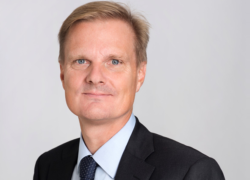
Swedbank’s president and CEO, Jens Henriksson, highlighted that the collaboration will broaden opportunities for corporate clients by combining the distribution and expertise of both institutions. Swedbank will hold a 20 percent stake in SB1 Markets, with the remaining ownership controlled by SpareBank 1.

SB1 Markets will employ approximately 240 professionals across Norway, Sweden, and the United States. The Stockholm office will initially have 35 employees from Swedbank’s Corporate Finance and Debt Capital Markets (DCM) High Yield teams, with plans to expand equity research capabilities over time. Bo Bengtsson, head of Corporates and Institutions at Swedbank, noted that clients will benefit from enhanced cross-border services, expanded research, and greater market access through the banks’ networks and the Savings Banks alliances.

Stein Husby, CEO of SpareBank 1 Markets, described the agreement as a key milestone in strengthening the banks’ presence in the Nordic investment sector. The combined expertise will create a competitive financial institution positioned to serve a broader client base with specialized investment banking services.

The Swedish Financial Supervisory Authority (FSA) has been informed, and the transaction remains subject to approval from the Norwegian FSA. The partnership is expected to be fully operational by 1 January 2026.

Photo: Swedbank’s president and CEO, Jens Henriksson

Czech apartment prices reach record highs in 2024, rising by seven percent

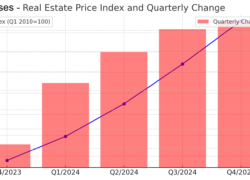
The Czech real estate market saw significant price increases across all property categories in 2024, with apartment prices reaching a new record high. According to data from the ČSOB Housing Index, the price of flats increased by seven percent year-on-year, with a further 3.4 percent rise recorded in the final quarter of the year. Apartment prices have now surpassed their previous peak from the third quarter of 2022.

Martin Vašek, CEO of ČSOB Hypoteční banka, noted that the real estate market returned to steady price growth in 2024, driven by strong demand for both newly built and older apartments. The sales period for flats has also shortened, averaging 3.8 months.

The strongest quarterly price growth was seen in the Moravian-Silesian region, where prices rose by 4.6 percent. The Ústí nad Labem and Hradec Králové regions also recorded price increases above four percent, while Prague and Central Bohemia saw growth just below this level. The surge in demand was supported by an 80 percent increase in mortgage volumes, rising real incomes, and buyers seeking to secure properties in a rising market. However, supply remains limited, exerting additional pressure on prices.

While the availability of older apartments declined in the last quarter, the new-build sector is showing signs of recovery, including in regional markets. Developers in Prague and Brno have continued to raise prices with each new stage of development, with costs increasing by around five percent per phase. Smaller flats up to 45 square meters have been particularly in demand, contributing to above-average price growth in the sector. Rental prices also increased significantly, with a 15 percent year-on-year rise, the highest in Olomouc and the lowest in Ústí nad Labem.

In contrast to the apartment market, the house sector remained stable, with demand lower than pre-pandemic levels. The most active areas for house construction were in Central Bohemia and around Brno. A positive development for the sector was a slowdown in the rise of construction costs. However, transaction activity remained limited in areas affected by the September floods, as potential buyers wait for infrastructure reconstruction.

The land market continued to experience strong demand, outpacing supply and maintaining a steady upward trend in prices. The lack of available land is exacerbated by outdated zoning plans and limited utility capacity. As a result, buyers are increasingly looking at plots further from major cities, including those without existing utility connections. Advances in photovoltaics, domestic sewage treatment, and off-grid housing have made previously undeveloped land more attractive. Plot prices continue to depend on factors such as size, location, access to utilities, transport connections, and topography.

With rising demand and constrained supply, the Czech real estate market is expected to face continued upward price pressure in 2025, particularly in the apartment sector.

Source: ČSOB

PAI Partners acquires majority stake in Motel One to support global expansion

Private equity firm PAI Partners has entered into a strategic partnership with Motel One, acquiring an approximately 80% stake in the European budget design hotel chain. This move aims to support Motel One’s international expansion while maintaining its core identity.

Motel One, established in 2000, has grown to operate 99 hotels across 13 countries, including the UK, France, and the US, attracting over 10 million guests in 2024. The company is recognized for offering affordable accommodations in prime city locations with high-end design. Recently, Motel One launched a new lifestyle brand, The Cloud One Hotels, with properties in New York, Hamburg, Düsseldorf, Prague, and Gdańsk.

Following the transaction, founder Dieter Müller will continue as Chairman and will also focus on developing the company’s real estate division, which had been previously separated to support future growth.

PAI Partners brings extensive experience in the hospitality sector, having previously invested in brands such as B&B Hotels, Roompot, and European Camping Group. The firm aims to leverage this expertise to accelerate Motel One’s growth trajectory.

The completion of the transaction is subject to regulatory approvals and is anticipated in the second quarter of 2025.

Central London’s office market sees strong start in January with £1 billion in investment deals

The central London office market had a strong start to 2025, with £1 billion in investment transactions and 248,600 square feet of office space leased in January, according to a report by CBRE. The figures reflect growing investor confidence and sustained demand for high-quality office spaces, following a period of economic uncertainty and shifting workplace trends.

Investment activity in January was driven by several large transactions, signaling renewed interest from both domestic and international investors. The demand for prime office properties remains particularly strong, with institutional investors seeking assets that offer long-term stability and the ability to attract high-quality tenants.

Leasing activity also performed well, with 248,600 square feet of office space taken up across central London. The demand was largely focused on Grade A office spaces, with businesses continuing to prioritize high-specification work environments that offer modern amenities, sustainability credentials, and flexible layouts. The flight to quality trend, which has shaped leasing activity in recent years, continues to be a dominant factor as companies look to create attractive workplaces that encourage employee collaboration and well-being.

CBRE’s report suggests that occupier confidence is growing, as businesses look beyond short-term economic pressures and focus on securing office space that aligns with their long-term strategies. With more investment expected in the coming months, the momentum in the office market could continue to strengthen throughout 2025.

Source: CBRE

LATEST NEWS