WSiP extends lease at Equator II office building in Warsaw

School and Pedagogical Publications (WSiP) has renewed its lease agreement for an additional six years at the Equator II office building on Aleje Jerozolimskie Street in Warsaw. The lease covers more than 2,500 square meters of office space. The renegotiation process was handled by a team of consultants from Walter Herz, including Mateusz Strzelecki, Monika Szymczyk, and Jakub Gabryszak.

WSiP representatives stated that the renewal was aimed at consolidating the company’s operations in a single location while optimizing lease terms. The agreement includes modernization work to adapt the office space to evolving needs. Some employees have been relocated from another office to Equator II. The company cited the building’s maintained high standard and ongoing improvements by the property owner as key factors in its decision to extend the lease until 2031.

Mateusz Strzelecki from Walter Herz noted that WSiP conducted a thorough evaluation of its office requirements, including location, space size, and financial considerations. Early negotiations allowed the company to secure an incentive package and cost savings before the previous lease expired. He emphasized that proper timing and preparation played a crucial role in achieving favorable lease terms.

Equator II, owned by the CPIPG Group, was completed in 2011. The 16-story office building offers over 21,300 square meters of Class A office space, with more than 240 underground parking spaces. It features a lobby with a reception area and various service points. The location is close to restaurants, fitness clubs, hotels, and other amenities.

Gender pay disparities persist in Poland

The latest Polish Labour Market Barometer report by Personnel Service highlights ongoing gender wage disparities in Poland. The data reveals that half of Polish women earn a net salary of up to PLN 4,000, while for men, this figure stands at 36%. Earnings above PLN 7,500 net are received by 10% of men, whereas only 3% of women reach this salary level.

According to data from the Central Statistical Office summarizing 2024, the median salary for men was PLN 513 higher than for women. The median gross monthly wage in the national economy was PLN 6,480.52, with women earning a median of PLN 6,642 and men PLN 6,755. This represents a wage gap exceeding 8%.

The Personnel Service analysis confirms that women are more likely to fall within lower wage brackets. Among employed women, 51% earn below PLN 4,000 net, compared to 36% of men. In the PLN 4,000–4,999 and PLN 5,000–5,999 ranges, women account for 14% and 7% of salaries, while men make up 20% and 10%, respectively. The gap widens in higher salary brackets, where only 2% of women earn between PLN 6,000 and PLN 7,499, compared to 8% of men.

Beyond wages, disparities in leadership positions are also evident. In the first half of 2024, women comprised an average of 35.1% of board members across Europe, an increase of one percentage point from 2023. However, in Poland, women held only 23.4% of supervisory board positions in the largest companies listed on the Warsaw Stock Exchange, marking a decline of 2.9 percentage points.

To address these imbalances, new regulations are being introduced. The Ministry of Justice has proposed a directive requiring large listed companies to ensure that at least 33% of management and supervisory board members come from the underrepresented gender. This requirement will apply from July 2026, with an earlier implementation for the largest state-owned companies in January 2026.

Another factor influencing wage disparities is the approach to salary negotiations. Women in Poland are less likely to request a raise, with only one in four planning to do so, compared to one in three men. This tendency may contribute to maintaining existing wage gaps. Additionally, women are more hesitant to apply for job positions unless they meet all the listed criteria, whereas men tend to apply when they meet approximately 60% of the requirements, according to a Harvard Business Review study.

Despite some progress in gender representation at the European level, wage disparities and underrepresentation in leadership roles remain challenges in Poland. Addressing these gaps requires continued regulatory efforts and cultural shifts in salary negotiations and hiring practices.

Source: Personnel Service

Overview: India’s Residential Mortgage and RMBS Market

India’s Residential Mortgage and RMBS Market: An Overview

The securitization of financial assets in India has gained momentum, driven by growing interest from both issuers and investors. As one of the world’s fastest-growing economies, India’s expanding urban population, increasing disposable income, and government incentives continue to support the development of the housing, mortgage, and residential mortgage-backed securities (RMBS) markets.

India, with a population exceeding 1.44 billion and a density of 479 people per square kilometer, has a housing market shaped by economic growth, geographic diversity, and policy interventions. Urban housing primarily consists of apartments and stand-alone homes, while rural areas feature simpler constructions. There is a persistent shortage of affordable housing, although unsold inventory in major cities has been gradually decreasing.

Infrastructure improvements, rising income levels, and urban expansion are expected to sustain growth in the residential property sector. Affordable housing remains in high demand, while the expansion of the upper-middle class is increasing demand for higher-end residential properties. Properties priced under INR 4.5 million to INR 5 million are generally classified as affordable, those between INR 5 million and INR 10 million as mid-segment, and properties exceeding INR 10 million as premium.

Approximately 70% of Indian households own their residences, but in many cases, these homes lack basic amenities or are inadequate for household size. To address housing affordability, the government has introduced various schemes over the years, offering interest subsidies, guarantees for low-income housing loans, and public-private partnerships. The Real Estate (Regulation and Development) Act (RERA), enacted in 2016, aims to enhance transparency and accountability in real estate transactions. However, as its implementation is handled at the state level, progress has been uneven across different regions.

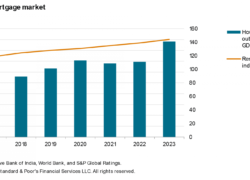
India’s residential mortgage market remains relatively underdeveloped, with mortgage penetration historically ranging between 5% and 9% of nominal GDP. Loans to the household sector account for about 32% of the banking system’s lending, with residential mortgages comprising roughly half of these loans. While banking accessibility has improved since the COVID-19 pandemic, large sections of the population, particularly in rural areas, remain outside the formal lending system.

Commercial banks dominate the residential mortgage market, holding an estimated 70% to 80% market share, followed by non-bank housing finance companies (HFCs). The Reserve Bank of India (RBI) regulates both commercial banks and HFCs, while the National Housing Bank (NHB) supervises HFCs. The banking system is fragmented, comprising public and private sector banks, foreign banks, small finance banks, payment banks, cooperative banks, and regional rural banks.

HFCs operate as a subset of non-bank financial companies (NBFCs) under the Companies Act. Unlike banks, NBFCs are generally restricted from accepting deposits and are not covered by deposit insurance. Since 2019, NHB’s regulatory authority over HFCs has been transferred to RBI, though NHB continues to oversee their supervision and grievance redressal.

Asset reconstruction companies (ARCs) also play a role in India’s financial landscape, purchasing non-performing assets (NPAs) from financial institutions. Regulated by RBI under the Securitisation and Reconstruction of Financial Assets and Enforcement of Security Interest Act (SARFAESI Act) of 2002, ARCs assist in debt resolution through business restructuring, debt restructuring, asset liquidation, or settlements. While ARCs handle various types of NPAs, they are more active in resolving non-personal loans and higher-value personal loans due to economic considerations.

India has four credit bureaus—TransUnion CIBIL, Experian, Equifax, and CRIF High Mark. Since 2015, all scheduled commercial banks, NBFCs, and cooperative banks are required to be members of all credit bureaus, ensuring standardized credit data that is updated regularly. ARCs have also been required to participate in credit bureau reporting since October 2024. These bureaus maintain at least seven years of credit history, tracking borrowers’ credit facilities, overdue payments, loan restructuring, and defaults. Credit scores above 730 are generally considered prime.

A significant factor influencing credit allocation is the priority sector lending requirement set by RBI. Banks are directed to provide credit to specific sectors, including housing, based on factors such as loan size and borrower demographics. For metropolitan areas with populations exceeding one million, priority sector housing loans are capped at INR 3.5 million, provided the total property value does not exceed INR 4.5 million. In non-metro locations, loans up to INR 2.5 million qualify if the overall property value does not exceed INR 3 million.

While these criteria aim to enhance access to housing finance, the rapid appreciation of residential property prices has led to some affordable housing projects exceeding priority sector lending thresholds. As a result, aligning lending policies with evolving market conditions remains an ongoing challenge.

Source: S&P Global

EU renewable energy use for heating and cooling reaches 26% in 2023, Poland declines by 2.2% points

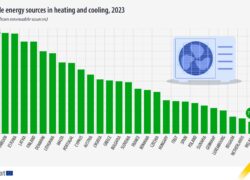
The share of renewable energy used for heating and cooling in the European Union continued to rise in 2023, reaching 26.2%. This marks the highest level recorded since data collection began in 2004, when the share stood at 11.7%. Compared to 2022, when the figure was 25%, the share increased by 1.2 percentage points.

EU Directive 2023/2413, adopted on 18 October 2023, mandates that member states increase their annual average share of renewable energy in heating and cooling by at least 0.8 percentage points between 2021 and 2025. From 2026 to 2030, this requirement rises to at least 1.1 percentage points annually.

The overall growth in renewable energy for heating and cooling has been driven mainly by biomass and heat pumps. Among EU countries, Sweden recorded the highest share of renewable energy in heating and cooling in 2023 at 67.1%, followed closely by Estonia at 66.7%. Both countries rely primarily on biomass and heat pump technology. Latvia ranked third, with 61.4% of its heating and cooling energy coming from renewable sources, also primarily from biomass.

At the other end of the scale, Ireland had the lowest share of renewables in heating and cooling at 7.9%, followed by the Netherlands at 10.2% and Belgium at 11.3%.

Compared to the previous year, 21 EU countries saw an increase in the share of renewables used in heating and cooling. Austria recorded the largest rise, with an increase of 8.1 percentage points, followed by Malta at 7.5 percentage points and Greece at 4.9 percentage points.

However, several countries experienced a decline. Sweden saw the largest decrease, with its share falling by 2.7 percentage points. Poland followed with a decline of 2.2 percentage points, while Slovakia, Croatia, Germany, and Luxembourg also recorded slight reductions.

Source: EU

2025: Another lost year for Germany’s mechanical engineering industry?

The outlook for Germany’s mechanical engineering sector, a key pillar of the country’s industry, remains bleak. The decline in incoming orders continues, and economic uncertainty is deepening. Jens Stobbe, Manager Risk Services at credit insurer Atradius, warns that the situation is alarming, as demand has not fallen so sharply and widely across industries in the past 15 years. As a result, the sector is not expected to see any growth in 2025.

Production in German mechanical engineering shrank by 5.7 percent in 2024, with a further decline of 0.6 percent forecasted for 2025. Germany’s economic weakness stands out in a global comparison. While worldwide mechanical engineering production is expected to grow by 3.6 percent in 2025, Europe is projected to lag behind at just 1.3 percent. With Germany accounting for more than 45 percent of the eurozone’s mechanical engineering output, its stagnation is weighing heavily on the European market. In contrast, industry growth is expected to be driven primarily by the United States and the Asia-Pacific region.

Unlike the automotive industry, which saw a wave of insolvencies in 2024, the mechanical engineering sector has so far avoided a drastic increase. However, insolvencies still rose in the low double-digit percentage range. Stobbe anticipates a further increase this year due to the sector’s heavy reliance on orders from the automotive and construction industries. By the end of February 2025, reports of non-payment in the sector had already surged by more than 20 percent compared to the same period last year. With numerous plant closures being announced across industries, every shuttered factory means fewer machines needed, further reducing demand.

A significant decline is evident across all sub-sectors of mechanical engineering. According to the German Engineering Federation (VDMA), order volumes fell by 8 percent in 2024, with domestic orders dropping by 13 percent and international orders declining by 5 percent. Given the typical lead time of one to two years for orders, the full impact of the downturn may not become clear until 2026, creating liquidity challenges and an increase in short-time work.

Hopes for a slight recovery in the second half of 2025 remain uncertain and are largely dependent on government policies. Industry experts stress the urgent need for decisive political action, particularly on reducing bureaucracy and stabilizing energy prices. While companies that have successfully diversified their portfolios are in a stronger position, overall economic conditions remain a major challenge for the sector.

Potential growth opportunities exist in high-tech industries, IT, data centers, and cleanroom technology, but none of these fields are traditional strongholds of the German economy. Investment decisions in these areas rarely favor Germany as a business location, with large German construction companies already shifting their focus abroad. Furthermore, the country’s export-dependent mechanical engineering sector remains vulnerable to U.S. import tariffs on EU goods. International competition, especially from Asia, continues to intensify. If a machine from China is 30 percent cheaper but only 5 percent less efficient, businesses have little reason to choose German products.

With no strong domestic growth drivers and increasing global competition, 2025 appears to be another challenging year for German mechanical engineering. Without decisive political measures and a recovery in international demand, the sector may continue to struggle in the years ahead.

Source: Atradius

Góraszka project secures building permit, construction set to begin in 2026

Ceetrus, the investor behind the Góraszka project, obtained a building permit in January 2025 for the construction of a multifunctional shopping and entertainment centre. The development, managed by Nhood Services Poland, is planned for the eastern part of the Warsaw metropolitan area. Construction of the main building is set to begin in 2026 and is expected to take approximately two years.

The central commercial building of the Góraszka project will provide nearly 40,000 square metres of retail space. Alongside planned neighbouring retail facilities and the existing Majaland Warsaw amusement park, the project aims to create a convenient location for shopping and leisure activities. The site will include a variety of retail and entertainment options, a food court, an Auchan hypermarket, and a Leroy Merlin DIY store. In total, the commercial and service facilities within the complex will cover approximately 65,000 square metres of gross leasable area (GLA). Additional amenities such as an aquapark, drive-thru restaurants, and a petrol station are also planned.

According to Anna Będkowska, Project Manager at Nhood Services Poland, securing the building permit marks a significant step forward. She highlights the project’s importance for the eastern Warsaw region and notes the strong support from the local community and the Wiązowna Municipality authorities.

The construction process will take place in phases. The initial stage will involve developing the technical infrastructure for the entire site, including provisions for partner companies involved in the project. This will be followed by the construction of retail and service buildings, with 40,000 square metres dedicated to commercial space. The retail component will include a hypermarket, catering facilities, and supporting infrastructure such as roads and utilities. Simultaneously, construction will begin on adjacent partner facilities, including restaurants, a DIY store, and a water park.

The project follows sustainable development principles, aligning with Nhood Services Poland’s environmental, social, and governance (ESG) strategy. The Góraszka development has already received a BREEAM Communities certificate in 2024, which assesses its positive impact on the local community and environment. The investor also intends to obtain a BREEAM New Construction certification and is participating in the MUQI (Mixed Use Quality Index) certification process, which evaluates the quality of mixed-use developments.

The site is positioned near the S17 and S2 road junction, ensuring accessibility from Warsaw’s southern and eastern districts as well as surrounding municipalities. A planned public transport connection includes bus stops with four bays, with discussions underway between the investor, the Wiązowna Municipality, and the Municipal Roads Authority in Warsaw to finalise the routes.

The retail portion of the Góraszka project is led by Ceetrus as the primary investor.

Increase in women holding managerial positions in the EU, Czechia recorded the lowest shares

In 2023, 3.7 million women in the European Union held managerial positions, an increase from 3.1 million in 2014, according to data from the EU Labour Force Survey, the primary source of labour market statistics in the region.

Despite this growth, women remained underrepresented in management roles. While they made up nearly half (46.4%) of all employed people in the EU, only 34.8% of managers were women in 2023. This marks an improvement from 2014, when women accounted for 45.8% of the workforce and held 31.8% of managerial positions.

Among EU countries, Sweden had the highest proportion of women in managerial roles in 2023, at 43.7%, followed by Latvia (42.9%) and Poland (42.3%). In contrast, Luxembourg (22.2%), Croatia (23.8%), and Czechia (27.4%) recorded the lowest shares.

Over the past decade, the overall share of women in management across the EU has increased by 3.1 percentage points. Twenty member states have seen an upward trend, with the largest increases recorded in Cyprus (+10.5 percentage points), Malta (+8.3 percentage points), and Sweden (+6.5 percentage points). Meanwhile, Hungary and Slovenia experienced the largest declines, both down by 2.6 percentage points, followed by Lithuania, which saw a decrease of 1.7 percentage points.

Source: Eurostat

Unimot Energia i Gaz launches AVIA Solar purchasing platform for the photovoltaic industry

Unimot Energia i Gaz, part of the Unimot Group, has introduced a purchasing platform for the photovoltaic industry under the AVIA Solar brand. The platform is designed for companies that design and install photovoltaic systems, as well as for industry wholesalers. It aims to streamline procurement by offering convenient access to essential components.

AVIA Solar focuses on quality assurance, combining Swiss standards with a Polish guarantee. The company ensures that all offered solutions undergo thorough verification. With its own production facilities, it can develop products tailored to the needs of installers while maintaining durability and compliance with energy industry standards. Partnerships with suppliers such as Deye and Weiheng allow AVIA Solar to integrate advanced technologies that align with market demands.

According to Wojciech Ginter, Vice-President of the Management Board at Unimot Energia i Gaz, maintaining full control over quality and securing access to leading technologies enables AVIA Solar to offer comprehensive solutions that meet professional standards.

The platform provides a range of components required for photovoltaic installations, including modules, inverters, switchgear, and energy storage systems. The selection process prioritises energy efficiency, and the certified assembly structures ensure stability and durability, complying with industry regulations.

Designed to serve businesses in the photovoltaic sector, the platform simplifies order processing and offers guidance on selecting and installing systems. It combines technological solutions with high service standards, including access to high-quality cabling to enhance system safety and performance.

Grzegorz Batko, PV Sales Director at Unimot Energia i Gaz, describes the launch as a significant step in expanding the company’s customer offerings. He emphasises the importance of providing professional solutions that support clients in implementing energy projects.

The Unimot Group continues to expand its role in the renewable energy sector, contributing to the energy transition and delivering solutions that address the evolving needs of the photovoltaic market.

Five Years After Brexit: The Economic Reality

Brexit ushered in a new era of ‘global Britain’ or an extended period of national decline, depending on your viewpoint. Five years on, we sift the evidence.

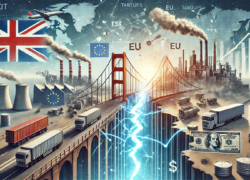
In January 2020, the United Kingdom officially left the European Union, a move that supporters hailed as a historic step towards economic freedom while opponents feared it would trigger long-term decline. Five years on, the reality is more complex. The economic impact of Brexit has been compounded by global challenges, including the COVID-19 pandemic and Russia’s invasion of Ukraine. However, Brexit itself has left a deep mark on the UK economy, with some analyses estimating a £140 billion loss directly linked to the country’s departure from the EU.

The Trade and Cooperation Agreement (TCA), which took effect on January 1, 2021, introduced new regulatory barriers, customs checks, and rules of origin requirements. As a result, UK trade with the EU declined sharply, with goods exports dropping by £27 billion in 2022 alone. Even now, the UK’s total trade in goods remains 12 percent below pre-Brexit levels, with goods exports at just 82 percent of their 2020 volume. In contrast, EU trade has rebounded, matching pre-Brexit levels. Economist Dana Bodnar of Atradius describes the situation as grim, noting that UK exports have struggled even more than imports, leaving the country’s overall trade performance weaker than anticipated.

Beyond Europe, the UK has pursued new trade agreements, though results have been underwhelming. While the country has secured 70 trade deals, most simply replicate previous EU agreements. New deals with Australia and New Zealand have been widely publicized but are limited in scope, and negotiations with the United States have stalled. The UK’s accession to the Comprehensive and Progressive Agreement for Trans-Pacific Partnership (CPTPP) may offer future benefits, though in the short term, its impact remains modest. Given that the UK already had agreements with nine of the eleven CPTPP members, any significant gains will depend on the bloc’s expansion.

Brexit’s impact has been uneven across different industries. Agriculture has been particularly hard-hit, with Brexit-related labor shortages exacerbated by the war in Ukraine. UK farmers, once reliant on seasonal migrant workers, have struggled to find replacements, leading to crop losses reported by 40 percent of farmers surveyed by the National Farmers’ Union. In response to concerns about rising costs, the UK government has delayed post-Brexit checks on EU agricultural imports for a third time, pushing them back to July 2025.

The automotive industry faces a major Brexit-related challenge in the form of a planned 10 percent tariff on electric vehicles traded between the UK and the EU, set to apply if they fail to meet strict rules of origin requirements. Originally scheduled for 2024, these rules have been deferred for three years to avoid disruptions at a time when the European auto industry is already grappling with rising competition from Chinese manufacturers.

For the chemicals sector, Brexit has introduced both tariffs and regulatory complications. With two-thirds of UK chemical production destined for export—mostly to the EU—new trade barriers mean that 70 percent of these exports now face tariffs, while raw material imports from the EU are also subject to new costs. The lack of a cost-effective UK regulatory framework to replace the EU’s chemicals registration system has created further uncertainty, affecting investment in the petrochemicals sector.

Despite these challenges, some industries remain resilient. Aerospace, paper and packaging, and renewable energy are expected to perform well in 2025, and the UK media industry is poised for significant growth. However, sectors with greater exposure to Brexit-related challenges—such as steel, logistics, and construction—face a more uncertain future.

While Brexit was driven by political as well as economic motivations, its economic benefits have yet to materialize. Trade remains sluggish with both the EU and the rest of the world, while key industries are struggling with increased costs, bureaucracy, and labor shortages. Supporters of Brexit argue that these are temporary adjustments and that opportunities such as CPTPP and a potential US trade deal could deliver future gains. Recent IMF data also suggests that the UK is on track to be the fastest-growing major European economy in 2025.

Even so, the UK’s growth remains below its historical average, and trade prospects remain highly uncertain. Five years after leaving the EU, Brexit has yet to deliver the economic advantages its proponents promised, and for many sectors, its challenges remain an ongoing reality.

Author: Silvia Ungaro, Senior Advisor, Atradius N.V.

Private equity industry contracts for the first time in decades

The private equity industry experienced a rare decline in 2024, marking the first contraction in decades. Assets under management (AUM) fell by 2% as investors scaled back commitments amid economic uncertainty and tighter financial conditions.

The pullback reflects a broader trend of cautious investment behavior, driven by rising interest rates, concerns over global economic stability, and reduced liquidity in capital markets. For years, private equity has seen continuous expansion, fueled by strong fundraising and high levels of deal activity. However, the slowdown suggests a shift in investor sentiment, with some limited partners choosing to rebalance their portfolios away from alternative assets.

Industry analysts point to multiple factors influencing the contraction. Higher borrowing costs have made leveraged buyouts less attractive, while valuation adjustments across portfolios have also weighed on overall AUM. Additionally, institutional investors, such as pension funds and endowments, have faced liquidity constraints, leading to reduced capital allocations for private equity funds.

Despite the decline, private equity firms continue to seek investment opportunities, with some focusing on distressed assets or alternative deal structures. Market participants anticipate a potential rebound if macroeconomic conditions stabilize and fundraising efforts regain momentum. However, in the short term, the industry may face continued headwinds as investors adopt a more cautious approach to capital deployment.

The contraction signals a potential inflection point for private equity, challenging firms to adapt to a changing financial landscape while maintaining long-term value creation strategies.

Source: comp.

LATEST NEWS