Wednesday, 30 September 2026
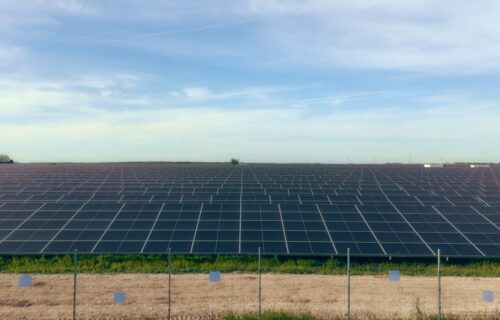
Rezolv Energy has arranged up to €561 million to finance the construction of the 1.3 GWp Dama Solar project in Arad County, providing the capital required to advance one of the largest renewable-energy developments currently planned in Europe. The scheme is being developed through Rezolv subsidiary West Power Investments and is expected to become the EU’s largest onshore renewable project once operational.
The financing is being provided by a group of 14 institutions, combining commercial banks with international development lenders. The European Investment Bank is acting as an anchor financier with backing from an InvestEU guarantee, alongside the EBRD, IFC and Black Sea Trade and Development Bank. Ten commercial lenders are participating, including Erste, UniCredit, Intesa Sanpaolo Romania, Société Générale, OTP, ČSOB, Raiffeisen, Piraeus and Siemens Bank.
A significant part of the project’s future revenue has already been secured. Dama Solar obtained two Contracts for Difference covering a combined 520 MW through Romania’s second CfD auction, while additional electricity production is covered by a corporate power purchase agreement. These arrangements provide greater predictability over future cash flows and have helped support debt financing for a development of this scale.
The solar complex is expected to generate around 1,800 GWh of electricity annually. Rezolv estimates that this would be equivalent to approximately 36% of all solar electricity produced in Romania during 2025, illustrating how rapidly the scale of individual renewable projects is increasing as the country expands its generation capacity.
The €561 million package is the largest financing arranged by Rezolv since the Actis-backed company began building its renewable portfolio in Central and Southeastern Europe. Previous transactions included €291 million and €331 million packages for the two stages of its VIFOR wind development in Romania and €90 million for the St. George solar project in Bulgaria.
The involvement of four international development institutions alongside commercial lenders also demonstrates how large CEE energy projects are increasingly being financed. Government-backed revenue mechanisms, corporate electricity contracts and multilateral financing are being combined to reduce market risk and mobilise private capital for developments that would otherwise require very large individual lender exposures.
For Romania, Dama Solar will add substantial generation capacity but also increase pressure on grid infrastructure to keep pace with renewable investment. As large solar and wind projects move from development into construction, transmission capacity, storage and new grid connections are becoming increasingly important to the country’s investment environment, particularly as electricity demand grows from manufacturing, logistics, data centres and other energy-intensive developments.