Tuesday, 22 September 2026
Japan’s logistics industry is continuing to adjust to the far-reaching effects of transport labour reforms introduced in 2024. While the regulations were designed to improve working conditions for truck drivers by limiting overtime, they have also accelerated structural changes across freight transportation, warehousing and supply chain management.
The new framework placed stricter limits on driver working hours, reducing the amount of time available for long-distance freight operations. As a result, transport companies, retailers and manufacturers have been forced to rethink distribution strategies and invest in new technologies to maintain service levels.
The sector remains under pressure from demographic trends that have been affecting Japan for years. An ageing population and shrinking workforce have made it increasingly difficult to recruit and retain drivers. Industry forecasts continue to warn that freight capacity could decline significantly by the end of the decade if labour shortages persist.
The financial impact on operators has also been considerable. Rising labour costs, higher fuel expenses and difficulties securing staff have squeezed profit margins, particularly among smaller transport firms. Insolvencies within the road freight sector remain elevated as companies struggle to adapt to the changing operating environment.
One of the most visible responses has been the evolution of distribution networks. Instead of relying solely on a limited number of large regional fulfilment centres, companies are increasingly developing smaller facilities closer to consumers. By shortening delivery routes, businesses can reduce pressure on drivers while maintaining delivery speed and reliability.
The trend has strengthened demand for strategically located logistics facilities around major urban centres, particularly in the Tokyo and Osaka metropolitan areas. Developers and investors are responding by expanding modern warehouse capacity in locations that allow faster access to population centres.
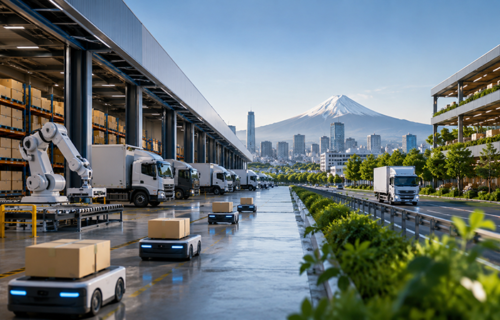
At the same time, automation is becoming a central component of logistics operations. Warehouse operators are deploying advanced robotics, automated storage systems and artificial intelligence-based management platforms to improve productivity and reduce dependence on manual labour.
Large e-commerce operators have been among the most active adopters of these technologies. Highly automated fulfilment centres now utilise thousands of robotic units to assist with inventory handling, order preparation and sorting processes. Similar investments are being made throughout the broader logistics sector as companies seek to offset workforce shortages while increasing operational efficiency.
The growing adoption of automation is creating a new generation of logistics facilities designed around technology rather than traditional labour-intensive operations. As a result, demand for modern warehouses equipped to support robotics and digital infrastructure continues to increase.
Government authorities are also exploring long-term solutions to improve freight movement across the country. Among the projects under consideration are dedicated automated cargo transport systems intended to supplement existing road networks and reduce pressure on the trucking industry.
For Japan’s logistics sector, the challenges created by labour shortages and changing demographics are unlikely to disappear in the near future. However, the industry’s response is already reshaping supply chains, accelerating technology adoption and influencing warehouse development strategies. What began as a regulatory adjustment is now driving one of the most significant transformations of Japan’s logistics and industrial real estate sectors in decades.
Source: CIJ.World Japan Research & Analysis Team