Wednesday, 23 September 2026
For decades, residential property has been viewed as one of Europe’s most reliable long-term investments. However, a growing body of research suggests that demographic change may become one of the most important forces shaping housing markets in the coming decades, creating clear winners and losers across the continent.
Population ageing, lower birth rates and shifting migration patterns are altering the balance between housing supply and demand in many European countries. While these trends are unlikely to trigger a broad decline in residential values, they are expected to increase the gap between regions attracting people and investment and those experiencing population decline.
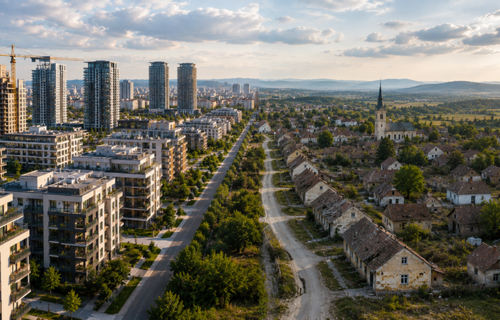
Economists and real estate analysts increasingly argue that future property performance will depend less on national housing markets and more on local demographic and economic conditions. Areas benefiting from employment growth, infrastructure investment and inward migration are expected to remain resilient, while locations losing younger residents may face slower demand growth and weaker long-term price performance.
The issue has gained prominence across Europe this year as policymakers, researchers and investors assess the long-term implications of demographic shifts. Several studies have concluded that ageing populations are likely to influence housing demand, but not necessarily in the way many investors expect.
In Germany, analysts have noted that demand for housing may remain relatively strong despite slower population growth because households are becoming smaller and more urbanised. Similar trends can be observed in several other European markets, where migration toward major cities continues to support residential demand even as national populations age.
Southern European countries are facing a different challenge. While demographic pressures remain significant, housing shortages in many urban areas continue to support prices. Strong demand from international buyers, migration and limited new construction have offset some of the effects that ageing populations might otherwise have on residential markets.
At the same time, demographic change is creating entirely new segments within the real estate sector. Demand for senior living communities, healthcare-related housing and age-friendly residential developments is growing as Europe’s population structure evolves. Investors increasingly view these sectors as long-term opportunities tied directly to demographic trends.
Recent housing market data across the European Union suggests that demographics alone are not currently driving property prices. In many countries, residential values have continued to rise despite declining birth rates and ageing populations. Factors such as housing shortages, construction costs, wage growth and mortgage availability continue to play a dominant role in determining market performance.
Nevertheless, experts believe demographics will become increasingly influential over longer time horizons. Regions experiencing sustained population decline may eventually face reduced demand for housing, while economically dynamic urban centres are likely to continue attracting residents and investment.
The growing importance of demographic factors is also changing the way investors evaluate residential assets. Rather than relying on national market trends, many are paying closer attention to local population growth, labour market conditions and migration patterns when assessing future value.
For homeowners and investors, the message emerging from current research is not that residential property is losing its appeal. Instead, it suggests that the traditional assumption that all real estate will appreciate over time is becoming less certain. Future success may increasingly depend on selecting locations with strong economic fundamentals and favourable demographic prospects.
As Europe continues to adapt to an ageing population, the residential market is expected to become more fragmented, rewarding regions capable of attracting people, jobs and investment while presenting new challenges for areas struggling with demographic decline.
Source: © CIJ EUROPE Analysis Team