Thursday, 22 October 2026
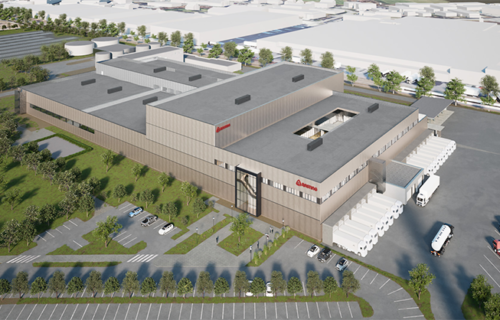
Austrian construction company PORR has been awarded a €97 million contract to build a food processing plant for German supermarket group EDEKA in Meckenheim, near Bonn. The development will cover 29,360 sqm and replace an existing production facility that has been operating for more than four decades. Construction began in October 2026, with completion scheduled for August 2028.
The project has been commissioned by EDEKA Nordwest Stiftung & Co. KG for Fleischhof Rasting GmbH, which has operated at the Meckenheim location since 1984. The existing premises no longer provide sufficient capacity for the company’s production requirements, particularly as its activities have expanded from traditional meat processing into prepared and convenience foods.
The replacement facility will be constructed immediately beside the existing operation. Once completed, it is expected to produce approximately 95,000 tonnes of meat, sausages and prepared food products annually for distribution to EDEKA supermarkets. The project will allow the company to continue operating in Meckenheim while transferring production to a new building designed around its current manufacturing requirements.
The main production building will have two floors and accommodate processing areas, storage facilities and administrative offices. Additional space will be allocated to staff changing rooms, training facilities, a canteen and equipment required for the operation of the plant. The layout will bring production and supporting activities together within the same complex.
Two smaller buildings will accommodate infrastructure serving the production operation. One will contain refrigeration equipment, while the other will house a wastewater treatment facility. The treatment system will use biological processes to remove contaminants from water generated during manufacturing before it is discharged or undergoes further treatment.
Refrigeration and ventilation account for a substantial part of the project’s technical requirements. Food processing areas require controlled temperatures and humidity levels, together with surfaces and equipment that can withstand regular washing and disinfection. The building will incorporate an air-handling arrangement that distributes cooled air without directing strong airflow onto production areas, alongside equipment for controlling moisture.
Construction also requires flooring and internal wall systems appropriate for food manufacturing. These materials must meet hygiene requirements and tolerate frequent cleaning. PORR has indicated that work will involve approximately 15 construction trades operating at the same time during parts of the building programme, reflecting the coordination required between structural works, mechanical installations and production-related infrastructure.
The project is part of EDEKA’s investment in its food supply operations in Germany. Fleischhof Rasting supplies products to the supermarket network, and the replacement plant will provide the capacity needed for its existing product range and prepared food activities. The announced annual output represents the planned production capacity rather than confirmed future sales volumes.
For the construction sector, the development illustrates the technical and financial requirements associated with food manufacturing properties. Such facilities differ from conventional warehouses because their design must accommodate processing equipment, refrigeration, drainage, hygiene controls and specialised building services. These requirements can also limit the ease with which the premises could be converted to alternative industrial uses.
The decision to construct the new plant beside the existing factory avoids the need to establish production at a separate location. However, the announcement does not specify whether operations at the current facility will continue throughout the entire construction period or how the transfer of production will be organised.
The contract value of €97 million covers PORR’s announced construction assignment. EDEKA has not disclosed whether the figure represents the total investment in the development, including production machinery, land-related expenditure and other project costs. Details of the future workforce, expected energy consumption and employment implications have also not been provided.
The Meckenheim facility is scheduled to enter its final construction phase during 2028, with PORR’s contractual programme running until August of that year. The precise date on which commercial production will begin has not been confirmed.