Tuesday, 13 October 2026
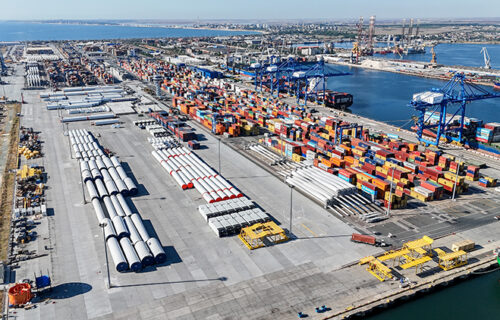
DP World is advancing a €100 million investment programme to modernise its container terminal at the Port of Constanța, introducing electric cargo-handling equipment and infrastructure that will allow vessels to receive electricity while docked. The initiative includes an initial €53.8 million project supported by European Union funding and financing from the European Bank for Reconstruction and Development (EBRD). The investment is intended to reduce dependence on conventional fuels and improve the environmental performance of one of the Black Sea region’s most important maritime logistics facilities.
The first investment package, scheduled for completion by 31 August 2028, will be implemented by Constanța South Container Terminal SRL, the company operating DP World’s facilities in the port. Financial support includes an EU contribution of up to €19.7 million through the Connecting Europe Facility, alongside an EBRD loan of up to €25 million. The remaining expenditure will be covered by the terminal operator. The European funding is administered through the European Climate, Infrastructure and Environment Executive Agency (CINEA), supporting improvements to transport infrastructure within the Trans-European Transport Network.
A substantial part of the programme will involve upgrading the terminal’s electricity distribution infrastructure to accommodate a new generation of cargo-handling machinery. The project covers 29 container storage sections, where approximately six kilometres of electrical distribution systems will be installed to support future electrically powered rubber-tyred gantry cranes. Three electrical substations, each equipped with three transformers rated at 2,000 kVA, will provide the additional capacity required for these operations.
The investment will also introduce electric vehicles for moving containers within the terminal. A dedicated charging facility with ten charging points will be developed, accompanied by the acquisition of ten electric terminal tractors. These vehicles will replace part of the equipment currently dependent on conventional fuels, while a separate electrical substation will support their operation. The transition is expected to reduce emissions associated with internal cargo movements and provide the infrastructure necessary for further fleet electrification.
Another component will enable ships to obtain electricity directly from the port’s infrastructure rather than relying on onboard generators during their stay. Two electrical supply installations, supported by transformers with a capacity of 5 MVA each, will be developed for this purpose. According to the project announcement, the electricity supplied through these systems will come entirely from renewable sources. The technology is intended to reduce emissions and local air pollution generated by vessels while they are berthed, although its practical benefits will depend on the compatibility and use of the facilities by visiting ships.
Beyond the initial €53.8 million investment, DP World is planning a further €46.2 million expenditure on electrically operated cargo-handling equipment. This additional programme includes remotely controlled electric gantry cranes, two electric mobile harbour cranes and further electric terminal tractors. Together, the two investment components will bring the planned expenditure on electrifying the Constanța terminal to €100 million, representing a substantial modernisation of the port’s operational infrastructure.
The programme reflects the growing importance of energy efficiency and environmental performance in European maritime logistics. Constanța occupies a strategic position in regional trade, connecting Black Sea shipping routes with European road, rail and inland waterway networks. By upgrading its electrical infrastructure and introducing cleaner cargo-handling technologies, DP World aims to strengthen the terminal’s long-term operational capabilities while supporting wider European transport decarbonisation objectives. The investment also demonstrates how port infrastructure is evolving as shipping operators, logistics companies and industrial customers face increasing expectations to reduce emissions throughout their supply chains.