Friday, 2 October 2026
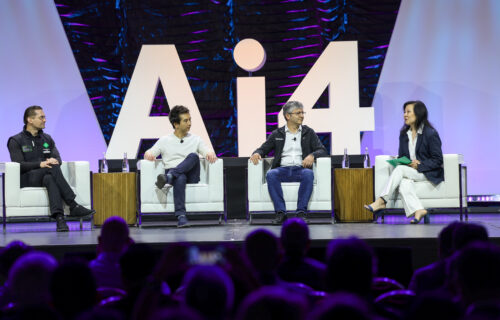
Artificial intelligence is no longer viewed as simply another research tool in pharmaceutical development. At AI4 2026, a panel featuring leaders from three of the industry’s most advanced AI biotechnology companies argued that AI is becoming an integral part of the entire medicine development process, from identifying biological targets to designing new therapies and, eventually, transforming how healthcare approaches ageing itself.
Moderated by Alice Park, senior health and medicine journalist at TIME, the discussion brought together Alex Zhavoronkov, Founder and CEO of Insilico Medicine, Eric Nguyen, Co-founder and CEO of Radical Numerics, and Gabor Gradinaru, Co-founder and Chief Technology Officer of Generate Biomedicines.
Opening the session, Park noted that medicine has progressed through defining technological breakthroughs—from antibiotics and genome sequencing to modern immunotherapies—and suggested that artificial intelligence now represents the next major shift in biomedical science.
AI addresses both biology and the business of drug development
Rather than focusing solely on AI’s ability to generate molecules, the panel emphasised that medicine remains one of the world’s most complex engineering challenges.
Gradinaru explained that AI must solve two separate problems simultaneously. The first is understanding biology itself, where human physiology remains only partially understood. The second is improving the highly complex process required to bring a medicine to market, involving manufacturing, regulation, clinical development and commercialisation.
He argued that AI’s greatest long-term value will come from connecting these fragmented stages into a more integrated development process rather than simply accelerating isolated scientific tasks.
Programming biology instead of observing it
Eric Nguyen described Radical Numerics’ research as an attempt to make DNA “programmable.”
Rather than viewing biology as something scientists simply observe, Nguyen explained that new foundation AI models can now read, write and design DNA sequences. This opens opportunities not only to create new medicines but eventually to engineer biological systems with greater precision.
However, he stressed that today’s achievements represent only the beginning.
Current AI systems can assist with designing proteins, RNA and DNA, but understanding how these therapies behave inside the enormously complex environment of the human body remains one of the industry’s biggest scientific challenges.
Drug discovery measured in thousands of decisions
Alex Zhavoronkov presented perhaps the most mature commercial example of AI-assisted pharmaceutical development.
He explained that Insilico Medicine currently has 31 drug candidates that have reached the stage immediately before or within human clinical development, including one programme in Phase III clinical trials.
According to Zhavoronkov, developing a single drug candidate involves roughly 1,200 individual scientific and technical steps, each representing an opportunity where artificial intelligence can reduce time, improve decision-making and increase the probability of success.
While AI has significantly shortened the pre-clinical discovery process, he acknowledged that once therapies enter regulated human clinical trials, progress must continue at the pace required to ensure patient safety.
Ageing emerges as the industry’s largest therapeutic target
Rather than concentrating on individual diseases, Zhavoronkov argued that ageing itself represents the largest medical challenge facing humanity.
Unlike cancer, diabetes or Alzheimer’s disease, ageing affects every person, making it a universal biological process rather than a single disease.
His company’s strategy is to identify biological mechanisms involved both in ageing and specific diseases, developing medicines that may eventually treat illness while also improving healthy longevity.
He suggested that even extending healthy human life expectancy by a single year across the global population would represent one of the greatest public health achievements in history.
Generative biology aims to standardise medicine development
The discussion also introduced the concept of generative biology, where AI helps design biological systems using reusable components rather than treating every new medicine as a completely unique scientific project.
Gradinaru compared the approach to engineering disciplines, where complex products are assembled from proven, modular building blocks instead of being reinvented each time.
Machine learning could eventually improve prediction of toxicity, manufacturing performance and unwanted side effects while creating repeatable development frameworks that become more accurate as additional clinical data becomes available.
DNA generation raises new ethical responsibilities
The conversation also turned to one of the most sensitive issues surrounding AI in biotechnology.
Nguyen discussed how recent AI foundation models have demonstrated the ability to generate functional DNA sequences, including harmless bacteriophages created entirely through AI-guided design.
While such advances offer powerful new tools for understanding disease and developing therapies, they also introduce concerns over dual-use technologies that could potentially be misused.
He argued that future AI biotechnology companies must develop offensive and defensive capabilities simultaneously, ensuring that systems designed to create biological innovations are matched with equally advanced safeguards capable of detecting and preventing misuse.
The panel compared today’s situation with the recombinant DNA debates of the 1970s, when scientists voluntarily introduced research guidelines before governments established formal regulatory frameworks.
Regulation remains an essential safeguard
Despite enthusiasm for accelerating research, the speakers agreed that human clinical trials remain indispensable.
Although AI can dramatically narrow the number of candidate molecules requiring laboratory testing, real-world biological validation continues to be the ultimate measure of whether new therapies are safe and effective.
Laboratory experiments, animal studies and carefully regulated human trials remain essential for confirming AI-generated predictions before new medicines reach patients.
AI becomes a partner rather than a replacement
The discussion concluded with broad agreement that artificial intelligence is evolving beyond being a productivity tool.
Instead, AI is becoming an increasingly important scientific partner capable of helping researchers understand biology, design therapies and improve the efficiency of pharmaceutical development.
Rather than replacing scientists, the panellists suggested AI will enable researchers to explore biological questions that were previously too complex, time-consuming or expensive to investigate, potentially shortening the path from scientific discovery to treatments that improve both health and longevity.
© 2026 cij.world