Saturday, 10 October 2026
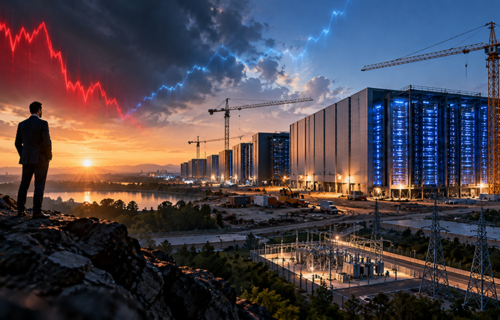
The rapid expansion of artificial intelligence is creating enormous opportunities for technology companies, infrastructure developers and property investors. However, the financial commitments required to support this growth are attracting closer examination. Rising credit protection costs for some major technology borrowers, increasingly complex financing arrangements and difficulties affecting selected data centre projects suggest that investors are becoming more selective about how the next generation of AI infrastructure will be funded.
The global investment programme supporting artificial intelligence is entering a more demanding phase. Technology companies continue to commit substantial resources to computing facilities, advanced processors and electricity infrastructure, encouraged by expectations that AI services will become increasingly important across the global economy. Yet the scale of these commitments is raising questions about how much additional capital the industry will require and whether the financial returns generated by new facilities will justify their development costs.
The shift is becoming apparent in corporate debt markets, where investors are paying greater attention to the financial obligations associated with AI expansion. Although major technology companies continue to attract substantial investment, the cost of obtaining protection against potential defaults by some borrowers has increased. Recent financial reporting has identified higher credit default swap spreads for several technology companies involved in artificial intelligence, including Oracle, Alphabet, Meta and Microsoft. These contracts allow investors to obtain financial protection if a borrower fails to meet its debt obligations. An increase in their price can indicate greater concern about a company’s financial position, although trading conditions and wider market developments can also influence the movement.
One notable example emerged in early October, when the five-year credit default swap spread associated with SpaceX reportedly reached approximately 194 basis points, compared with around 110 basis points in June. The increase coincided with reports that the company was seeking approximately $40 billion in financing to purchase advanced computing equipment for AI operations. The proposed arrangements reportedly included around $10 billion in bank loans and $30 billion in corporate debt. These were financing plans rather than completed transactions, but their scale illustrates the substantial financial commitments that can accompany the expansion of artificial intelligence infrastructure.
The wider challenge is the extraordinary amount of capital required to construct and operate the physical infrastructure supporting AI. Large computing facilities depend on specialised buildings, advanced processors, extensive cooling systems, high-capacity telecommunications connections and reliable electricity supplies. These requirements involve substantial expenditure before the facilities can begin generating income, exposing developers and investors to construction delays, financing costs and uncertainty about future demand. Morgan Stanley estimates that global investment in data centres and associated computing infrastructure could reach approximately $2.9 trillion between 2025 and 2028. Its research suggests that around $1.4 trillion could be supported by the internal financial resources of major technology companies, leaving approximately $1.5 trillion to be provided through external financing arrangements.
These figures represent forecasts rather than confirmed expenditure or borrowing commitments. Nevertheless, they illustrate the potential importance of banks, corporate bond investors, private credit funds and institutional capital in supporting the next stage of AI infrastructure development. The demand for capital is developing alongside substantial borrowing requirements across governments and other industries. As technology companies compete for financing, investors may demand higher returns to compensate for the risks associated with large investment programmes. Even businesses with substantial operating income can face higher financing expenses when borrowing requirements increase or market conditions become less favourable.
For data centre developers, the consequences can be significant. Projects frequently require considerable initial investment, while construction schedules depend on the availability of equipment, electricity connections and regulatory approvals. Financing costs may accumulate throughout the development period, meaning delays can reduce expected returns before a facility begins operating. These concerns have become visible in selected infrastructure financing transactions. In September, approximately $18 billion of loans associated with Project Jupiter, a major Oracle-linked data centre development in New Mexico, reportedly encountered difficulties in the debt market. The loans were being quoted at between 89 and 91 cents for each dollar of principal, indicating that potential investors were assigning a discount to their original value.
The reported quotations did not establish that the entire financing package had been sold at those prices. However, they suggested that lenders and investors were becoming more cautious about the financial risks associated with the development. Project Jupiter is intended to provide substantial computing capacity connected with Oracle and OpenAI. The development has attracted attention because of its scale, financing arrangements and infrastructure requirements. Concerns have included local opposition, environmental considerations, the availability of electricity and the financial commitments associated with Oracle’s wider AI investment programme.
Further uncertainty emerged when Oracle reportedly issued a contractual notice concerning possible delays in securing the electricity infrastructure required for the development. The project’s developer maintained that the principal participants remained committed to completing the facility. The available evidence therefore does not establish that Project Jupiter has been abandoned, but it demonstrates how uncertainty surrounding infrastructure delivery can affect investor confidence and the market value of associated financing.
Electricity availability is becoming one of the most important factors influencing data centre investment. Large AI facilities require continuous power supplies, often at levels that existing electricity networks cannot immediately accommodate. Securing the necessary capacity may involve new substations, transmission infrastructure or additional electricity generation, all of which can influence development schedules and costs. A location may offer suitable land, planning permission and access to telecommunications networks, yet remain commercially unsuitable if sufficient electricity cannot be delivered within the required timeframe.
The availability of electricity is therefore becoming increasingly relevant to the value of development sites. Locations with established connections or credible arrangements for obtaining additional capacity may provide greater certainty than sites requiring extensive infrastructure investment. However, their commercial attractiveness also depends on construction costs, customer demand, regulatory requirements and the financial structure of individual projects. For lenders, the challenge is to determine whether individual developments can generate sufficient income to justify the financial commitments required to complete them. This involves examining construction programmes, infrastructure availability, contractual arrangements and the financial strength of the companies expected to occupy or operate the facilities.
The relationship between technology companies and real estate investors adds another dimension to these risks. Many data centres are developed or owned by specialist property and infrastructure businesses that enter into long-term agreements with technology companies. These arrangements allow computing capacity to be provided without requiring technology businesses to finance every element of the underlying development directly. For property investors, agreements with financially strong customers can support substantial borrowing and provide greater confidence in future income. Nevertheless, the financial performance of a development remains dependent on construction costs, infrastructure delivery and the ability of the occupier to meet its contractual obligations.
This creates a connection between corporate borrowing conditions and property investment. If financial markets become more concerned about the obligations undertaken by major technology companies, lenders may also reconsider the risks associated with developments that depend on those companies for future revenue. The relationship is not automatic. An increase in the credit protection costs of a technology company does not necessarily mean that financing for every data centre associated with that business will become more expensive. The outcome depends on contractual arrangements, the financial resources of developers, the security available to lenders and the availability of alternative capital.
The financing structures supporting these projects are also becoming more complicated. Some technology companies are using partnerships, guarantees and specialist investment arrangements to secure computing capacity without necessarily financing every asset through conventional corporate borrowing. Such arrangements can provide flexibility and make additional investment possible. However, they also require investors to examine financial commitments that may extend beyond a company’s outstanding bonds and bank loans. Guarantees, contractual purchase obligations and agreements linked to the future value of equipment or infrastructure can create financial exposure even when the associated assets are held by separate businesses.
This does not mean that alternative financing structures are inherently problematic. They are widely used across infrastructure and property markets and can distribute investment requirements among participants with different financial capabilities. Their effectiveness depends on the transparency of the arrangements, the allocation of responsibilities and the ability of each participant to meet its obligations. For lenders, understanding these relationships is particularly important when projects involve substantial expenditure on computing equipment. Unlike the buildings that accommodate data centres, advanced processors may have relatively short commercial lives because technological improvements can reduce the competitiveness of existing equipment.
A facility may remain physically suitable for decades, while the technology installed within it requires replacement or upgrading much sooner. This creates additional investment requirements that must be considered alongside construction expenditure, electricity costs and debt repayments. The distinction matters because the commercial success of a data centre depends on more than the value of the underlying property. It also depends on the performance of its computing equipment, the cost of operating that equipment and the continued demand for the services being provided.
Despite the concerns emerging in credit markets, there is insufficient evidence to conclude that the global data centre industry is experiencing a widespread financing crisis. Major technology companies continue to invest substantial amounts in AI infrastructure, and banks and institutional investors remain active in financing large developments. The available evidence instead points towards greater selectivity. Investors are examining the relationship between expected revenue, financial obligations and project delivery more closely, particularly where developments require substantial borrowing before becoming operational.
For Central and Eastern Europe, the changing international financing environment could influence future investment in digital infrastructure. Poland, Czechia, Slovakia, Hungary and Romania offer different opportunities for data centre development, shaped by land availability, electricity infrastructure, telecommunications connectivity and access to European markets. The region’s ability to attract additional investment will depend partly on whether developers can combine these advantages with reliable project delivery and commercially sustainable financing. However, there is currently insufficient evidence to establish that recent developments in US technology credit markets have materially restricted data centre financing across Central and Eastern Europe.
The longer-term direction of AI infrastructure investment will depend on how commercial demand develops relative to the expenditure required to provide computing capacity. Continued growth in AI services could support substantial additional investment, while slower revenue growth, higher operating costs or infrastructure delays could reduce the returns available to investors. For commercial real estate, the important distinction is between the expected growth of artificial intelligence and the financial performance of the facilities built to support it. Strong demand for computing services does not automatically guarantee that every data centre development will achieve its projected returns, particularly when substantial capital must be committed before income is generated.
The global expansion of artificial intelligence remains a major source of opportunities for technology companies, property developers and infrastructure investors. However, as the financial commitments involved continue to grow, access to capital, reliable electricity infrastructure and disciplined project delivery are likely to become more influential in determining which developments proceed. The next phase of AI investment may therefore be shaped not only by advances in computing technology and demand for new services, but also by the ability of developers and their financial partners to deliver infrastructure that generates sustainable returns.
Source: CIJ.World Research & Analysis Team