Sunday, 25 October 2026
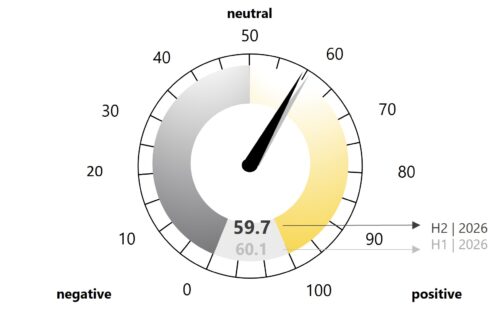
Private debt markets entered the second half of 2026 with investor confidence remaining positive, while real estate lenders are showing greater interest in financing development and repositioning projects. The BF.Private Debt Market Sentiment Index stood at 59.7 points, little changed from 60.1 in the first half and remaining comfortably above the neutral level of 50.
Within real estate debt, the purpose of financing is changing. The proportion of respondents reporting development financing doubled from 20% to 40%, while financing for refurbishment and repositioning remained at 40%. Acquisition financing declined from 80% to 60%, refinancing from 60% to 40%, and short-term bridge financing from 80% to 20%. None of the real estate debt respondents reported distressed or special-situation transactions.
The figures suggest private lenders are increasingly supporting projects where capital can be deployed into development or improvements rather than concentrating primarily on refinancing existing assets. Lending structures nevertheless remain disciplined. Among the real estate debt respondents, 80% of transactions were within a 56–65% loan-to-value range, with the remaining 20% between 66% and 75%. Average all-in spreads were estimated at approximately 430 basis points above the three-month base rate.
Negotiating conditions are also moving towards lenders. Across the broader private debt survey, the share of respondents reporting improved terms for lenders increased from 20.9% in H1 to 38.7% in H2, with expectations indicating that lender influence over pricing and transaction structures could remain stronger during the coming six months.
Property-sector risks remain uneven. Offices and high-street retail recorded the highest stress levels within real estate debt portfolios, both scoring 8.7 in the survey. Logistics and industrial property stood at 6.0, residential at 4.4 and hospitality at 3.6, highlighting significant differences in perceived risk between property sectors.
Fundraising remains active but is taking longer. Among real estate debt managers, the proportion reporting fundraising periods exceeding 18 months increased from 20% to 40%, while none reported completing a fundraising process within six to twelve months during H2. Across private debt more broadly, credit performance remained relatively stable, although the proportion expecting a significant increase in defaults or non-accruals over the next six months rose from 1.6% to 6.6%.
The results point to a private real estate lending market where capital remains available but underwriting discipline is increasing. Development and repositioning are attracting a greater share of financing activity, while lenders are gaining negotiating power and remaining cautious towards sectors facing greater pressure.
The real estate results should nevertheless be treated as directional rather than representative of the entire market. The survey contained 63 respondents overall, of which five were primarily real estate debt managers. Those five represented organisations with average assets under management of approximately €115 billion, but the small sample makes the findings more useful as an indication of changing lender sentiment than as a comprehensive measure of the private real estate debt market.