Friday, 23 October 2026
Volkswagen’s Osnabrück factory is set for a major industrial transformation after the carmaker agreed the framework for a potential sale of the site to Israel-based Aurelius Capital and the State of Lower Saxony.
Under the proposed structure, Aurelius would become the majority shareholder, while Lower Saxony would participate as a co-owner. The transaction has not yet been completed and remains dependent on final agreements, corporate approvals and regulatory reviews.
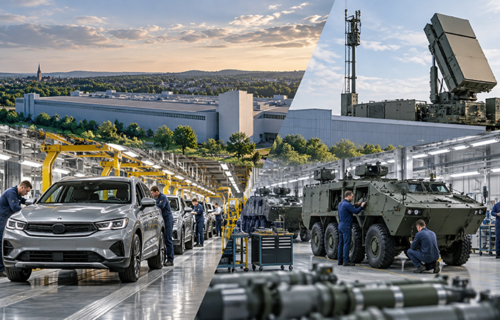
Volkswagen decided in 2024 to end vehicle manufacturing at Osnabrück in summer 2027. Rather than closing the industrial site, the proposed new ownership plans to gradually reposition it for security and defence manufacturing.
The first planned programme involves cooperation with Israel’s Rafael Advanced Defense Systems. The parties are examining the possibility of manufacturing air-defence systems and components in Osnabrück for Germany and other European markets. Volkswagen said additional industrial partnerships could follow.
The conversion could also preserve a substantial proportion of the existing workforce. Volkswagen’s works council says more than 1,200 employees have been given a perspective at the site, while Reuters reports that around 1,400 of approximately 1,800 existing jobs could initially be retained under the proposed arrangement.
“Osnabrück offers something that cannot be built from scratch: years of experience with demanding products, precise manufacturing processes, high quality, well-established teams and a strong tradition,” said Tomer Jacob, Managing Director of Aurelius Capital.
The agreement comes as Volkswagen undertakes a much broader restructuring of its European manufacturing network. The group says its European factories have capacity for more than 500,000 vehicles beyond current requirements, while future production programmes have not been guaranteed for plants in Emden, Zwickau, Hanover and Neckarsulm after existing allocations expire between 2031 and 2034.
Osnabrück could therefore provide a model for how some surplus automotive manufacturing capacity can be given an alternative industrial use. Existing factories offer production infrastructure, skilled workforces and established supply connections that can potentially be adapted more quickly than entirely new manufacturing facilities can be developed.
The shift also reflects growing convergence between Europe’s automotive and defence industries. Higher defence expenditure is creating demand for additional manufacturing capacity at the same time as parts of the automotive sector face weaker demand, high European production costs and increasing competition from Chinese manufacturers. Other industrial groups have similarly explored ways of redirecting automotive production expertise towards defence.
Lower Saxony Prime Minister Olaf Lies described the agreement as an industrial opportunity for Osnabrück, arguing that changing European security requirements are creating demand for greater domestic manufacturing capacity.
For Volkswagen, the proposed transaction offers an alternative to leaving a major manufacturing property without a long-term industrial function after car production ends. For the wider German property and manufacturing market, Osnabrück could become an important test of whether Europe’s defence expansion can help reposition large automotive sites that no longer fit carmakers’ future production requirements.
Source: CTK