Thursday, 27 August 2026
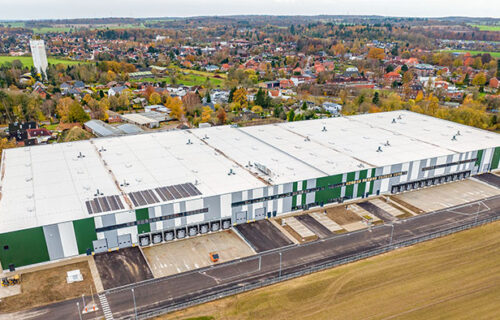
German e-commerce company Dieseo is doubling its logistics footprint at Garbe Industrial’s facility in Lensahn, northern Germany, taking an additional 11,700 sqm and bringing the entire 23,400 sqm property under a single occupier.
The expansion comes only around a year after the Kiel-based company moved into the first half of the building in August 2025. Dieseo, which operates the Pammys footwear brand, uses the site for warehousing and order fulfilment and has now committed to the second unit as it prepares for further growth.
“With the additional space, we’re laying the groundwork for our growth to €300 million in revenue while optimising our logistics processes,” said Fatbardh Pakashtica, CEO of Dieseo. He added that having additional capacity available at the same location enables the company to expand its warehousing and distribution operations without moving to another facility.
According to the company, Pammys has built a customer base of more than 1.5 million. Dieseo also points to a 2025 ranking published by Statista and the Financial Times in which the business was placed first among Europe’s fastest-growing e-commerce brands.
The rapid expansion provides a practical example of how growth among digitally led consumer businesses can translate into additional physical logistics requirements. While online retailers may operate without extensive conventional store networks, expanding sales volumes still require warehouse capacity for inventory, order processing and distribution.
For Garbe Industrial, the additional lease brings the Lensahn property to full occupancy. The building was designed as two approximately equal units, allowing Dieseo initially to occupy around half of the facility before expanding into the remaining space as its requirements increased.
That flexibility can be particularly relevant for younger businesses whose future logistics requirements are difficult to predict. Taking a smaller initial area reduces the property commitment during an earlier stage of expansion, while immediately available neighbouring capacity can allow a tenant to grow without disrupting an established distribution operation.
Lensahn is located in East Holstein, approximately 50 kilometres north of Lübeck. The logistics centre lies several hundred metres from the A1 motorway, providing road connections south towards Hamburg, Bremen and the Ruhr region and north towards the Baltic coast.
The location could acquire greater strategic significance as transport infrastructure between Germany and Denmark improves. The A1 corridor leads towards the future Fehmarnbelt fixed link connecting the German island of Fehmarn with Lolland in Denmark. Garbe’s material currently anticipates the cross-border connection becoming available from 2031.
Once operational, the new connection is expected to shorten travel between northern Germany and Denmark, potentially strengthening the wider corridor’s relevance for logistics and distribution serving Germany, Scandinavia and other northern European markets.
The Lensahn property also incorporates a number of energy and sustainability features. It holds DGNB Gold certification and has a rooftop photovoltaic installation with a peak capacity of 2.9 MW. Heating is provided through heat pumps and the building operates without fossil fuels for its heating system. The lease between Garbe and Dieseo also incorporates provisions governing environmental aspects of the property’s operation.
The transaction is relatively modest in size compared with the large fulfilment centres typically associated with major international e-commerce operators, but the speed of Dieseo’s expansion makes it notable. Moving from approximately 11,700 sqm to 23,400 sqm within around a year demonstrates how quickly logistics requirements can change when an online consumer business enters a high-growth phase.
It also highlights the role of modern logistics developments that allow occupiers to expand within the same property. For landlords, retaining a rapidly growing tenant can absorb vacant space without the downtime and expenditure associated with finding another occupier. For tenants, adjoining capacity can remove the cost and operational disruption of establishing a second distribution location.
Dieseo’s expansion therefore represents more than the completion of a leasing programme at a northern German warehouse. It illustrates how rapid e-commerce growth can translate directly into physical property demand and how flexible logistics buildings can accommodate that growth without forcing occupiers to relocate their operations.