Saturday, 19 September 2026
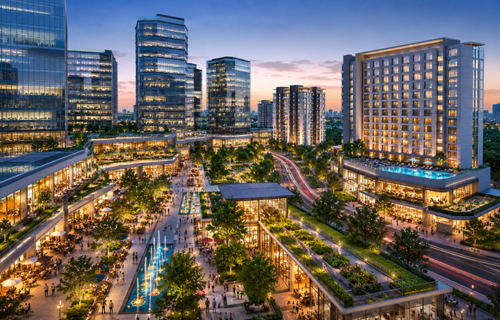
India’s real estate sector is undergoing a significant transformation as developers, investors and occupiers increasingly favour mixed-use developments that combine retail, office, hospitality and, in many cases, residential components within a single integrated destination.
Projects emerging across major urban centres, including several large-scale schemes in Noida, Bengaluru, Hyderabad and Mumbai, demonstrate how the traditional separation between property sectors is gradually giving way to more integrated development models. What was once considered a niche approach is increasingly becoming a preferred strategy for developers seeking to maximise land value and create more resilient investment platforms.
One of the primary drivers behind this shift is economics. Land costs in India’s major metropolitan markets have risen substantially over the past decade, while construction costs, financing costs and labour expenses have also increased. In this environment, developers are seeking ways to optimise land utilisation and diversify revenue streams. Mixed-use developments allow multiple income sources to coexist within a single project, reducing reliance on any one asset class.
The model offers a combination of short-term and long-term financial benefits. Residential components often generate early cash flow through unit sales, helping finance project development. Office, retail and hospitality components can subsequently provide recurring rental income and long-term asset appreciation. This combination creates a more balanced risk profile that appeals to both developers and institutional investors.
Changing consumer behaviour is another important factor driving demand. Modern urban residents increasingly seek convenience, connectivity and experience-driven environments. Offices are no longer viewed solely as places of work, while shopping centres are evolving into lifestyle destinations that combine retail, dining, entertainment and wellness facilities. Hotels similarly benefit from being integrated into mixed-use districts where they can serve business travellers, tourists, residents and visitors simultaneously.
The workplace itself has evolved. Following the pandemic, occupiers have placed greater emphasis on employee experience, accessibility and amenities. Corporate tenants increasingly prefer office locations that offer restaurants, cafes, hotels, fitness centres and retail services within walking distance. Integrated developments can meet these requirements more effectively than standalone office buildings.
Urbanisation is further strengthening the case for mixed-use projects. As India’s cities continue to expand, land in prime locations is becoming increasingly scarce. Mixed-use developments allow developers to extract greater value from strategic sites while creating districts that remain active throughout the day and evening. This approach can also support more sustainable urban growth by reducing commuting distances and encouraging walkable environments.
The hospitality sector has become an increasingly important component of these developments. Hotels integrated within office and retail districts benefit from multiple demand sources and can achieve stronger year-round occupancy. Business travellers, shoppers, event attendees and local visitors can all contribute to hotel demand, creating operational advantages compared with standalone hospitality assets.
Institutional investors have taken notice of these trends. India’s real estate sector attracted significant levels of equity investment in 2025, with a substantial portion directed toward land acquisition and development opportunities that included mixed-use elements. Investors are increasingly attracted by projects capable of generating diversified income streams while offering exposure to multiple segments of the real estate market through a single asset.
Despite these advantages, mixed-use development remains complex. Successful projects require careful planning, phased execution, effective infrastructure integration and strong operational management. Coordinating multiple asset classes within one project presents greater challenges than developing a single-use property. Regulatory approvals, financing structures and long development timelines can also increase project complexity.
As a result, execution has become a critical differentiator. Industry leaders frequently note that the long-term success of mixed-use developments depends not only on design but also on the ability to create vibrant ecosystems where different uses complement one another.
The growing convergence of retail, office and hospitality is therefore more than a development trend. It reflects changing patterns of urban living, working and consumption. As India’s cities continue to grow and mature, integrated mixed-use developments are likely to play an increasingly important role in shaping the country’s urban landscape, attracting both domestic and international investors while creating new models for city development.
Source: CIJ.World India Research & Analysis Team