Sunday, 6 September 2026
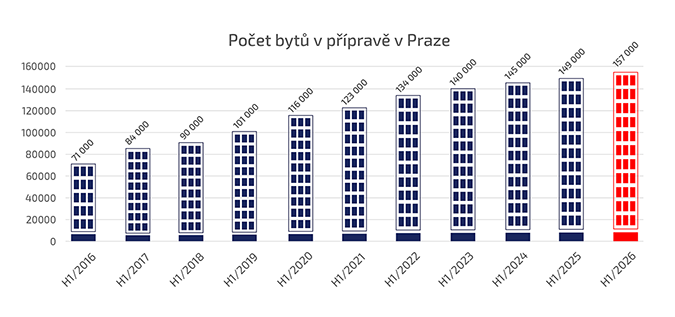
According to an analysis by Central Group, approximately 157,000 apartments are currently in various stages of preparation across Prague, representing the largest residential development pipeline recorded in the Czech capital. The developer estimates that around one-quarter of these planned units are being prepared by the company itself.
Despite the substantial development pipeline, Prague continues to face a shortage of housing supply as lengthy permitting procedures delay the delivery of projects to the market. Industry participants argue that the imbalance between supply and demand is contributing to rising property prices and worsening housing affordability.
Demand for new housing remained strong during the first quarter of 2026, with approximately 1,800 new apartments sold in Prague, according to market data cited by Central Group. Sales volumes remained broadly in line with levels recorded at the end of 2025 and reflected the average demand seen over the past two years.
However, the number of available new homes has remained relatively stable at around 5,000 units in recent years, limiting the market’s ability to respond to sustained buyer demand. Central Group reports that average prices for new apartments in Prague have reached approximately CZK 182,000 per square metre.
The company also points to rising construction costs as an additional challenge. According to its data, construction delivery costs have increased by 27 percent over the past two years. Central Group argues that elevated costs have made it more difficult to launch new projects and have contributed to delays in planned developments.
The analysis indicates that most future residential development is concentrated in Prague 4, Prague 5 and Prague 9, where larger redevelopment sites and brownfield opportunities remain available. Development opportunities in the city centre are considerably more limited.
Industry representatives continue to identify the permitting process as one of the main constraints on housing delivery. According to Central Group, Prague currently permits approximately 5,000 apartments annually, while market demand would require significantly higher levels of construction. The developer estimates that the city’s housing shortage has grown substantially over the past two decades, although the exact size of the deficit varies across different market studies.
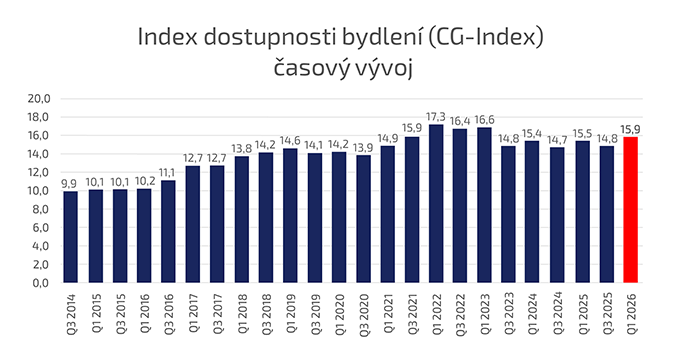
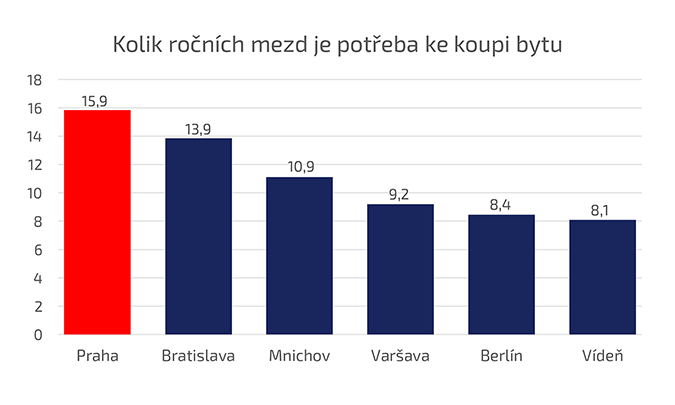
Housing affordability remains under pressure. Central Group’s latest affordability index suggests that the purchase of a typical 70 sqm new apartment in Prague now requires the equivalent of 15.9 annual gross salaries. According to the company, apartment prices have increased by almost 180 percent over the past decade, while wage growth has been significantly lower over the same period.
The recently approved Prague metropolitan zoning plan is expected to support future housing development by opening additional brownfield and transformation areas for construction. Market participants are also closely monitoring the proposed amendment to the Building Act, currently being debated in parliament, which aims to streamline permitting procedures through measures including a unified state building authority and accelerated approval processes for large residential developments.
Central Group currently has approximately 3,200 apartments under construction in Prague, representing projects valued at more than CZK 25 billion. The company expects to complete a record 1,600 apartments during 2026.
At the same time, Central Group has continued to postpone the launch of approximately 2,000 additional apartments, citing what it considers unsustainably high construction costs. The developer says the projects are ready to proceed once market conditions stabilise and construction pricing becomes more favourable.
Looking ahead, Central Group reports that it is preparing more than 40,000 apartments across approximately 60 locations throughout Prague. Following a record year for land acquisitions in 2025, when the company acquired sites for around 5,300 future homes, the developer says it continues to explore additional investment opportunities linked to the city’s newly approved zoning framework.