Tuesday, 8 September 2026
MLP Group is reinforcing its presence in Austria with the acquisition of a second development site in Vienna, underlining the growing importance of urban logistics assets in core European cities.
The company has secured a 5,879 sqm plot in the Austrian capital, located in the 11th district and within close proximity to Wien Hauptbahnhof. The site’s connectivity and central positioning are expected to support last-mile distribution and business operations targeting the city’s dense urban market.
The project will be delivered as a brownfield redevelopment, with demolition of existing structures scheduled by the end of the second quarter of this year. In parallel, MLP Group will advance permitting, with completion of the new scheme targeted between the second and third quarters of next year.
The planned development will take the form of a modern urban business park, focusing on smaller, flexible units ranging from approximately 300 to 1,000 sqm. This segment remains undersupplied in Vienna, despite increasing demand from small and medium-sized enterprises seeking centrally located space.
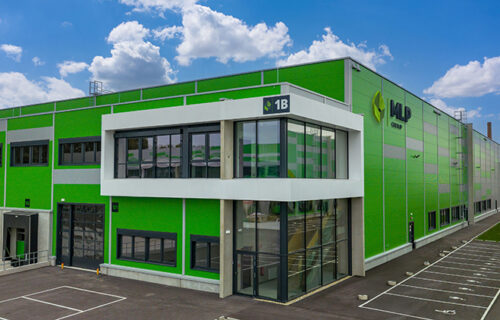
The new scheme will complement the existing MLP Business Park Vienna, allowing the group to build a more comprehensive offering within the city’s urban logistics segment. The strategy reflects a broader shift among developers towards smaller-format assets positioned close to end users and transport infrastructure.
According to Radosław T. Krochta, CEO of MLP Group, Vienna remains a priority market within the company’s European expansion strategy, with the latest acquisition representing a further step in consolidating its footprint in key metropolitan areas.
The project is also expected to incorporate sustainability features aimed at improving energy performance and reducing environmental impact, in line with evolving occupier requirements and regulatory standards.
For Vienna, where availability of centrally located logistics space remains constrained, the development highlights both the intensity of demand and the continued repositioning of urban land towards higher-value, last-mile uses.