Thursday, 10 September 2026
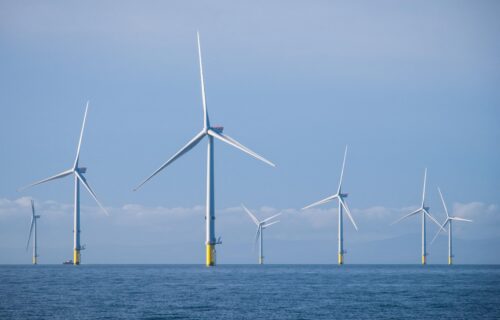
Offshore wind energy is becoming an increasingly important part of Poland’s economic development, with growing involvement from domestic companies and expanding industrial capacity. The sector is contributing to activity across manufacturing, logistics and services, while also creating demand for specialised skills.
Polish firms are taking part in various stages of offshore projects, including the production of steel components, development of port infrastructure and the installation and maintenance of wind farms. This reflects a broader shift towards greater local participation in a sector that has often been associated with international players.
The expansion of offshore wind is also influencing employment. Estimates suggest that up to 20,000 to 30,000 jobs could be created by 2030, covering roles such as engineers, technicians, logistics specialists and port operators. The sector is also contributing to the emergence of new professional specialisations linked to renewable energy.
Several infrastructure projects are already underway. The offshore terminal in Świnoujście, developed by the ORLEN Group, has been operational since mid-2025 and supports the installation of offshore wind components. In parallel, a new installation terminal is being developed at the Port of Gdańsk, while industrial facilities such as the Baltic Towers factory are producing structural elements for turbine towers.
One of the most advanced offshore wind developments is the Baltic Power project, a joint venture between the ORLEN Group and Northland Power. The project, located in the Baltic Sea, is expected to reach a capacity of around 1.2 GW and generate a meaningful share of Poland’s electricity demand once operational. Commissioning is planned for late 2026.
The development of offshore wind is also shaping supply chains within Poland. Domestic companies are involved in producing components, building onshore infrastructure and supporting installation activities. At the same time, ports and logistics hubs are being adapted to handle large-scale equipment and transport operations.
Over the longer term, offshore wind is expected to represent one of the largest areas of investment in Poland’s energy sector. The scale of planned projects indicates significant capital expenditure, alongside continued expansion of industrial capabilities and workforce development.
Despite its growth, the sector faces challenges, including public debate around environmental and economic impacts. Industry organisations and stakeholders are responding with information campaigns aimed at addressing concerns and providing data on the effects of offshore wind projects.
Overall, offshore wind development in Poland is progressing as part of a broader shift in the energy system, with increasing links to domestic industry and infrastructure. The extent to which local companies continue to expand their role in the supply chain will be a key factor in determining the sector’s long-term economic impact.