Crevedia Retail Park expects tens of thousands of visitors per month in 2025

Crevedia Retail Park, with a total leasable area of 11,400 sqm, has been inaugurated, and developer REPACO Capital expects tens of thousands of visitors per month throughout 2025.

The estimate considers the potential of a clientele of at least 70,000 inhabitants for retailers who have rented spaces in Crevedia Retail Park, from an area located in the immediate vicinity of northwest Bucharest, spread over Ilfov and Dâmbovița counties, which has seen consistent population growth in recent years.
Among the tenants of Crevedia Retail Park are a 1,800 sqm supermarket (Annabella) and other stores specializing in the trade of: footwear (CCC and Deichmann); cosmetics, healthcare and pharmacy (DM, Dr Max); clothing (New Yorker, Sinsay); toys (Noriel); furniture (JYSK); various products, from clothing to household items and decorations (KiK, Pepco, TEDi). Added to these is a drive-in restaurant, opened by the Finnish fast-food chain Hesburger, and a fitness center Stay Fit Gym.

REPACO Capital is currently developing other retail parks: two under construction, in Curtea de Argeș (6,100 sqm) and Breaza (3,100 sqm), and two others in the authorization process, in Timișoara (4,500 sqm) and Brașov (5,500 sqm).

Bucharest, Ilfov, and Timiș lead Romania in mortgage loans issued in 2024

Bucharest, Ilfov and Timis are the top three regions with the most tabulated mortgages in 2024 in Romania, followed by Iasi and Constanta, according to an analysis released by online broker Ipotecare.ro and financial consultant and mortgage lending company SVN Credit Romania.

About 86,600 mortgages were tabulated last year in Romania, up 26.5% to 2023’s level. The biggest annual increase, of 107%, was registered in Iasi. However, this was determined by the delayed tabulation of some presales contracts closed in previous years. Significant annual increases in tabulated mortgages were also registered in Bihor, of 65%, in Arges, of 33.6%, and Brasov, where 33% more mortgages were issued last year.

Compared to the total number of home sales concluded last year in Romania, tabulated mortgages hold a share of 51%, according to SVN’s calculations based on statistics published by the National Agency for Cadastre and Land Registration. However, it should be noted that the total number of tabulated mortgages also include refinancings, reconversions and restructurings, as well as personal loans with mortgages. Thus, cash transactions still hold the majority of home sales closed in Romania.

”The mortgage market returned to an upward trend since the middle of the last year and we estimate that 2025 will bring an acceleration of the growth rhythm of the mortgage loans granted. A significant part of the financing institutions have already aligned their mortgage offers at a level below 5% / year in the fixed interest rates segment, a level that is attractive for those wishing to finance a home purchase. The mortgage market will continue to develop rapidly in the coming years, especially in the large regional centres of the country, such as Timisoara, Cluj – Napoca, Brasov or Iasi, but also in medium – sized cities,” said Alexandru Radulescu, managing partner SVN Romania | Credit & Financial Solutions.

The next position in the ranking of regions with the most mortgage loans granted in 2024 is occupied by Cluj, with an annual increase rate of 24.7%. The city on the Somes river is only on the six position due to the high level of savings registered in the region, with cash transactions holding thus a large share compared to other regions in the country. Brasov, Sibiu and Bihor occupy the following positions among the regions with the most tabulated mortgages in Romania in 2024, while Arges closes the top 10, according to Ipotecare.ro analysis.

Mortgage loans worth EUR 8.2 billion were granted in total at a national level in the first 11 months of 2024, up 42% compared to the first 11 months of 2023 – please note that this volume also includes refinancings, conversions, transfer and restructurings.

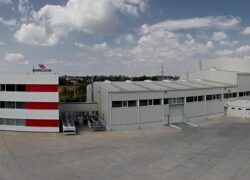
Romcolor 2000 plans new investment in Romania

The manufacturer of dyes and additives for plastics, Romcolor 2000, is preparing to expand its factory in Copăceni, south of Bucharest.

The plan foresees an increase of about 25% of the built area and also includes a block for service housing. In addition, Romcolor 2000 wants to place a special machine for loading bulky bags. The investment in these works was estimated by the designers at about EUR 1.5 million.

Romcolor 2000 plans to start, in the spring of this year, the works to expand the main production hall with 3 additional buildings. To make room for the new constructions, the company opted for the demolition of an office building that they had on the property.

Romcolor 2000 is one of the most important manufacturers of dyes and additives for plastics in Eastern Europe. The Ilfov factory occupies an area of 12,000 square meters and was built in 2008, after the sale of the production unit in Bucharest to real estate developer Ion Rădulea, who integrated it into the Sema Parc complex.

Source: Profit.ro

Colliers: Top 10 predictions for the Romanian real estate market in 2025

Romania’s economy and real estate market enter 2025 with positive long-term prospects, but face significant challenges in the year ahead, Colliers consultants predict in the report ”Top 10 Forecasts for the Romanian Real Estate Market in 2025”. Optimism about long-term economic growth is driven by factors such as infrastructure investments, entering the Schengen zone, the favorable productivity-to-cost ratio in the labor market, and signs that some Romanians who migrated are beginning to return to the country. But risks remain high, given modest economic growth, a substantial budget deficit, political instability, and a global environment dominated by geopolitical and economic uncertainties.

Colliers consultants forecast economic growth of just over 2% in 2025, but caution that there are significant risks we could result in a softer outcome. In 2024, Romania’s economy grew at a sluggish pace of less than 1%, far below the initial expectations of over 3% at the start of the year. While the outlook for 2025 is moderately optimistic, supported by investment and a relatively stable consumer sector, economic vulnerabilities persist.

Political instability and uncertainty are expected to remain high in 2025, according to Colliers consultants. Romania is facing an unprecedented political situation after the Constitutional Court annulled the presidential elections and ordered a rerun, likely to take place in spring 2025. The current context is defined by an arguably fragile ruling coalition of several parties, primarily united by a pro-European stance, and a strong opposition led by three Eurosceptic parties. Political turbulence and uncertainty are anticipated to persist, especially as the new government will need to address the largest structural budget deficit in the EU amid a challenging external environment. This combination leaves Romania vulnerable to sudden changes on the global scene.

Geopolitics remains at the forefront, with adaptability emerging as the key to navigating an ever-changing international environment. “No Quiet Moment” aptly summarizes the current geopolitical landscape, say Colliers consultants. From the new Trump administration in the US and potential trade tensions between major economic blocs, to China’s slowing economy, the war in Ukraine, crises in the Middle East, and uncertainties in Southeast Asia, the world is grappling with a highly challenging global environment defined by unpredictable variables. The unwritten rule of recent years – “expect the unexpected” – remains as relevant as ever, and 2025 is no exception, warn Colliers experts. In this volatile global context, Romania maintains a firm strategic alignment with the EU and US bloc.

Full Schengen membership starting in 2025 and ongoing infrastructure development are driving Romania’s long-term economic optimism. Additionally, Romania’s entry into the US Visa Waiver Program strengthens its global standing. Notably, Romania ranked 7th in the global passport strength index last year, alongside countries such as Canada, Singapore, and the United Kingdom. Economically, full Schengen accession is expected to spark a new wave of investment and production initiatives in the medium term. Simultaneously, road infrastructure has expanded significantly, reaching nearly 1,200 kilometers of high-speed roads by early December 2024 after a record year of deliveries (around 200 kilometers in 2024). Furthermore, around 700 kilometers are under construction, with an additional 700 kilometers in the planning phase.

Relatively low rental demand redefines the office market. Modest economic growth in most Western countries, domestic uncertainties, and the unfavorable momentum carried over from 2024 indicate a challenging 2025 for the local office market. New rental demand is expected to remain low, comparable to previous years, or even hit new lows in an adverse economic scenario – a far cry from the highs of 2017-2019. One positive factor for developers is the lack of significant new office space deliveries in 2025, both in Bucharest (except for the small One Gallery project) and in other cities, which will also see low deliveries. This situation supports a gradual decline in vacancy rates for high-quality buildings, further widening the gap between modern, energy-efficient, well-located projects and the less competitive properties. This dynamic is creating a dual market, note Colliers consultants, where modern, well-positioned buildings continue to attract tenants, while less efficient spaces struggle to secure or retain occupiers.

Romania’s industrial market is expected to moderate slightly in 2025, influenced by relatively weak economic activity in other countries. However, the long-term drivers supporting the growth of the logistics and industrial sectors remain strong. The favorable wage-productivity gap will continue to attract companies looking to relocate production, and Romania’s stock of industrial land remains significantly lower compared to neighboring countries. Additionally, ongoing infrastructure developments are set to support industrial and logistics operations across various regions for years to come. However, challenges persist, with less optimistic news from Germany’s industrial sector – particularly the automotive industry – negatively impacting the confidence of developers and tenants in Romania.

Retail development is set to gain momentum in 2025 after several years of subdued growth. Preliminary estimates indicate that over 200,000 square meters of modern retail space are scheduled for delivery this year, a notable increase from the over 160,000 square meters completed in 2024, according to preliminary figures. Looking ahead, Colliers consultants anticipate a rise in large-scale projects, with significant deliveries expected in 2027-2028, including several major shopping centers. The largest investments will come from players such as NEPI Rockcastle and the Prime Kapital/MAS REI joint venture, joined by UK-based M Core following its acquisition of the Mitiska portfolio in late 2023. Meanwhile, smaller developers and local investors are also very active and are focusing on smaller towns and cities, addressing unmet demand with projects like retail parks and shopping centers, further driving the expansion of modern retail space across the country.

The recovery in real estate investment is expected to continue despite the complicated backdrop, according to Colliers consultants. Forecasts for property investment transactions in 2025 remain uncertain, with various factors acting in opposite directions. On one hand, the European real estate sector could benefit from a recovery, driven by the fact that yields seemed to have peaked and, in Romania’s case, the positive momentum following a relatively successful 2024 in terms of transaction activity. On the other hand, modest economic growth across Europe, including Romania, combined with domestic risks and an uncertain external environment, complicates the outlook. Over the long term, Romania presents significant potential for investors who are willing to look beyond short-term risks. Commercial property yields remain historically attractive, maintaining the country’s appeal to investors. However, some buyers may find it increasingly challenging to justify these yields amidst high government costs and regional tensions. Consequently, the investment market is likely to face ongoing challenges in completing deals in 2025.

Colliers consultants believe that house prices may rise in the near future, but their trajectory will depend on several factors. In a negative economic scenario, a significant deterioration in the labor market and a sharp rise in unemployment could have a major impact, potentially leading to falling house prices and a slump in sales. However, current prices are not as disconnected from fundamentals as they were during the 2007-2008 period, which reduces the risk of a major correction. If economic activity picks up, even at a modest pace, the housing market outlook remains positive. A relatively stable labor market with rising wages, declining interest rates, and consumer confidence nearing record highs not seen since 2007-2008 could support another strong year for the housing sector. Additionally, if supply remains constrained and the broader economy sees slight improvements (absent any significant negative tax changes), there is potential for prices to accelerate over the medium term. In this context, Colliers consultants anticipate increasing interest from clients, developers, and investors in Private Rented Sector (PRS) schemes, a model that could gain significant traction in the near future.

The return of Romanians from the diaspora is becoming increasingly evident. Colliers consultants highlight a growing trend: more and more Romanians who emigrated, particularly to Western Europe, are starting to return to the country or are considering this option. This phenomenon is primarily driven by factors such as economic difficulties in countries like Germany, Italy, or Spain, as well as improving living standards in Romania. Close monitoring of this trend is essential, as an accelerated return of Romanians from the diaspora could become a significant source of long-term economic growth for Romania.


ROCA Industry appoints Camelia Ene as CEO

ROCA Industry, the Romanian holding company of construction materials manufacturers, announces the appointment of Camelia Ene as the head of the company starting this January.

Camelia Ene has 25 years of professional experience in multinational companies with over 17 years in the strategic energy sector (oil & gas), including 7 years as CEO of one of the most important companies in the field at the local level. Among her notable achievements in this role are the implementation of major strategic projects, expansion of product portfolios, and development of the nationwide retail network to strengthen market presence. Thus, Camelia Ene brings to ROCA Industry a strategic vision focused on sustainable growth and consolidation, aligned with the holding’s objectives.

At the same time, Ionuț Bindea, who held the position of CEO for almost 3 years, continues to support the holding’s growth as Chairman of the Board of Directors of ROCA Industry.

“I am starting this new chapter with ROCA Industry with energy and the desire to continue driving impactful projects for the future of the industry. My experience in business transformation and scaling aligns with ROCA Industry’s vision of building strong Romanian companies that are competitive at the regional level. Our team of professionals will continue to pursue the sustainable growth of the holding and leverage market potential, thus demonstrating that the Romanian industry can generate value and innovation,” states Camelia Ene, CEO of ROCA Industry.

ROCA Industry directly and indirectly owns 7 significant players in the construction field: BICO Industries (the first and largest national producer of fiberglass mesh and the only local producer of fiberglass reinforcements), EVOLOR (one of the largest players in the paint and varnish production industry), VELTA DOORS (the largest Romanian producer of doors for residential construction, resulting from the merger of ECO EURO DOORS with WORKSHOP DOORS), DIAL (producer of wire products), ELECTROPLAST (one of the most important producers of electrical cables), as well as fiberglass producers Terra and Iranga, through BICO Industries.

A new electricity supplier enters the Romanian market

The Romanian group Enevo launches the company Enevo Power, as a new electricity supplier on the Romanian market, recruiting Corina Drumeanu, who previously worked as Portfolio Management Director of Electrica SA, as General Manager.

“By combining the expertise of the group companies in building and operating renewable assets with the ingenuity and unique experience of the Enevo Power team, we will soon become a trusted partner, offering real solutions and services, adapted to technical, financial or regulatory requirements and challenges,” says Corina Drumeanu.

The Romanian entrepreneurial group ENEVO was founded in 2014 by two college colleagues, Cristian Pîrvulescu and Radu Braşoveanu, and has businesses in electrical engineering, automation systems for the energy sector, digitalization and cybersecurity. The group has projects in 12 countries, with 5 regional offices and over 250 employees.

Source: Profit.ro

Romanian government wants to increase the number of homes in the ANL fund for doctors

The government wants up to 20% of the number of newly built homes by the ANL for young people and intended for rent to be allocated to healthcare specialists, including redistributing some available homes from the built fund for the same purpose.

A year ago, it was established that the homes of the National Housing Agency (ANL) intended exclusively for rental to young specialists in education or healthcare will no longer be able to be sold. At the same time, minimum rental rates for ANL homes have been established, with local authorities being penalized if they do not transfer the rents to the budget on time.

Now, in order to solve the shortage of specialists at the local level, the local public authority requests that, from the existing housing stock, it distributes vacant housing for young people to health specialists, in order to solve the shortage of specialists at the local level.

The government will also modify the maximum rent level for rental housing, depending on the maximum income threshold per family member. Currently, the maximum rent level is set at 30% of the average monthly net income per family member.

Source: Profit.ro

Affinity Global Development launch Belgrade residential project pre-sales in summer

U.S. investment company Affinity Global Development of Jared Kushner, son-in-law of U.S. president Donald Trump, plans to launch pre-sales of its luxury Trump Tower Belgrade residential complex in the Serbian capital in the summer of 2025, according to the project’s website.

The complex will be developed on the site of the former building of the Yugoslav Ministry of Defence, which was damaged during the 1999 NATO bombing campaign, under a 99-year leasehold agreement signed with Serbian officials in May 2024.

In the implementation of the project Affinity Global Development is partnering with the Trump Organization conglomerate owned by Donald Trump, and with real estate investment firm Eagle Hills of Emirati businessman Mohamed Ali Alabbar.

Kushner plans to invest USD 500 million in his project in Belgrade.

Corallis apartments achieves RON 57.4 million in sales within four months of launch

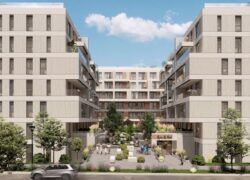
The Corallis residential complex, developed by KÉSZ Group and implemented by KÉSZ Romania has achieved remarkable sales performance. In just four months from the sales launch in September, 27% of the available stock has been acquired, representing a total transaction volume of RON 57,400,000. The results were reported by the sales agent of the project, Fortim Trusted Advisors.

Located on the shores of Lake Grivița, the complex has obtained BREEAM Excellent certification and includes facilities promoting a healthy lifestyle, which have attracted buyers and resulted in pre-sale agreements for 61 apartments in 2024.

Half of the buyers opted for the staggered payment method, with payments to be made until the completion of construction. The down payment required for purchasing Corallis apartments is 30%, payable upon signing the pre-sale contract, regardless of the chosen payment method. The project completion deadline is set for the end of 2026, with apartment handovers expected at the beginning of 2027.

“We are delighted with the progress of construction work and the sustained pace of sales at the Corallis project. The remarkable performance in the early months reflects both the attractiveness of the concept and the credibility that KÉSZ Group enjoys in the real estate market. We are convinced that this project will become a landmark in the Bucharest real estate landscape, offering quality, comfort, and a different lifestyle,” said Tatár Zsolt, Project Director at KÉSZ Group.

“The Corallis project is an appealing real estate product, both through the features of the apartments and the included facilities that support the goal of offering an exceptional lakeside lifestyle. As expected, most interested buyers chose Corallis apartments for residential purposes. At the same time, investing in an apartment in this complex is a wise decision considering the long-term property value appreciation potential. Currently, during the pre-sale period, apartment prices are still very attractive, offering buyers the chance to choose their desired unit from a variety of apartment types with views of the lake, garden, or rooftop terrace,” said George Călin, Residential Sales Manager at Fortim Trusted Advisors, the exclusive real estate agent for the project.

FAN Courier plans €40 Million investment in 2025 to boost expansion and modernization

FAN Courier, an entrepreneurial company with 100% Romanian capital, ended 2024 with a turnover of RON 1,385 billion (approximately EUR 280 million), up 12.5% compared to the previous year and maintains its forecasts for 2025.

As main objectives, the company will focus on continuing investments in the development and technology of regional HUBs, equipping the HUB in Ștefănești with a new sorting belt, expanding the FANbox locker network, as well as continuing international development. The proposed value of investments in 2025 amounts to EUR 40 million.

The expansion and modernization of the Ștefănești HUB requires an investment of EUR 25 million. The total area of the land purchased for the construction of the new HUB is approximately 185,000 sqm, where there are 17 building blocks, including underground and technological constructions, with a built area of approximately 30,000 sqm. The new Ștefănești HUB includes a fulfillment warehouse, which covers over 60% of the built area, as well as an area dedicated exclusively to deliveries to FANbox and Collect Point.

LATEST NEWS