Colliers: Romania’s modern retail sector on the positive trend

Romania’s modern retail market continues to expand, defying economic slowdown trends, fueled by rising consumption and the entry of new international players. According to Colliers’ annual report, non-food sales grew by 14% in 2024, reaching a record high, while actual individual consumption surpassed that of Poland and the Czech Republic, hitting 89% of the European Union average. Despite strong demand, modern retail stock remains undersized. However, developers plan to deliver over 200,000 square meters of new retail space by 2025. Key projects include the expansion of Mall of Moldova in Iași and the reopening of Agora Mall in Arad. Against this backdrop, Romania is becoming increasingly attractive for retail investment, strengthening its position in the regional market despite macroeconomic challenges and ongoing uncertainty.

A total of 167,000 square meters of new modern retail space was delivered in 2024, down from 221,000 square meters in the previous year, according to Colliers’ annual report. Despite this decline, the market remained resilient, exceeding the decade-long annual average of 140,000 square meters. By comparison, during the pandemic years, economic uncertainty caused retail space deliveries to drop below 100,000 square meters in both 2021 and 2022. Pitești recorded the highest retail deliveries in 2024, reinforcing the trend of developers shifting their focus to small and medium-sized cities. The most significant projects completed in Pitești include Arges Mall, developed by Prime Kapital/MAS REI, with 51,000 square meters, and M Pitești Park, developed by M Core, with 24,000 square meters. As a result, nearly half of the new modern retail stock was concentrated in a single city of just 140,000 inhabitants, highlighting the growing interest in regional markets.

However, in the coming years, the market is expected to shift direction, Colliers consultants note, explaining that as developers focus on larger cities, where major retail projects are in the pipeline, the sector’s dynamics will evolve. Additionally, Bucharest may once again attract major investors, either through one or two large-scale projects in the near future or by expanding existing shopping centers.

“Although Romania’s economy recorded only modest growth in 2024, estimated at under 1% of GDP, this does not signal a decline in consumption. On the contrary, non-food retail sales increased by approximately 14% in volume, reaching a new all-time high. Official data for 2024 is not yet available, but Eurostat reports that in 2023, actual individual consumption—an indicator measuring the real amount of goods and services used by the population rather than total spending—rose to 89% of the EU average. This marks the highest level in Central and Eastern Europe, surpassing both Poland and the Czech Republic. Moreover, nominal spending indicators reinforce this upward trend. An analysis by Oxford Economics, based on data from Eurostat, national statistical institutes, and recent estimates, offers a clear perspective on Romania’s consumption trends over the past decade and a half. One particularly relevant segment is clothing and footwear, a key component of the tenant mix in shopping centers. This category remains a major driver of modern retail expansion, reflecting both shifting consumer preferences and the local market’s attractiveness to investors”, explains Simina Niculita, Director | Partener | Retail Agency at Colliers.

Over the past 15 years, per capita spending in Romania has grown significantly, rising from one-sixth of Germany’s level to just 20% below that of Europe’s largest economy. This trend reflects a steady improvement in purchasing power, according to Colliers consultants. Romania has outpaced all major economies in the region – and even some Western European countries, such as Spain – in terms of per capita spending on clothing and footwear. This growth confirms a rise in consumption, fueled by higher incomes and an increasingly competitive retail market. Although this expansion has negatively impacted the balance of payments, as Romania relies heavily on imports for consumer goods, it is now more sustainable than in the past decade. Unlike previous years, consumption growth is no longer predominantly fueled by consumer credit, signaling a more balanced economy and stronger purchasing power.

“Over the past decade, salaries in Romania have grown consistently, outpacing inflation – except for a brief period during the pandemic. Historical data shows that the purchasing power of the average salary began rising in 2014 and has since doubled in real terms, when adjusted for inflation. Another key factor is the relatively low market saturation in terms of international brand presence. This translates into high profitability and efficiency for the retail sector, where performance indicators are significantly stronger than in other countries. As a result, Romania remains an attractive market for both the expansion of established brands and new retail investments”, adds Liana Dumitru, Director Retail Agency at Colliers.

The sector’s strong performance is reflected in gross operating yields, positioning Romania among Europe’s top markets in categories such as clothing, footwear, pharmaceuticals, cosmetics, and toys. The trend of new brands entering the Romanian market continued in 2024, with increasing visibility for regional players from Poland, the Czech Republic, and Turkey. Meanwhile, international brands are actively exploring expansion opportunities in Romania, further reinforcing the market’s upward momentum.

One of the most notable market entries was Froo, the proximity supermarket owned by Żabka Group, Poland’s largest chain of its kind. Expanding rapidly, the brand opened over 50 stores in just six months, marking a strong push into the local market. In the cosmetics sector, Rituals Cosmetics and Kiko Milano made their debut, while the fashion and accessories segment expanded with Budmil and Bogner. Meanwhile, the hospitality and restaurant industry welcomed Happy Restaurants and Hesburger, further diversifying options for Romanian consumers.

Colliers consultants anticipate that this sales growth will positively impact sales-based rents in 2024, as overall volumes remain above pre-pandemic levels. Shopping center occupancy remains high, and new developments, including retail parks in smaller towns, have been well received by the market. Dominant shopping centers continue to experience strong tenant demand, with waiting lists and minimal available space. This dynamic presents an opportunity for landlords to refine the tenant mix, ensure a healthy turnover rate, and align supply with market demand.

“In the long term, Romania’s retail sector holds significant expansion potential, driven by growing consumption. However, economic and geopolitical risks could influence the pace of development. Although Romania faced a severe recession in 2009-2010, the market recovered quickly, and retail sales have consistently outperformed the European average since 2014. While the modern retail stock remains below that of Western European countries, strong retailer demand highlights substantial opportunities for expansion, further enhancing the market’s appeal for both retailers and investors”, concludes Simina Niculita, Director | Partener | Retail Agency at Colliers.

For 2025, Colliers estimates the delivery of over 200,000 square meters of new retail space, including the expansion of Mall of Moldova in Iași (62,000 square meters) and the reopening of Agora Mall in Arad (35,000 square meters). Additionally, NEPI Rockcastle, Iulius, and Prime Kapital/MAS REI are resuming the development of large, dominant shopping centers exceeding 100,000 square meters of leasable space, following a period of focus on retail parks.


Approximately 93% of new office buildings in Bucharest have green certifications

The office markets in CEE are undergoing a transformation process, influenced by the aging building stock and increasingly stringent decarbonization requirements, and Bucharest, along with Warsaw, Prague and Budapest, stands out for its growing green building stock and the integration of sustainability standards, according to the Colliers report “CEE Office Markets on the Green Path – Decarbonization Potential”.

Approximately 93% of new office buildings in Bucharest, built in the last 7 years, and 70% of older buildings, over 15 years old, have green certifications. In comparison, only Warsaw surpasses Bucharest in terms of green certifications, with 98% of new buildings certified.

The Bucharest office market ended 2024 with a total leasing demand of almost 339,000 square meters, recording a 20% decrease compared to the historical high in 2023, but remaining above the average of the last five years.

“Romania is an important player in the region and, although well positioned in the adoption of sustainability standards, has a significant stock of old buildings, comparable to that of Bratislava and Budapest. The modernization of these buildings represents a major investment opportunity, which can strengthen the market’s competitiveness in the long term and attract developers interested in meeting current sustainability requirements. The performance of green certifications increases the attractiveness of the local market for investors and contributes to creating a competitive business environment,” explains Victor Coşconel, Partner I Head of Leasing I Office & Industrial Agencies at Colliers.

CTP Group to take over the P3 Bucharest A1 logistics park

CTP Group wants to take over the P3 Bucharest A1 logistics park in Chiajna, marking the exit of the Singaporean Sovereign Wealth Fund from the local market. The Competition Council is analyzing the transaction.

P3 would be the first big name to mark an exit from the local logistics and industrial market in 2025, after Globalworth in 2024. The Singaporean sovereign wealth fund could collect EUR 265 million.

The P3 Bucharest park has a total area of approximately 380,000 sqm and currently includes 14 buildings, a power station and a railway terminal. Since 2022, the park has also had a building with accommodation units for workers with a capacity of 252 places. The park’s largest tenants include Carrefour, Emag, Altex, Gebrüder Weiss, Elit, Agricover, HOPI, Europharm, Interbrands and Logistic E Van Wijk.

H&M Romania will have an 88,5000 sqm distribution center in CTPark Ploiești 1

Retailer H&M will have a distribution center in Romania, near Ploiești, 14 years after entering the local market. The retailer has leased an 88,5000 sqm warehouse in CTPark Ploiești 1, developed by CTP. The warehouse is the largest delivered last year on the logistics and industrial market in Romania, according to Cushman & Wakefield data.

H&M has been present in Romania since March 2011, when it opened its first store in the AFI mall in Bucharest. Since then, the retailer’s sales have grown steadily. 2024 was the second year in which H&M’s sales exceeded RON1 billion

H&M recorded a 35% increase in turnover in 2023 in Romania, according to financial data reported to the Ministry of Finance.

Source: economica.net

Construction work on Dinamo Stadium begins

The public tender procedure has been completed and a 10-day period follows, at the end of which, if no objections have been filed, the execution contract can be signed and, soon, construction work on Dinamo Stadium in the capital will begin. The works are financed by the Ministry of Development, have a value of over RON 580 million, plus VAT.

The new CS Dinamo Bucharest Multifunctional Arena will not only be a stadium, but a modern, UEFA-approved sports complex, with 25,000 seats for spectators, accommodation and cafeteria for athletes, training rooms for multiple sports disciplines, a recovery center for athletes and exhibition space.

“The government, through the Ministry of Development, reaffirms its commitment to supporting the sports infrastructure in Romania, in general, and the construction of Dinamo Stadium, specifically. The project also includes the development of the heliport of the Floreasca Emergency Hospital in Bucharest”, said the Minister of Development, Cseke Attila, about this project.

Source: Profit.ro

Cluj-Napoca leads regional office market, securing 76% of office leases outside Bucharest in 2024

Cluj-Napoca, February 2025 – Cluj-Napoca dominated Romania’s regional office market in 2024, accounting for 76% of all modern office space leased outside Bucharest. Companies secured a total of 48,008 square meters of office space in Cluj-Napoca, marking a fourfold increase compared to 2023, according to an analysis by Fortim Trusted Advisors, a member of the BNP Paribas Real Estate Alliance.

Across Romania’s secondary office markets, companies leased a total of 63,024 square meters, including new leases and contract renegotiations. Cluj-Napoca emerged as the clear leader, outperforming Timisoara and Brasov, which took second and third place, respectively.

Several major corporations contributed to Cluj-Napoca’s office market boom, including Betfair, Orange, Banca Transilvania, Yopeso, Deloitte, Endava, Nestlé, MedLife, and SAP. This surge in activity contrasts with Bucharest’s office market, which experienced a slight contraction in 2024.

Nicolae Ciobanu, Managing Partner – Head of Advisory at Fortim Trusted Advisors, highlighted Cluj-Napoca’s growing significance in the national office market, stating: “Cluj-Napoca recorded the highest demand for office space outside Bucharest in 2024, solidifying its position as Romania’s second-largest office market. Timisoara retained its ranking in second place, while Brasov climbed to third, supported by new office deliveries in the Coresi Business Campus. In 2025, we expect these three regional office hubs to continue their strong performance.”

Timisoara maintained its second position in 2024 but saw a decline in total rental volume compared to 2023. Meanwhile, Brasov rose to third place, benefiting from new office space deliveries in the Coresi Business Campus complex.

In contrast, Iasi experienced a slowdown in office leasing activity, primarily due to a lack of new office building deliveries. The stagnant supply in Iasi highlights the importance of continued development to meet the growing corporate demand for modern office spaces.

The Romanian office market outside Bucharest is poised for continued growth in 2025, with Cluj-Napoca, Timisoara, and Brasov expected to remain the key regional hubs. With Cluj-Napoca leading the way, these cities are becoming increasingly attractive for companies seeking modern office environments outside the capital, reinforcing their role as dynamic business centers in Romania.

The Krenzia family is preparing a major residential project in northern Bucharest

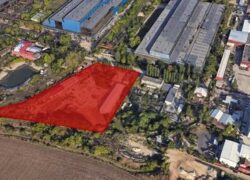
The family of businessman Amir Krenzia, who co-founded the confectionery manufacturer Alka, plans to enter the real estate market with a large-scale residential project located near his factory in northern Bucharest.

The Krenzia family is now analyzing the details of the documents required to build a residential complex with blocks of flats starting from 4-5 floors and reaching up to 11 floors, on a plot of land of about 22,000 square meters located near Petrom City in Străulești and the Alka candy factory. The project will include about 500 apartments, being the first residential project carried out by the Krenzia family.

The future project of the Alka owners would be adjacent to the The Level residential complex, which the developer Redport Capital is building together with Dan Șucu. Around Petrom City, a series of residential complexes with a total of over 4,000 apartments are in various stages of development.

Source: Profit.ro
The Krenzia family is preparing a major residential project in northern Bucharest

The family of businessman Amir Krenzia, who co-founded the confectionery manufacturer Alka, plans to enter the real estate market with a large-scale residential project located near his factory in northern Bucharest.

The Krenzia family is now analyzing the details of the documents required to build a residential complex with blocks of flats starting from 4-5 floors and reaching up to 11 floors, on a plot of land of about 22,000 square meters located near Petrom City in Străulești and the Alka candy factory. The project will include about 500 apartments, being the first residential project carried out by the Krenzia family.

The future project of the Alka owners would be adjacent to the The Level residential complex, which the developer Redport Capital is building together with Dan Șucu. Around Petrom City, a series of residential complexes with a total of over 4,000 apartments are in various stages of development.

Source: Profit.ro

A group of Romanian investors is preparing a residential project near the former IMGB

A group of Romanian investors, coordinated by the Chitafes family, is preparing the demolition of buildings built 25 years ago near the former IMGB industrial platform, in southern Bucharest. The land with an area of 15,569 square meters borders the former IMGB industrial platform. The lot was purchased in 2022 from the company Sacin, in a transaction brokered by the real estate consulting company Crosspoint Real Estate.

A residential complex that could have around 500 apartments can be built on the cleared land.

The acquisition of the 54 hectares of land of the former IMGB industrial platform by Lion Capital, formerly SIF Banat-Crișana, has increased the potential of the area. Lion Capital demolished the buildings on the former IMGB platform, purchased for 40 million euros in 2020, after which it sold the land to Prime Kapital, which will build a major residential district here, with over 3,100 apartments and a retail park with an area of about 60,000 square meters, and to retailers Dedeman, Kaufland, Lidl and Altex.

Source: Profit.ro

InteRo Property Development closes EUR 16 million bond issuance with CVI

InteRo Property Development, a leading real estate developer dedicated to urban regeneration through sustainable and innovative projects and developing modern communities, announces a 16-million-euro bond issuance for the development of Pajurei 3 Residence luxury project located within a 3-minute walk from the Jiului metro station in the Bucharest Noi area. The agreement was recently closed with CVI, an independent asset manager from Poland, operating since 2012 and managing portfolios for 8 investment funds in private debt strategies with a total AUM of nearly EUR 900 million.

Part of the capital raised is allocated to the completion of works of the Pajurei 3 Residence real estate project, while another part will be used for refinancing another investment. Pajurei 3 Residence is the first luxury project developed by InteRo. It received the building permit in April 2024 and currently the underground structure is completed, and the aboveground structure will be completed in June. This luxury residential project will provide 160 apartments with refined design and beautiful amenities, including outdoor pool, barbeque area, fitness centre, event room, a children’s playground and dog parks. 60% of the Phase 1 apartments have already been sold.

”We are pleased to have successfully secured this financing for Phase 1 of Pajurei 3 Residence, ensuring that the remaining works are funded with 8-million-euro cash on hand. This transaction highlights the strong appeal of the local market for international capital. We appreciate the efficient and collaborative approach of CVI, whose expertise and professionalism played a key role in executing this transaction smoothly,” said Michael Topolinski III, Founder and CEO of InteRo Property Development.

”We are confident in the Romanian real estate market and its long-term potential within the CEE region. Romania continues to present attractive investment opportunities, driven by a dynamic market that prioritizes quality developments. InteRo’s commitment to delivering value through modern real estate projects aligns with our investment philosophy, fostering sustainable growth for its partners”, added Jakub Kozłowski from CVI.

Nhood Romania surpasses EUR 10 million in revenue, achieving 10% growth in 2024

Nhood Romania, an integrated real estate services and solutions company, reported revenue exceeding EUR 10 million in 2024, marking a 10% increase compared to the previous year. At the same time, the company’s net profit grew by 63% year-over-year, leveraging a diversified portfolio and operational efficiency.

“In 2024, Nhood Romania continued to expand its portfolio by diversifying the projects managed and increasing the number of clients outside the group’s portfolio. Ceetrus remains our primary client, but we have also successfully secured seven new mandates with third-party clients. This growth strategy, established at the end of 2023 and implemented throughout 2024, has already delivered results that exceeded expectations,” stated Elena Bocan, Head of Market & Resources & Fund Investment, Nhood Romania.

Among the new clients that joined Nhood Romania’s portfolio in 2024 are Urbano Cluj and Lagardère (for leasing services), a key player in the entertainment industry (for entertainment consulting and advisory), MADEX (for real estate development and project management services), and Spartan (for international expansion and franchise services).

LATEST NEWS