

CEDER 2025 in review: Signs of Growth Potential on the Romanian Real Estate Market

The experts discussing Romania’s real estate market during the “Market Growth Projections” panel discussion held at CEDER 2025 conveyed a sense of underlying strength and significant growth potential. Panellists highlighted fundamental factors that position Romania as an attractive market for long-term investment.

One perspective shared is that Romania is currently at an earlier stage of development in certain sectors. Miroslav Tavel, Managing Partner of OPC Holding, suggested that this perceived lag can be viewed positively: “You can see that there are so many opportunities compared to the region and the regional countries. […] Romania is underdeveloped in a lot of kinds of businesses.”

Several panellists pointed to strong fundamentals as a basis for future growth. Silviu Toma, Executive Director, Project and Corporate Structured Finance at Raiffeisen Bank stated, “We have potential, we have fundamentals” and believes the investment market should be significantly larger. Joao Saracho de Almeida, Managing Director of Solida Capital Europe agreed, saying “the fundamentals are here, […] are very strong”. He also noted growing market sophistication and increasing consumer income as positive drivers and concluded: “Clearly the market growth is for people that will be focused on offering this distinctive factor in terms of location, sophistication, in terms of architecture and offer in terms of what [are], let’s say, the solutions in the real estate component. But I clearly see a big appetite from international companies to bring and add their grain of sand to the market.”

Yields were also cited as a draw for international investors. While some questioned the yield differential compared to Poland or Germany, Joao Saracho de Almeida maintained, “there is definitely a motivation for people to come to Romania”.

Miroslav Tavel added to the factors contributing to the positive outlook in Romania, saying: “I think that Romania has a lot of advantages compared to the other markets in the region and there is cost, land availability, also the entrance from […] new tenants and the relatively underserved secondary cities.” Other benefits include increasing urbanization and investment in infrastructure.

Although acknowledging current challenges, the overall sentiment suggests that Romania’s real estate market offers substantial potential for those adopting a strategic, long-term approach. As Anca Merdescu, Head of Investments, Square 7, part of M Core put it, “Of course, it’s very important for Romania to keep a sound macroeconomical situation, to keep its European values. If we do that, I think the growth story will continue.”
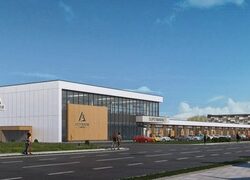
Astorium consolidates its presence on the market through logistics projects in Popești-Leordeni

Astorium is actively working on expanding its portfolio, both in the commercial area and in the residential segment. The first on the list of future projects is a logistics complex in Popești-Leordeni, with 19 halls, which is already in an advanced stage of preparation. In parallel, the company is focusing on selling apartments in its newest project, Astorium Life.

“We are actively working on expanding our portfolio, both in the commercial area and in the residential segment. The first on our list of future projects is a logistics complex in Popești-Leordeni, with 19 halls. In parallel, we are focusing on selling apartments in our newest project, Astorium Life, as Astorium Garden is already almost Sold Out. The first two blocks in Astorium Life will be completed and delivered this year, so we are focusing most of our efforts on this project. For now, we are not thinking about expanding to other cities in the country, but we will continue our projects in Bucharest and the surrounding area,” says Ulas Dilmac, CEO of Astorium.

Source: Profit.ro

Bucharest Promenada Mall introduced new brands in May

Promenada Mall brought new brands in May

In May, Promenada Mall brought three brands closer to its visitors: Men’s Cave, SKKIN and Pupa Milano.

Promenada hosts over 150 stores, including premium brands such as Coccinelle, LIU JO, GUESS, Musette, Intimissimi, Kultho, Bijuteria Teilor, renowned groups such as Inditex, with the brands Massimo Dutti, Oysho, ZARA, ZARA HOME, Bershka, Merer and Stradivarius, Peek & Cloppenburg, Lunet, Murmur, exclusively in Romania, Chic Chic Urban Fashion, children’s, sports, beauty and leisure stores. The store offer is complemented by a wide range of services such as Asian Vitality SPA, The BAR Salon, Salon Yvonne, Floria, Needle Atelier de retuş, ECO CLEAN, Diamond Car Wash and a variety of banking services.

Promenada Mall is located on Calea Floreasca no. 244-246, Sector 1 Bucharest.

Romanian permits for residential buildings decreasing

In the first four months, 10,770 building permits for residential buildings were issued, down 2.1% compared to the same period in 2024, according to data from the National Institute of Statistics (INS). Decreases were recorded in the following development regions: North-East (-266 permits), South-Muntenia (-96) and Bucharest-Ilfov (-44),” INS data shows. Increases were recorded in the following development regions: West (+117 permits), Center (+24), South-West Oltenia (+14), South-East (+11) and North-West (+10).

In April 2025, 3,140 building permits were issued for residential buildings (+1.5% compared to March 2025), with a total usable area of 659,764 sqm (-7.3%). Of the total building permits for residential buildings, 70.1% are for rural areas. In territorial terms, this increase is reflected in the following development regions: North-West (+67 permits), West (+26), North-East (+20), South-East (+19) and South-Muntenia (+16). Decreases were recorded in the following development regions: South-West Oltenia (-68 permits), Bucharest-Ilfov (-30) and Center (-5).

Source: Profit.ro

Developers plan 32,000 new apartments in Bucharest over the next three years

Developers intend to bring approximately 32,000 new apartments to the residential market in the capital by the end of 2028.

The Theodor Pallady area, located in the southeast of the city, is expected to host over 5,700 units, while in the north of the capital, the Pipera neighborhood plans to develop another 4,438 apartments. The Drumul Taberei neighborhood completes the top of the areas where the most new apartments are planned with 2,341 units, according to Imobiliare.ro data.

The next positions in the ranking of neighborhoods where developers plan the most new apartments are occupied by Băneasa (2,340 units), Colentina (1,657 units), Străuleşti (1,355 units), Obor (1,333 units), Militari (1,261 units), Rahova (1,220 units) and Berceni (1,194 units).

Currently, of the 37,530 homes available for sale in the Capital in Q1/2025, only 23% are properties completed in the last five years according to Imobiliare.ro.

FortonMKA launches new shopping mall in Ohrid, North Macedonia

North Macedonia’s commercial real estate advisory firm FortonMka opened a shopping mall in Ohrid.

The shopping centre covers an area of over 17,000 square meters and offers parking for more than 250 vehicles. The shopping mall is expected to create over 200 new jobs in sales and customer service, as well as in logistics, maintenance, and supply operations. Some of the brands present at the commercial center are: “Sinsay”, “NewYorker”, “D Sport”, Zito Market, UNO, “Playpark.

FortonMka operates as an independent affiliate of global commercial real estate services firm Cushman & Wakefield.

CEDER 2025 in review: Navigating Challenges in Romania’s Construction Sector

One of the topics touched upon by the “Sector-Specific Trends, Part 1” panel held at CEDER 2025 was the state of the construction sector in Romania. Moderator Silviu Stratulat, Managing Partner of Stratulat Albulescu Attorney at Law, described the sector as still “booming”, but noted that it faces significant and complex challenges that impact the broader real estate market.

Claudiu Bisnel, Managing Partner for Brisk Group, highlighted key pressure points within the industry, underscoring the need for enhanced efficiency. A primary concern is the shortage of skilled professionals. Claudiu Bisnel stated: “We experience a shortage of labour. The current Romanian market is short of 50,000 specialists, which puts a lot of pressure on quality, puts a lot of pressure on time of delivery and directly on costs”. This deficit not only strains project timelines and budgets, but also risks compromising the final quality of construction.

Adding to these difficulties are bureaucratic obstacles within the permitting process. Statistics cited by Bisnel indicate that “bureaucracy in the permitting process is contributing to [a] three to six-month delay in the actual delivery of the project”. Furthermore, inconsistent interpretation of urbanist regulations by local authorities can unfavourably impact the construction process. As a countermeasure, Bisnel noted: “when it comes to [the] actual backlog of permitting issues, that you can tackle through a leaner type of management, digitalised way of looking at things. We saw that this kind of process is being implemented as we are speaking. And I think it’s the right way to a more fluent way of getting permits and approvals when it comes to local authorities, leaves less way to interpretation.”

Economic factors, such as inflation causing volatility in material prices and the potential impact of tax increases like VAT, also contribute to cost pressures. As Geanina Ungureanu, Head of Retail at CPI Property Group noted regarding construction projects, the VAT increase means “you’re asking yourself if those prices will stay the same or we have to redo all our calculations and budgets for this development”.

To counteract these challenges, Claudiu Bisnel advocates strongly for efficiency. This can be achieved through measures like modular construction and prefabrication, which reduce on-site labour needs and improve control: “Control the waste management, control the efficiency in delivery, reduce the actual labour requirement, because you produce this in a controlled environment, in a factory. You have a pre-assembled element of a building, which you can bring on site with specialists, a reduced number.” Although these measures can be seen as costly, “on the long run, there isn’t any question about the efficiency brought by such a process and how this can exponentially accelerate and better, if you may, our construction environment.”

Digitalisation, including BIM management, is also crucial for ironing out design risks and streamlining processes. Moreover, a “thorough due diligence process” is essential from the outset, particularly for industrial and retail projects, to identify and manage risks related to road connections and utilities, thus preventing future delays and cost overrun.

CEDER 2025 in review: A Comparative Look Among CEE Peers

Panellists invited to take part in the “Market Growth Projections” panel discussion held at CEDER 2025 examined Romania’s real estate market in relation to its CEE neighbours, identifying similarities and differences between the situation in Romania and countries like Poland, Hungary, and the Czech Republic.

A notable point of contrast is the perceived level of predictability. Aurelia Luca, Executive Vice President Operations Hungary and Romania at Skanska suggested that Romania currently misses the “clear predictability” found in other markets, even with differing political landscapes, where “we know how to plan”. This can lead to a “wait and see” sentiment among some investors.

In terms of market maturity, Miroslav Tavel, Managing Partner of OPC Holding, indicated that Romania is arguably “something like six or seven years behind the other countries, mostly Slovakia, the Czech Republic and Poland”. However, this perceived lag isn’t necessarily negative, as it translates into “plenty of opportunity”, particularly in “underserved secondary cities” where tenant hunger is evident, and in asset classes which are still untapped in Romania.

Financing conditions also drew comparisons. Joao Saracho de Almeida, Managing Director of Solida Capital Europe found Romanian banking practices surprising regarding amortisation rates, noting that a standard “five, four percent […] per year” is “completely unheard of in other countries” like Germany, Poland, or Hungary. This difference “does not contribute for, first, better prices in the market. Second, more liquidity”. He also added: “I don’t see the Romanian banks really hungry for real estate business. I think it’s something that you need to cultivate.”

Talking about Romania’s still unrealised potential for growth, Joao Saracho de Almeida compared the country to Poland saying “[In] Poland […] the country understood jointly that they would need to follow one path if they want to embrace this growth. And I think that this is the challenge, I would say, for Romania today — is that the society, in my opinion, needs to come and converge at some point. […] I really think this is missing in the country, a long-term vision, a long-term leadership for the country.”

Debates arose regarding yields. While Vlad Dragoescu, Director and CEE Head of Portfolio Management at Revetas Capital questioned why an investor would “pay 8% here, when you can pay 8% in Poland or in Germany”, Joao Saracho de Almeida countered, stating “there is definitely a motivation for people to come to Romania, because the yields are different”. He maintained that the yield for a prime asset in Warsaw is “not the same yield as a prime asset in Bucharest”, and there is still a “big spread still between Poland and Romania and other markets in CEE and Romania”, providing an “incentive for investors to be looking at Romania”.

Panellists found similarities between the political uncertainties in Romania and Hungary, with Vlad Dragoescu giving Hungary as an example of what Romania might turn into in the coming period: “Imagine a market like this, where you don’t have liquidity, you don’t have new companies entering […]. This is where we’re heading. I think on the short run, on the long run, […] for sure we need to be prepared.” Later in the discussion, Aurelia Luca added some nuance to the issue: “Since I’m also covering Hungary, I can also give a bit of an insight from there. It’s not only the market itself […] but it’s about also the product and who is building that product. […] Other than that, again, I think it’s also the quality of the product, because maybe it sounds like a broken record, this location, location, location and […] the quality of tenancy, which is extremely important.”

M Core acquires retail park project in Bucharest

Real estate group M Core has acquired a retail park project in eastern Bucharest from the Călin and Alina Dobra family. The project is located on a portion of the former Energomontaj factory site on Ilioara Street, adjacent to plots previously sold to Kaufland and Lidl.

Last autumn, the Dobra family secured building permits for a Kaufland hypermarket and a Lidl store on part of the site, a prerequisite for the sale of the land to the two German retailers. Kaufland acquired approximately 21,600 square meters, while Lidl took possession of around 9,600 square meters.

Following these transactions, the Dobra family retained a 31,600-square-meter plot, where they planned a retail development consisting of two buildings—one with a built area of nearly 3,000 square meters and another of about 3,800 square meters. The development also includes 381 parking spaces, five of which are designated for electric vehicles.

M Core has initiated construction on the retail park, which will complement the neighboring Kaufland and Lidl stores. Completion is scheduled for the end of this year.

Source: Profit.ro

CEDER 2025 in review: Romania’s Real Estate Market Amidst Political and Economic Uncertainty

The “Market Growth Projections” panel discussion held at CEDER 2025 aimed to shed some light on the implications of the current political events and potential economic shifts, and the outlook for market growth and investment. Moderated by Andrei Văcaru, Head of Capital Markets CEE at iO Partners, the discussion highlighted a sense of caution mixed with underlying optimism about the market’s long-term potential.

Aurelia Luca, Executive Vice President Operations Hungary and Romania at Skanska, articulated the challenge represented by the uncertainty surrounding the Romanian presidential elections, stating, “What we miss is predictability. […] We need […] to wait and understand what would be the impact on the market”. This lack of a clear direction leads to a “wait and see” sentiment amongst investors. Anca Merdescu, Head of Investments at Square 7, part of M Core, added some nuance to the sentiment by quoting an article: “When you live in a permanent crisis situation, like we are, I think, witnessing for the last few years, waiting for stability is like waiting for a train that never comes. And there is also a cost in waiting, that’s clear”.

Beyond political outcomes, potential changes in the taxation system are widely anticipated due to Romania’s credit risk and deficits. Vlad Dragoescu, Director, CEE Head of Portfolio Management at Revetas Capital, warned of the short-term economic impacts: “Whatever is happening on Sunday [May 18th] will give us a mid- to long-term pathway for Romania. But on the short run, regardless what’s happening […] still we’re going to have fiscal changes, we’re going to have consumption compression. […] So, we need to be prepared”.
He further expressed his opinion that these changes, coupled with reduced liquidity from banks prioritising lending to the state, could lead to increased finance costs and pressure on margins for landlords and tenants, potentially resulting in distressed assets.

However, several panellists emphasised that uncertainty also presents opportunities for investors. Joao Saracho de Almeida, Managing Director at Solida Capital Europe, suggested avoiding over-analysis of potential scenarios, highlighting the “incredible adaptability” of “the human and business factor”. He believes that “whatever will be the decision on Sunday, I’m sure Romania will continue on a growth path”, and that “in moments of more turbulence, there is the opportunity to make the best deals”. Francisc Peli, Founding Partner at PeliPartners, echoed this, advising, “In times of uncertainty, you don’t have to be idle because that’s where you miss opportunities”. Miroslav Tavel, Managing Partner at OPC Holding, acknowledged the “short-term uncertainty” but stressed their “long-term strategy” and strong belief in the Romanian market. He pointed to Romania’s advantages such as cost, land availability, new tenant entry, and underserved secondary cities, which offer “plenty of opportunity”.

LATEST NEWS