Tuesday, 13 October 2026
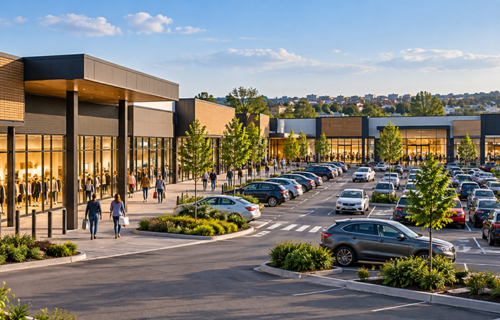
Poland’s retail property market continued expanding during the third quarter of 2026, with approximately 123,800 sqm of additional shopping space completed between July and September. According to the latest research from Colliers, retail parks accounted for the entire volume of new accommodation, reinforcing their position as the principal focus of commercial development. The quarterly total was almost twice that recorded during the corresponding period of 2025, reflecting sustained investment in suburban locations and smaller regional markets.
Colliers estimates that Poland’s modern retail property stock reached approximately 14.4 million sqm across 761 properties by the end of September, based on the consultancy’s market coverage. During the quarter, nine new developments opened and eight existing properties were extended. The country’s retail accommodation provision reached an estimated 384 sqm per 1,000 inhabitants. Other property consultancies apply different market definitions and therefore report different national stock figures, making comparisons between datasets dependent on their geographical and property coverage.
Among the largest projects completed during the quarter was OTO Park in Siemianowice Śląskie, providing approximately 20,500 sqm of retail accommodation. Another significant development involved the conversion of a former hypermarket in Rybnik into the 19,500 sqm S1 retail park. Additional completions included the 14,500 sqm RWS development in Mierzyn, near Szczecin, and the 10,300 sqm Sekunda retail park in Włoszczowa. These projects demonstrate how investment is increasingly directed towards both new shopping destinations and the redevelopment of older commercial properties.
Anna Radecka-Łysiak, Co-Head of Retail at Colliers, identifies smaller municipalities and locations surrounding major cities as important areas of expansion. Retail parks generally provide convenient access to everyday shopping and accommodate a combination of grocery, discount, fashion and household retailers. Their development outside traditional city-centre shopping districts reflects changing retail strategies and the importance of accessibility, local spending capacity and suitable commercial locations.
The construction pipeline remains substantial. According to Colliers, approximately 658,000 sqm of modern retail accommodation was under development at the end of September. Among the largest projects were BIG Piła, with 24,000 sqm, Świderek Otwock at 23,200 sqm, and BIG Konstantynów Łódzki and Redkom Park in Tarnów, each with approximately 21,200 sqm. Other developments included Redkom Park in Białystok, OTO Park in Lubin and the Kaszuby retail park in Wejherowo. The geographical distribution of these projects indicates that development activity remains spread across regional cities and smaller urban markets rather than being concentrated exclusively in Poland’s largest metropolitan areas.
Occupancy levels remained relatively strong within the eight metropolitan markets monitored by Colliers. The average vacancy rate stood at 2.5% at the end of September, although conditions varied between locations. Szczecin recorded the lowest proportion of vacant accommodation at 0.9%, followed by the Tricity area at 2.0%. Warsaw and Kraków each registered 2.1%, while Wrocław stood at 2.7%. Higher vacancy was recorded in Łódź at 3.3% and the Upper Silesian metropolitan area at 3.4%. These figures describe the markets surveyed and should not be interpreted as a nationwide vacancy rate or as a direct measure of occupancy in smaller retail parks.
Marta Cegielnik, Co-Head of Retail at Colliers, considers the relatively limited availability of vacant space an indication of continued occupier demand. However, the substantial development pipeline will require sustained leasing activity, particularly in locations where new retail parks compete for a relatively small customer base. Developers will increasingly need to evaluate the purchasing power of surrounding communities, transport accessibility and the presence of established retail destinations when determining the viability of additional projects.
Changes in retailer requirements are also influencing the configuration of existing properties. Grocery operators continue expanding smaller store formats, while some traditional hypermarkets are reducing their occupied areas and allowing additional businesses to take space within established buildings. Lidl has exceeded 1,000 stores in Poland, while Auchan is pursuing further expansion through smaller outlets and franchise arrangements. These developments illustrate how changes in retail operating models can create opportunities for landlords to adapt older properties rather than relying exclusively on new construction.
The wider retail sector is also placing greater emphasis on restaurants, leisure facilities and other activities intended to attract visitors beyond conventional shopping. Gdańsk’s historic market hall has reopened with a combination of food outlets, restaurants and specialist retailers, while international restaurant operators continue exploring opportunities in Poland. Planned cinema developments in Tarnów and Poznań demonstrate the continuing role of entertainment facilities in the positioning of larger retail destinations. Such investments can help landlords broaden their tenant mix and encourage longer visits, although their commercial performance depends on local demand.
For investors and developers, the third-quarter figures highlight the continuing transformation of Poland’s retail property market. Retail parks have become the principal source of new accommodation, supported by expansion into regional centres and the conversion of existing commercial buildings. With approximately 658,000 sqm under construction, future performance will depend on the ability of developers to secure appropriate tenants and match new supply with local consumer demand. The sector’s growth remains substantial, but the increasing number of projects makes location selection, leasing strategies and long-term property management increasingly important.