Tuesday, 20 October 2026
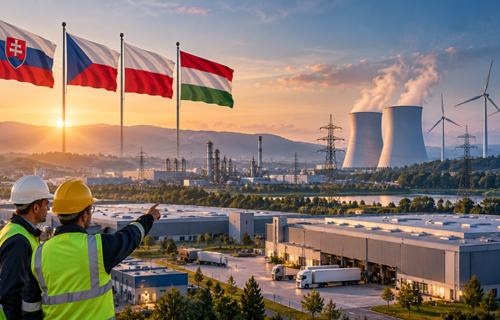
Slovakia, the Czech Republic, Poland and Hungary are calling for changes to European Union funding arrangements that would allow greater financial assistance to manufacturers struggling with elevated energy expenditure. The proposal reflects growing concerns about the competitiveness of Central European industry, particularly among companies whose production costs depend heavily on electricity and gas prices.
The initiative was discussed during a meeting of energy ministers from the four Visegrad countries in Bratislava on 19 October 2026, attended by European Commissioner for Energy and Housing Dan Jørgensen. Following the discussions, Slovak Economy Minister Denisa Saková confirmed that the governments were seeking temporary adjustments to existing European financing rules, allowing certain resources to be used more directly to support industrial businesses.
A central element of the proposal involves permitting European funding to cover some of the operating expenses faced by manufacturers, rather than concentrating assistance primarily on investment projects and infrastructure improvements. The governments believe that greater flexibility could help companies manage energy expenditure while maintaining production capacity and avoiding additional pressure on national budgets.
Among the financial mechanisms under consideration are EU cohesion resources and the Modernisation Fund, which currently supports energy system improvements and investments associated with the transition towards cleaner technologies. Any changes to how these resources can be allocated would require agreement within the relevant European regulatory framework. No new funding arrangements or exemptions have been approved.
The discussions also addressed broader questions surrounding Europe’s energy infrastructure and future supply requirements. The four countries expressed support for a financing approach that would provide nuclear energy with opportunities comparable to those available for renewable technologies. Energy security, infrastructure investment and the long-term affordability of electricity were also identified as important considerations for the region’s industrial development.
The request comes as European manufacturers continue to assess the financial implications of energy expenditure alongside labour costs, financing conditions and international competition. Although the European Commission already permits certain forms of industrial electricity support under its Clean Industrial Deal State Aid Framework, those provisions do not automatically allow existing European funding allocations to be redirected towards everyday business expenses. The Visegrad initiative therefore concerns both the availability of financial resources and the rules governing their use.
For Slovakia, the issue is particularly relevant to automotive manufacturing and the extensive network of component suppliers supporting vehicle production. The Czech Republic faces similar considerations across its automotive, engineering and machinery industries, while Poland’s manufacturing sector includes a broad range of industrial activities with different energy requirements. Hungary’s automotive, battery and electronics industries also depend on competitive operating conditions when evaluating production investment.
The potential consequences extend to the industrial property market, where manufacturers increasingly assess energy expenditure and electricity infrastructure when considering new facilities or expanding existing operations. Production buildings with substantial power requirements may face different operating challenges from conventional warehouses, while highly automated logistics centres can also require reliable electricity supplies and suitable infrastructure. These considerations can influence property specifications, investment budgets and the selection of industrial locations.
However, the latest government initiative does not establish that rising energy costs have already resulted in widespread factory closures, cancelled developments or declining warehouse demand across the four countries. Manufacturing investment decisions are influenced by several factors, including customer demand, financing costs, labour availability and international trade conditions. The relationship between energy expenditure and industrial property activity therefore requires examination of individual investment decisions and current market data.
The four governments are now seeking a response from the European Commission on whether existing financial mechanisms can be adapted to provide more immediate assistance to industry. The outcome could influence how Central European manufacturers manage energy costs and plan future investment, although the scope, eligibility requirements and timetable of any changes remain undecided.
Source: CIJ.World Research & Analysis Team