Tuesday, 20 October 2026
Shopping centre owners across Europe are reducing the space occupied by hypermarkets and converting the released areas into smaller retail and service units. Property management company Nhood has overseen the conversion of approximately 65,000 sqm across Europe on behalf of Ceetrus and Auchan, including 11,300 sqm of additional space leased to tenants at four shopping centres in Poland.
The changes follow Ceetrus’s acquisition of areas previously occupied by Auchan hypermarkets. By reducing the size of existing grocery stores, the property owner can introduce additional tenants without constructing new buildings. Nhood is responsible for planning the alterations, managing construction work and securing occupiers for the newly available premises.
In Poland, the programme covers Galeria Bronowice in Kraków, Auchan Komorniki near Poznań, Auchan Bydgoszcz and Port Rumia. Together, these properties account for 11,300 sqm of space allocated to new tenants. Two additional Polish shopping centres are expected to undergo similar conversions, although their locations and construction schedules have not been announced.
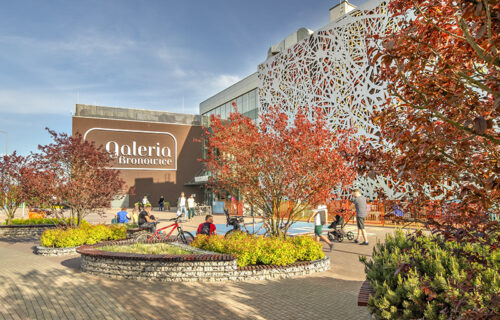
At Galeria Bronowice, approximately 4,000 sqm has been made available for additional retailers. Decathlon opened a 3,300 sqm store in April 2026, while CCC is expected to occupy the remaining 700 sqm. The alterations have enabled the shopping centre to accommodate both businesses within its existing building.
At Auchan Komorniki, approximately 2,300 sqm has been allocated to Rossmann, Dr Materac and JYSK. The changes follow refurbishment work completed in 2025 and involve the division of former hypermarket accommodation into separate retail units.
In Bydgoszcz, the reduction of Auchan’s occupied area has released approximately 3,000 sqm, divided into four units for Rossmann, Sinsay, Maxi Zoo and fitness operator Fit Style. The premises have individual external entrances and access to parking, allowing customers to enter the businesses without passing through the main shopping centre.
At Port Rumia, approximately 2,000 sqm has been allocated to Rossmann and Reserved. The centre reported full occupancy of its existing retail accommodation during 2025, meaning that reducing the hypermarket’s floor area provided space for additional tenants without extending the property.
For the wider European programme, Nhood expects approximately 75% of the released accommodation to remain in retail use, while the balance may be occupied by restaurants, fitness operators, healthcare providers and other services. The allocation will depend on the requirements of individual properties and the availability of tenants.
The conversion of hypermarket space reflects changing requirements within the retail property sector. Large grocery operators have traditionally occupied substantial areas of shopping centres, often under long-term leasing arrangements. Reducing their floor space allows property owners to divide accommodation between several tenants, potentially increasing the number of businesses operating within an existing development.
The financial outcome depends on the cost of alterations and the rental income generated by the new units. Conversions may require changes to entrances, internal layouts, utilities, servicing arrangements and customer circulation. Although the approach avoids the need for additional land, construction and leasing costs remain relevant when assessing whether the investment is commercially justified.
Nhood has not disclosed the total cost of the European conversion programme or the additional rental income expected from the completed projects. No comparative figures have been provided to establish whether the alterations have increased visitor numbers, tenant sales or the overall financial performance of the affected shopping centres.
The programme demonstrates how existing retail properties can accommodate changing tenant requirements without increasing their total building area. For shopping centre owners, the principal consideration is whether the rental income from several smaller occupiers can justify the investment required to replace space previously used by a single hypermarket.
With further projects planned in Poland, the results will depend on the performance of the new tenants, the cost of adapting the buildings and the ability of the centres to maintain occupancy over time.