Thursday, 8 October 2026
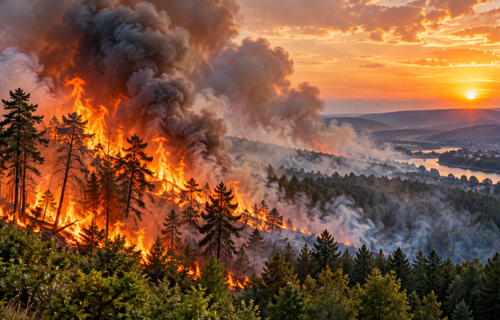
Germany recorded 4,345 hectares affected by vegetation fires by the end of September 2026, more than twice the average of the previous ten years and the third-highest level since 2016, according to an analysis by the German Institute for Economic Research (DIW Berlin) based on European satellite data.
Only 2025, with around 6,800 hectares, and 2022, with approximately 5,100 hectares, recorded larger affected areas during the period examined. DIW notes that the three highest figures have all occurred in recent years, while longer-running German forest-fire statistics also place three of the four largest fire years since records began in 1991 between 2019 and 2025. The institute cautions, however, that the comparable EFFIS satellite series only extends back to 2016 and detection has improved since 2018.
Most of the German land affected this year was not forest. Around 71% consisted of heathland, moorland and natural grassland, while forests accounted for 21%, transitional woodland and scrub for 6% and agricultural areas for 2%. Among the significant incidents was a fire covering around 300 hectares at the former military training area near Jüterbog in Brandenburg in July, followed by the largest forest fire recorded in North Rhine-Westphalia since nationwide records began.
The wider European fire season has been considerably more severe. The European Forest Fire Information System had mapped approximately 742,000 hectares of burned land across the EU by the end of September, also the third-highest figure at that point since 2016. Spain accounted for more than 310,000 hectares, followed by Italy with almost 130,000 hectares, France with close to 110,000 hectares and Portugal with almost 80,000 hectares. Germany represented slightly more than 0.5% of the EU total.
DIW estimates that fires across the EU had generated approximately 30 million tonnes of carbon dioxide by the end of September, based on Copernicus Atmosphere Monitoring Service data. Germany accounted for around one million tonnes. Fires also produced an estimated 120,000 tonnes of PM2.5 particulate matter across the EU, including approximately 3,500 tonnes in Germany. Beyond environmental and health consequences, the institute points to research connecting wildfire exposure with losses in tourism, economic activity and property values.
The implications increasingly extend into real estate, infrastructure and regional investment. Previous economic research cited by DIW indicates that greater wildfire exposure can affect residential values, while Mediterranean regions can experience lower tourism activity and weaker economic growth following fires. For southern Europe as a whole, studies referenced by the institute estimate annual economic losses associated with vegetation fires at between EUR 1.3 billion and EUR 2.1 billion.
DIW does not expect 2026 to become a record fire year in either Germany or the EU, but argues that the clustering of severe seasons in recent years deserves attention as periods of extreme heat and drought become more significant. The institute calls for stronger prevention and preparedness alongside climate policy, including greater public awareness, improved access for firefighters and greater use of remotely operated firefighting equipment in hazardous areas such as former military sites containing unexploded ammunition.