Thursday, 19 November 2026
Family offices in Germany, Austria and Switzerland are reducing the proportion of their real estate holdings invested in Germany while increasing allocations to other European markets and the United States. A survey published on 19 November 2026 by KINGSTONE Investment Management found that German properties accounted for 76.5% of respondents’ real estate portfolios, compared with 88.3% in 2025, a reduction of 11.8 percentage points.
The findings come from the second KINGSTONE Family Office Real Estate Report, prepared with RUECKER EVENT and based on responses from 34 family offices in the German-speaking DACH region. Real estate remained their largest overall investment category, representing 53.7% of total investment portfolios, down from 56.5% in 2025. Equities accounted for a further 19.6%. Dr Tim Schomberg, CEO of KINGSTONE Investment Management, said the findings confirmed the importance of property in family wealth management, with participating family offices allocating more than half of their investment portfolios to real estate.
Within respondents’ property portfolios, Germany remained the dominant location, followed by other European countries at 12.6%, an increase of 6.7 percentage points, and the United States at 9%, up 3.6 percentage points. These geographical allocations relate specifically to real estate holdings rather than total investment assets.
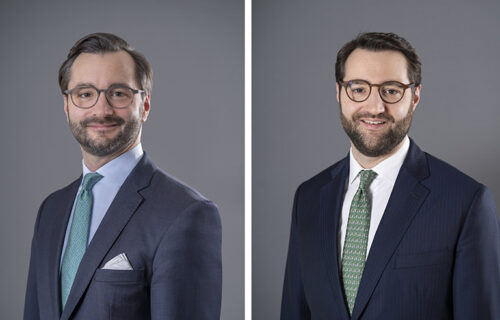
Poland and the United Kingdom were identified as markets attracting interest from family office clients seeking to diversify beyond Germany. Philipp Schomberg, co-founder of KINGSTONE Investment Management and CEO of KINGSTONE RE Poland, said: “Many family offices have significant exposure to the German real estate market and are looking for opportunities to diversify their investments further.” He identified Poland and the United Kingdom as markets frequently considered by clients, with particular interest in well-located office buildings in major Polish cities and professionally managed rental housing. The survey does not quantify planned investment in either country.
Residential properties accounted for 37% of respondents’ real estate holdings, followed by offices at 22.7%, mixed-use residential and commercial buildings at 13.5%, and retail properties at 12.1%. Compared with 2025, the office share declined by 2.3 percentage points, while retail increased by 5.8 percentage points.
Return expectations varied considerably. Approximately 35.3% of respondents targeted annual total returns between 5.5% and 7%, while around one-quarter expected returns of 7% to 8.5%. Across the survey, expectations ranged from 4% to more than 10% annually.
Looking ahead, 41.2% of participating family offices intended to increase their property exposure over the following twelve months, while approximately one-third planned to maintain existing allocations. Around 26% expected to reduce their holdings. Philipp Schomberg noted that the survey indicated differing approaches to future property allocations, with a larger proportion of respondents planning to expand their holdings than reduce them.
Planned investment budgets also varied. Some 38.2% of respondents expected to allocate between €5 million and €10 million annually to property over the next three years, while 23.5% indicated budgets of €10 million to €20 million. A further 14.7% anticipated annual investment of €20 million to €50 million. Only 5.9% planned to invest between €50 million and €100 million each year, and none expected to exceed €100 million annually. Dr Tim Schomberg noted that planned annual investment amounts had declined slightly compared with the previous survey.
The survey was conducted between 1 September and 22 October 2026. Of the participating family offices, 35.3% managed net assets exceeding €500 million, while another 35.3% managed between €100 million and €500 million. The 34 responses represented 2.34% of the 1,450 offices invited, meaning the findings should be treated as indicative rather than representative of the wider market.
The results point to greater geographical diversification among the surveyed investors, although Germany continues to account for more than three-quarters of their property holdings. Residential assets remain their largest property category, while most respondents intend to maintain or increase their real estate exposure over the coming year.