Wednesday, 16 September 2026
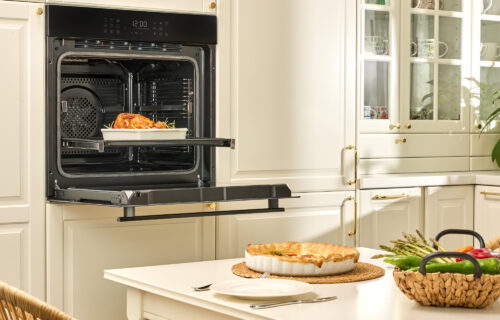
Romania’s shift towards integrated kitchens is becoming increasingly relevant for residential developers, with built-in cooking appliances gaining market share even as households reduce overall spending on major appliances. During the first half of 2026, built-in ovens moved marginally ahead of traditional freestanding cookers in unit sales, according to an Amica analysis based on GfK market data. Approximately 72,900 built-in ovens were sold during the period compared with around 71,700 standalone cookers.
The change occurred against a weakening consumer market rather than a surge in appliance purchases. The combined market covering built-in ovens, hobs and freestanding cookers contracted by approximately 12% in both units and value compared with H1 2025. Built-in products nevertheless accounted for most activity within the categories analysed. Approximately 154,600 built-in ovens and hobs were sold during the six-month period, generating around EUR 39.5 million. This represented roughly 68% of units and 69% of expenditure across the three cooking-appliance categories covered by the analysis.
Spending patterns underline the difference between the formats. Built-in ovens generated approximately EUR 22.3 million of sales during H1, compared with EUR 17.9 million for freestanding cookers. Built-in oven sales themselves declined from the previous year, but less favourable conditions affected conventional standalone cookers more heavily. Sales volumes of freestanding cookers fell by approximately 14% year on year, while gas-only models experienced a decline of more than 20%. Built-in hob sales also decreased, but at a slower rate of around 11%.
The figures suggest that the change is less about consumers buying more kitchen equipment and more about how spending is being distributed when households replace appliances or fit out homes. Integrated products are taking a larger proportion of a market that is itself becoming smaller.
That development has implications for residential property because built-in equipment requires kitchen furniture, electrical connections and appliance dimensions to be considered together. This is particularly relevant where developers provide fitted kitchens or offer buyers kitchen and appliance packages as part of a new apartment. Evidence from Romania’s fitted-kitchen sector points in the same direction, with suppliers working with residential developers reporting growing demand for kitchens designed as part of the wider living space, particularly in open-plan apartments where cabinetry, appliances and finishes are visually connected.
Consumer preferences are also changing within the built-in segment. Larger ovens represented the majority of purchases during the first half of 2026, while induction technology continued to increase its share of hob sales. Approximately three out of every ten built-in hobs sold during the period used induction technology.
Design choices are shifting as well. Black ovens represented around 65% of built-in oven sales during H1 2026, according to the Amica analysis, compared with 54% during the corresponding period last year. Black built-in hobs accounted for approximately 42% of their category.
The trend is developing while Romania’s residential market itself has become more cautious. Apartment transactions declined nationally during the first half of 2026, while buyers placed greater emphasis on affordability, energy performance, location and the overall cost of owning a home. For developers, this makes specification decisions more significant. Buyers facing higher housing and financing costs are likely to scrutinise what is included in an apartment purchase, while developers must balance additional fit-out expenditure against the value buyers attach to completed kitchens and other interior features.
Integrated kitchens are therefore becoming another consideration in the positioning of Romanian residential developments. They are unlikely to become a universal specification across every price category, but their growing share of the appliance market and their increasing presence in new residential projects suggest that kitchen planning is moving closer to the initial design and sales process.
The broader change is occurring without growth in overall appliance consumption. Instead, Romanian consumers appear to be reallocating a greater share of their cooking-appliance budgets towards products designed to form part of the kitchen itself, potentially influencing how developers, architects and furniture suppliers approach the interiors of new homes.