Monday, 31 August 2026
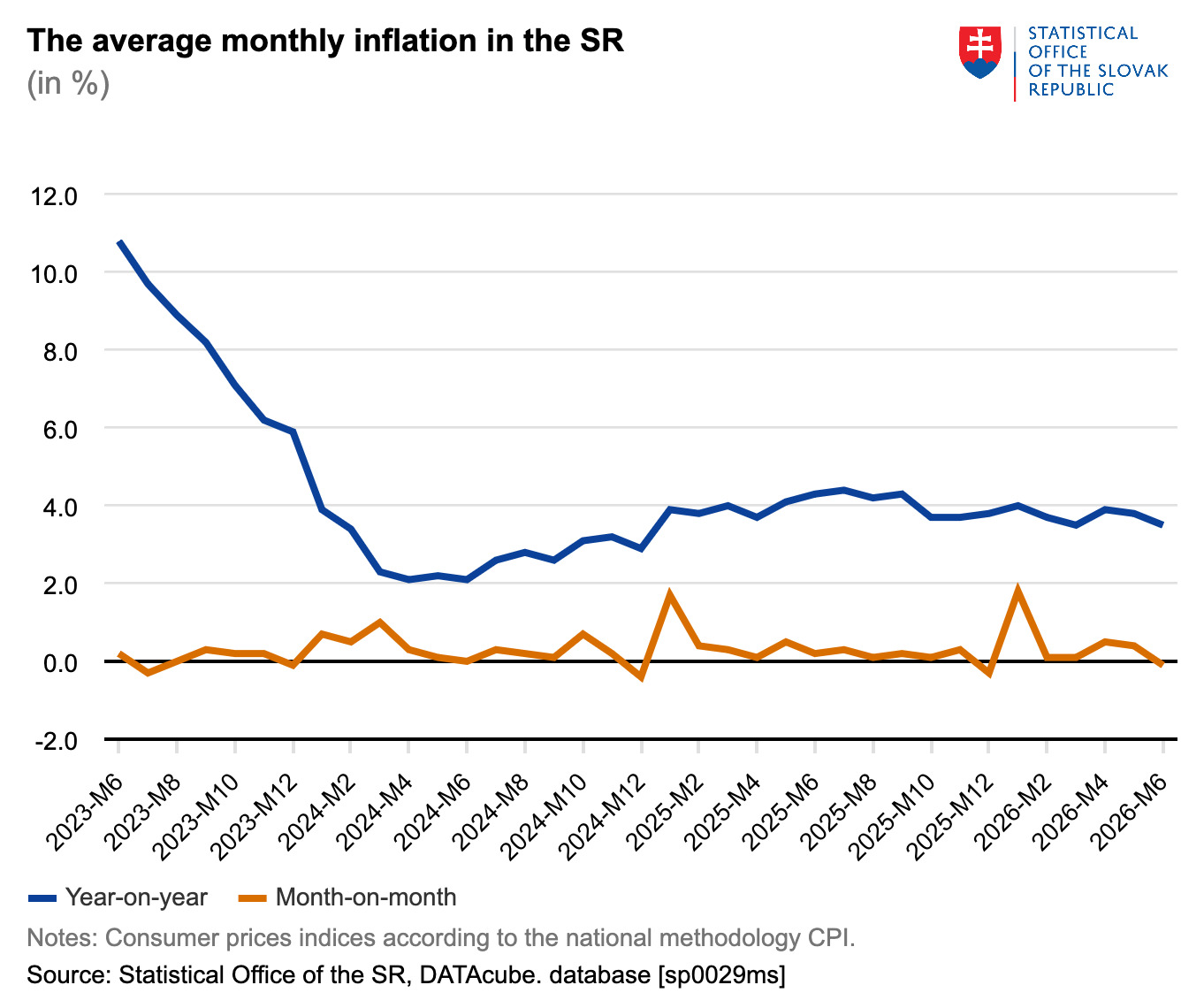
Slovakia’s annual inflation rate eased to 3.5% in June 2026, matching the level recorded in March and marking the lowest annual inflation rate so far this year. Consumer prices also declined 0.1% month-on-month, the first monthly decrease since the beginning of 2026, mainly reflecting lower fuel and food prices.
The moderation in inflation was supported by the first year-on-year decline in food and non-alcoholic beverage prices since June 2021, while lower fuel prices also contributed to the monthly fall in consumer prices. At the same time, housing and energy costs continued to exert upward pressure on inflation following regulatory changes introduced in January.
On a monthly basis, prices declined in three of the 13 expenditure categories under the revised COICOP 2018 classification. Transport recorded the largest decrease, with prices falling 2.1%, primarily due to a 6.0% drop in the cost of fuels and lubricants for private transport. Prices for food and non-alcoholic beverages declined 0.7%, while alcoholic beverages and tobacco became 0.5% cheaper.
Food prices fell across six of the nine food groups. The largest monthly declines were recorded for vegetables and fruit, both down by more than 3%, while prices also fell for milk, cheese and eggs, bread and cereals, and meat. By contrast, prices increased for oils and fats, selected food products and non-alcoholic beverages.
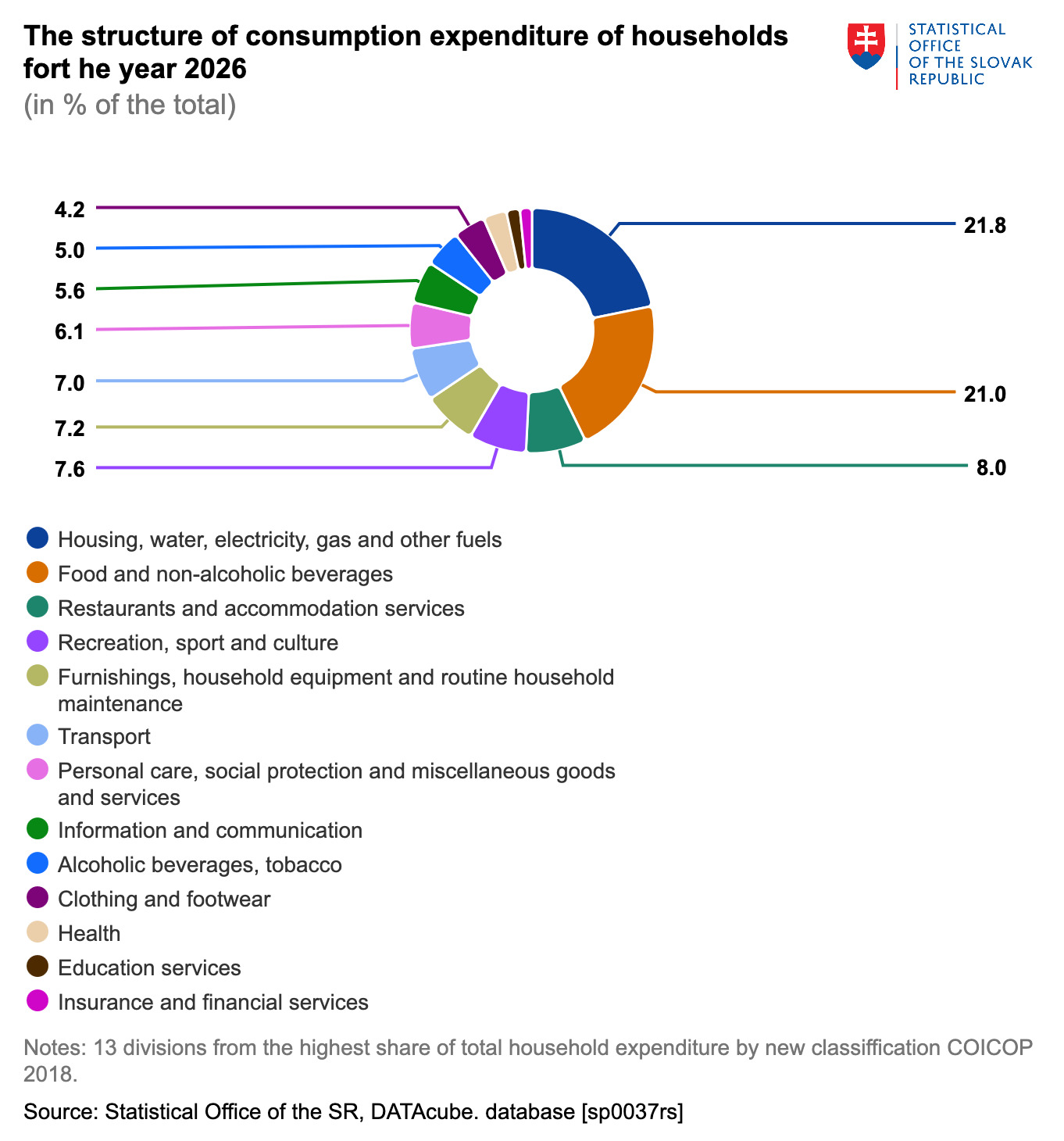
The main upward pressure on monthly inflation came from the housing and energy category, where prices increased 0.4%, driven by a 1.0% rise in imputed rents for owner-occupied housing together with higher water supply and housing maintenance costs. Housing and energy account for 21.8% of the average Slovak household’s expenditure, making it the largest component of the consumer basket.
Prices also increased for package holidays, contributing to a 0.6% rise in the recreation, sport and culture category, while restaurant and accommodation services recorded a 0.4% monthly increase.
On an annual basis, prices increased in 12 of the 13 expenditure categories. Housing and energy remained the largest contributor to inflation, with prices rising 7.3% compared with June 2025. Higher housing costs, including both actual and imputed rents, together with energy prices, continued to reflect the impact of the government’s regulatory measures introduced at the beginning of the year.
Food and non-alcoholic beverages were the only category to record a year-on-year decline, with prices falling 0.5%. Food prices alone were 1.1% lower than a year earlier, reflecting lower prices for milk, cheese and eggs (-3.6%), meat (-3.2%) and oils and fats (-12.9%). However, prices for bread and cereals, as well as fruit and nuts, remained higher than a year earlier.
Annual inflation in the transport category slowed to 5.3%, as fuel prices, although still 11% higher than a year earlier, increased at a much slower pace than in previous months. Lower air fares also helped moderate transport inflation.
Other categories continuing to contribute to annual inflation included recreation, sport and culture, where prices rose 4.8%, and restaurant services, which increased 5.1% year-on-year. Alcoholic beverages became 0.2% cheaper than a year earlier, mainly due to lower beer and wine prices.
During the first six months of 2026, consumer prices in Slovakia increased by an average of 3.7% compared with the same period of 2025.
Core inflation, which excludes regulated prices and administrative measures, stood at 1.9% year-on-year in June, while net inflation, which also excludes food prices, reached 3.1%. On a monthly basis, core inflation declined 0.1%, while net inflation remained unchanged.
The Statistical Office also introduced a revised consumer basket for 2026 based on household spending patterns in 2024 and the new COICOP 2018 classification. Under the updated weighting, housing and energy account for 21.8% of household expenditure and food and non-alcoholic beverages for 20.9%, making them the two largest components of the inflation basket.