Sunday, 4 October 2026


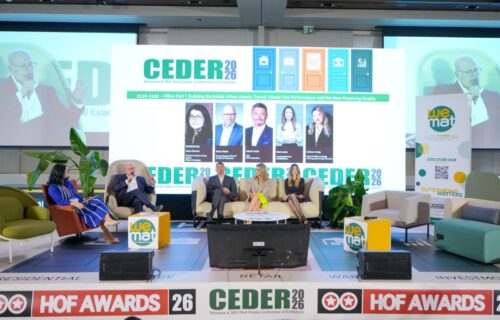
At CEDER 2026, the specialists invited to take part in the first panel, entitled “Office I: Building Bankable Urban Assets: Transit, Mixed-Use Performance and the New Financing Reality”, discussed how, in the current real estate landscape, the mixed-use, “one-stop-shop” concept has evolved from a branding trend into a metric of performance. They highlighted that the success of integrated environments—where residential, office, and retail coexist—now rests on their ability to function as high-performing operational tools.
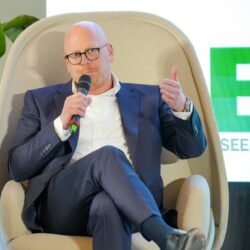
Doron Klein, Group Deputy CEO of AFI and CEO of AFI Romania, describes the core value of mixed-use as “the fact that you can create and (…) hold and operate those three, maybe in some cases four elements within one location, (…) somewhere where people can live, can work and can leisure in the same campus, in the same area, saving their commuting time, (…) that’s the name of the game”. According to him, this proximity is more than a convenience; it is a fundamental performance factor that ensures a project “works” for both stakeholders and users. Klein asserts that he wholeheartedly believes in the mixed-use concept: “I absolutely believe that if you can offer [a] one-stop-shop where people can do everything in a very short distance, they will come”.
A critical shift in the market is the move away from “marketing exercises” in favour of tangible performance. Maria Jianu, Leasing Director at Speedwell, argues that developers must redefine their luxury offerings, moving toward “premium as performance”: “Tenants are no longer willing to pay for things that help us in our branding but do not solve a problem (…) in their daily lives. So, it’s amazing that you have this greenery, it’s amazing you have these amenities. How do they work for us?” For a mixed-use project to perform, developers must meticulously think “about the technical specifications, about the flows, about the density, the catchment areas”, to ensure all components work together seamlessly.
The performance of an asset is also tied to its technical resilience and predictability. Adinel Tudor, CEO of EVO Properties, points out that certifications must translate into “actual savings for the tenants”. Utilizing modern technologies, such as all-electric systems that avoid natural gas, allows developers to keep operational costs low. This technical efficiency creates the “predictability of revenues” that lenders demand, which Tudor claims “beats everything” in the current market.
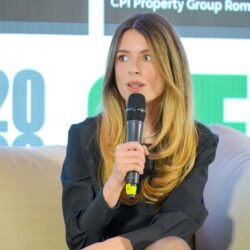
Andreea Cotigă, Head of Leasing Office at CPI Romania, spoke of a “flight to quality or flight to experience over space.” Ultimately, the long-term performance of a project is judged by its ability to “foster functional communities” and, if a project “is not able to offer that kind of ecosystem or environment, then rarely that inquiry turns into a signed lease”. As a conclusion, she emphasizes: “I think in a world that is more and more digitalized and where unfortunately we have the tendency to become (…) more solitary, the spaces and the projects that will manage to bring people together by offering quality services (…) and superior experiences will have a greater value and a greater retention”.