Saturday, 4 April 2026
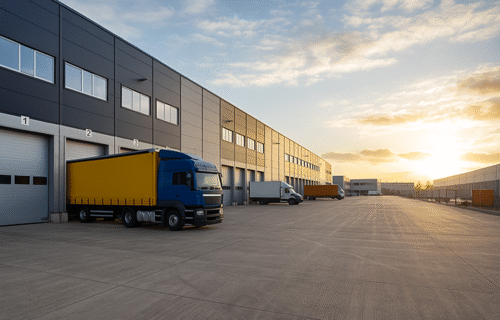
India’s logistics and warehousing sector has undergone a dramatic transformation over the past several years. What began as a surge driven by online retail, organised manufacturing and the expansion of third-party logistics providers has reshaped the physical supply chain landscape across both major metropolitan areas and emerging regional hubs. Large-format warehouses, fulfilment centres and last-mile facilities have become a defining feature of industrial development in India’s Tier I and Tier II cities.
This growth phase has resulted in a substantial expansion of built warehousing space nationwide. By the end of 2024, total modern warehouse stock across India’s leading markets had crossed the half-billion square foot mark, reflecting sustained development activity over multiple years. Leasing activity has also remained consistently strong, with annual take-up exceeding earlier historical norms and signalling deep occupier demand from retail, manufacturing and logistics operators.
However, as the sector enters 2025, signs of maturity are beginning to emerge. While leasing volumes remain healthy, investor sentiment has become more cautious, particularly in markets that saw rapid and concentrated development during the boom years. Developers and occupiers alike are now placing greater emphasis on location quality, infrastructure access and long-term viability, rather than sheer scale and speed of expansion.
Much of the early momentum in the sector was fuelled by aggressive network build-outs from e-commerce and quick-commerce platforms seeking to dominate last-mile delivery. Over time, this strategy led to dense clusters of warehouses in certain corridors and secondary micro-markets. As profitability and operational efficiency have come under closer scrutiny, many of these players have slowed the pace of expansion, focusing instead on optimising existing networks. This shift has altered demand patterns, particularly in peripheral locations that were heavily dependent on online retail growth.
Rising land costs have added another layer of complexity. In established logistics clusters around Delhi NCR, Mumbai and Bengaluru, competition for suitably zoned land has pushed acquisition prices higher, compressing development margins and lengthening decision timelines. In smaller cities, while land may be more affordable, challenges related to approvals, connectivity and administrative delays have often offset those advantages, making execution more uncertain.
Infrastructure constraints continue to shape the sector’s evolution. Despite major investments in highways, freight corridors and port capacity, logistics efficiency in India remains uneven. Last-mile connectivity, especially in peri-urban and semi-rural areas, still poses challenges for warehouse operators. Congestion and operational delays at ports and intermodal nodes further underline the need for coordinated improvements across the supply chain ecosystem.
At the same time, technology is becoming an increasingly important differentiator. Automation, data-driven inventory management and intelligent warehouse systems are gradually being adopted to improve throughput and reduce reliance on manual labour. While the long-term benefits are widely recognised, adoption remains uneven due to high upfront costs, dependence on imported equipment and a shortage of skilled personnel capable of operating advanced systems. For many operators, balancing efficiency gains with cost pressures remains a central challenge.
Concerns around potential oversupply are also gaining attention. As demand growth normalises, particularly in secondary locations, some markets face the risk of elevated vacancy levels. This has prompted developers to slow speculative construction and adopt more phased, demand-led development strategies.
Looking ahead, the logistics and warehousing sector appears to be transitioning from an era of rapid expansion to one of consolidation and refinement. Capital access will remain critical, and many industry participants are exploring new funding avenues to support long-term growth. While the pace may moderate, the underlying role of logistics infrastructure in supporting India’s manufacturing ambitions, consumption growth and export competitiveness ensures that the sector remains strategically important.
Rather than signalling a slowdown, the current phase points to a more disciplined and mature market, where scale is matched by sustainability, efficiency and long-term planning.
© 2026 cij.world