Tuesday, 22 September 2026
A privately financed heating and cooling network using energy from the Vltava is moving towards construction in Prague’s Smíchov district, with the developer saying the principal elements of the CZK 2.5bn scheme have secured final permits. The SeeDis Smíchov project is ultimately intended to supply around 400 buildings, equivalent to approximately 20,000 households.
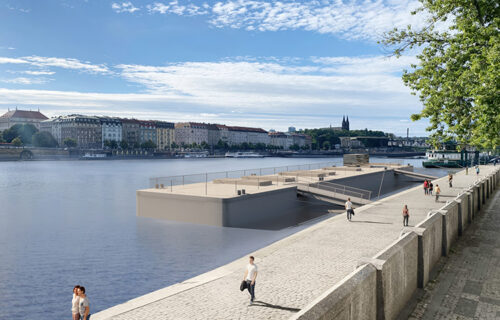
The system is being developed by Smíchovská teplárenská as an alternative to individual building-level heating and cooling. At its centre would be ComPon, a floating installation equipped with heat pumps that use the temperature of the river as an energy source. According to the developer, river water would not be consumed or chemically treated as part of the process.
Energy generated by the system would be distributed through a new local network serving residential and other properties in Smíchov. The company expects to offer heat at approximately CZK 750/GJ excluding VAT, compared with around CZK 1,200/GJ that it cites for a typical Prague apartment building. It also expects centrally supplied cooling to cost substantially less than producing it independently at individual properties. These figures are project estimates rather than independently established future energy prices.
Smíchovská teplárenská says more than 90% of the building owners it has approached have expressed an interest in connecting to the network. Banks have also offered financing for the first stage following due diligence, according to the company. The overall CZK 2.5bn investment is planned to be financed privately and through bank lending rather than Prague’s municipal budget.
The developer says final permits have been obtained for the main distribution infrastructure, the mooring required for the floating energy installation and the first group of building connections. Construction has yet to begin, however, because easements are required to place parts of the network beneath land and roads belonging to the City of Prague. Smíchovská teplárenská says it has been waiting for the city’s approval for 33 months and has consequently initiated proceedings seeking compulsory establishment of the necessary rights.
If completed at its intended scale, the network could also have implications for the environmental performance of Smíchov’s existing building stock. The developer calculates that the system could reduce CO₂ emissions by as much as 31,000 tonnes annually once the planned buildings are connected. It says the thermal effect of operating the installation on the Vltava would amount to only hundredths of a degree at maximum output.
The project is particularly relevant because much of Smíchov does not have access to an established district heating network and buildings commonly rely on their own heating systems, including gas. Providing heating and cooling from the same infrastructure could offer property owners another option as buildings face pressure to reduce fossil-fuel consumption while demand for summer cooling increases.
With permits for the main infrastructure in place and financing being prepared, the outstanding question is therefore less about the concept than access to municipal land required for construction. Resolving the easement dispute with Prague would allow the CZK 2.5bn project to move towards implementation and could provide a significant test of whether river-based heating and cooling can be deployed at district scale in the Czech capital.