Sunday, 20 September 2026
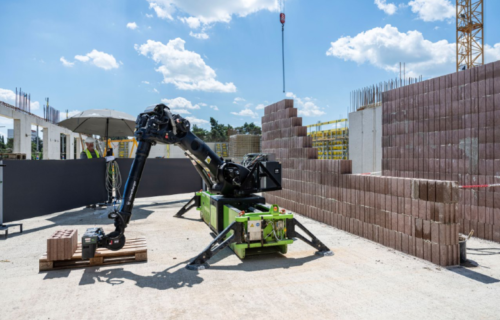
Austrian construction group PORR is expanding the use of construction automation by deploying a bricklaying robot on the Kladno Living residential project near Prague, where the technology is being evaluated under live site conditions.
The robotic system, known as WLTR or “Walter”, is being used to construct load-bearing and internal partition walls using precision-manufactured acoustic bricks. The Kladno Living development comprises five residential buildings with 371 apartments and parking facilities, making it one of the largest projects in the Czech Republic to incorporate robotic masonry during construction.
According to PORR, the trial forms part of the company’s wider programme to assess how automation can improve productivity, construction quality and workplace safety without replacing skilled tradespeople.
The robot has been operating on the project since construction began and works from a digital building model, positioning individual bricks with millimetre accuracy. It is capable of handling blocks weighing up to 52 kilograms, reducing the amount of heavy manual lifting required on site.
Introducing robotic systems into a construction project requires extensive planning beyond simply deploying new equipment. Project design, structural engineering, site logistics and construction sequencing all need to be coordinated to ensure the technology can operate efficiently alongside conventional building activities.
Although the robot performs the repetitive bricklaying work, trained personnel remain responsible for supervising its operation, preparing materials and ensuring quality standards are maintained. PORR said automation is intended to support construction workers by reducing physically demanding tasks rather than replacing them.
The current generation of robotic bricklayers can construct straight walls as well as corners and wall openings, allowing them to complete a broader range of structural elements than earlier prototypes. Based on the experience gained in Kladno, PORR said the robot’s output is comparable with that of an experienced bricklayer, while maintaining consistent installation quality throughout the working day.
Beyond productivity, the company believes one of the principal advantages of robotic masonry lies in improving health and safety by taking over repetitive lifting and handling of heavy building materials, helping reduce physical strain on construction workers.
The deployment forms part of PORR’s broader digital construction strategy, which combines Building Information Modelling (BIM), digital project management and data-driven construction technologies with increasing levels of automation. Development and implementation of robotic solutions are coordinated through the group’s dedicated Construction Automation & Robotics (CAR) team, which evaluates technologies according to the specific requirements of individual projects.
The Kladno pilot is expected to provide operational data that will help determine where robotic masonry can be introduced on future developments across PORR’s international operations. As labour shortages continue to affect construction markets across Europe, many contractors are exploring automation as a way to improve efficiency while allowing skilled workers to focus on more complex construction activities.
The WLTR robot weighs approximately 2.5 tonnes, has a working reach of 3.5 metres and can build around 7.5 square metres of wall per hour, with peak productivity reaching 10 square metres per hour. It is operated by a two-person team and consumes around 1.5 kilowatts of electricity, similar to the power demand of a typical household appliance.