Wednesday, 25 November 2026
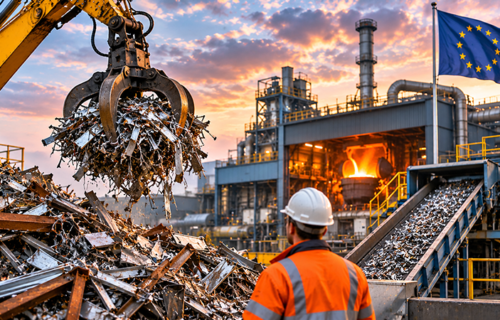
European Union restrictions on steel scrap exports, scheduled to take effect in May 2027, may deliver limited environmental benefits while redirecting international trade flows, according to research by the German Institute for Economic Research (DIW Berlin).
Steel production accounts for approximately a quarter of industrial emissions in the EU. European steelmakers have advocated retaining more recyclable steel within the bloc to reduce emissions and improve industrial competitiveness.
The EU currently exports nearly 16 million tonnes of steel scrap annually. Under the forthcoming restrictions, exports to most countries outside the Organisation for Economic Co-operation and Development (OECD) will be restricted, subject to certain exceptions.
However, nearly two-thirds of European steel scrap exports already go to Turkey, an OECD member that would remain largely unaffected by the restrictions.
Countries including Egypt, India, Pakistan, Morocco and Bangladesh could compensate for reduced European supplies by increasing imports from alternative markets, including the United States and the United Kingdom. Alternatively, steel producers in these countries could increase their reliance on iron ore, resulting in more carbon-intensive production.
“Scrap is scarce worldwide and valuable for the climate. Retaining it shifts emissions but is unlikely to reduce them,” said Antonia Kurz, author of the DIW study.
The research also examined a hypothetical complete ban on EU steel scrap exports. Under this scenario, European scrap prices could decline by nearly 30%, potentially improving the competitiveness of domestic steel manufacturers. However, global carbon dioxide emissions could increase by approximately 16 million tonnes during the first year as overseas producers substitute scrap with iron derived from ore.
A complete export ban is not currently under consideration and would face international trade law challenges.
Another obstacle is the quality of recycled materials. Much of the scrap exported from Europe contains impurities that limit its suitability for producing higher-grade flat steel, particularly for the automotive industry. Retaining these materials within the EU would not necessarily result in their immediate industrial use.
DIW argues that investment in material separation, sensor-based sorting and advanced scrap processing would provide a more effective route towards increasing recycled steel consumption in Europe.
“The key to improving scrap utilisation in the EU is processing, not an export ban,” Kurz said.
For the construction and industrial property sectors, the findings are relevant to the availability of lower-carbon building materials and the development of recycling and processing infrastructure. Improved steel recycling could support efforts to reduce embodied carbon in buildings, although the study does not quantify potential effects on construction costs or property development.
Source: DIW Berlin, November 2026.