Friday, 6 November 2026
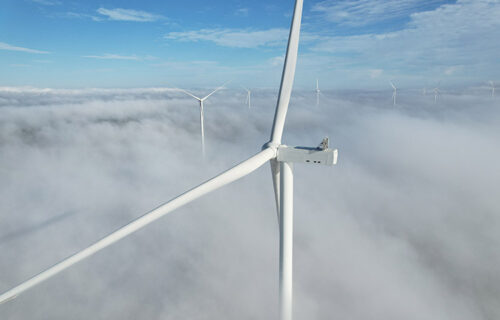
Rezolv Energy has arranged financing of up to €367 million for a 292.5 MW wind power project in Romania’s Constanța County. The development, known as Dunarea East, is expected to enter operation in early 2029, adding to the country’s electricity generation capacity.
The funding agreement involves six financial institutions, including Société Générale, Erste Group Bank, Raiffeisen Bank International together with Raiffeisen Bank S.A., Mizuho Bank Europe, Raiffeisenlandesbank Niederösterreich-Wien and the European Bank for Reconstruction and Development (EBRD). Denmark’s Export and Investment Fund (EIFO) is supporting the transaction, while the EBRD’s involvement is backed by an InvestEU guarantee.
The project received a Contract for Difference under Romania’s second renewable energy auction in 2025, covering 211 MW of the planned generating capacity. Rezolv Energy has also agreed to supply electricity to international retailer Ahold Delhaize under a long-term corporate purchasing arrangement. These agreements reduce some of the uncertainty surrounding future revenue and provide lenders with greater visibility over the project’s ability to meet its financial obligations.
The transaction follows three previous financing agreements secured by Rezolv Energy for renewable electricity developments in Romania. The company arranged up to €291 million for the first phase of the VIFOR wind farm, up to €331 million for its second phase and up to €561 million for the Dama Solar project. Together with Dunarea East, the four financing packages amount to approximately €1.55 billion in potential borrowing.
Rezolv Energy is backed by investment groups Actis and Mubadala. Its existing Romanian wind portfolio includes the 461 MW VIFOR development in Buzău County, where the first 192 MW phase began commercial operation in October 2026. The remaining 269 MW is under construction, with completion expected in 2027.
Once Dunarea East begins operating, Rezolv Energy’s combined wind generation capacity in Romania is expected to exceed 760 MW. The additional electricity supply will form part of Romania’s expanding renewable energy infrastructure, although the eventual contribution to the national electricity system will depend on actual generation and operating conditions.
The financing arrangements illustrate how large renewable energy developments increasingly depend on a combination of commercial lending, public financial guarantees and long-term electricity sales agreements. Such structures can reduce exposure to fluctuations in wholesale electricity prices, although construction costs, delivery schedules and operational performance remain important financial considerations.
For Romania’s construction and infrastructure sectors, the project represents another substantial investment in electricity generation facilities. The development will require construction works and associated technical infrastructure in Constanța County, with completion currently planned for early 2029.
The agreement also indicates continued participation by international banks in financing Romanian renewable energy projects. However, the announced €367 million represents the maximum financing available under the agreement rather than an amount necessarily disbursed at signing.