Wednesday, 28 October 2026
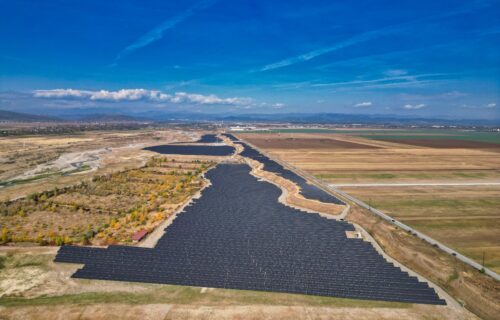
NEPI Rockcastle has completed a 56.2 MW solar power installation in Ariceștii Rahtivani, near Nedelea in Romania’s Prahova County, expanding its electricity generation activities beyond the shopping centres it owns and manages. The development covers 75.5 hectares and is the company’s second large solar facility in Romania. It forms part of a renewable energy investment programme valued at more than €100 million across its wider property portfolio.
The project was undertaken with Global Technical Systems and comprises more than 90,000 solar panels. The equipment is designed to generate electricity from sunlight reaching both sides of each panel, with a stated efficiency of up to 23%. According to the company, the panels carry a 30-year production guarantee. The installation adds a substantial amount of generation capacity to the group’s existing electricity assets.
Annual production is estimated at approximately 73,000 MWh, equivalent to the electricity used by more than 40,000 Romanian households over a year, based on the developer’s calculations. The company also estimates that the facility could reduce carbon dioxide emissions by approximately 17,000 tonnes annually. Both figures are projections, and actual results will depend on weather conditions, equipment performance and the amount of electricity generated during operation.
The new installation follows the opening of a solar facility at Chișineu-Criș in Arad County during 2025. Together with electricity generation equipment installed on shopping centre rooftops, the two projects form part of the group’s efforts to produce a larger proportion of the electricity used across its properties. The company expects its own renewable sources to account for 31% of total electricity consumption by the end of 2026, compared with 6% in 2024.
The increase in electricity generation capacity is relevant to the operating costs of commercial property. Shopping centres require substantial electricity for lighting, ventilation, cooling and other building systems, making energy expenditure an important consideration for owners and occupiers. Producing electricity through company-owned facilities may reduce reliance on external suppliers, although the financial outcome depends on investment costs, maintenance expenditure and the arrangements for supplying electricity to individual properties.
The Prahova County installation occupies land previously used for extracting mineral aggregates. Following the end of those activities, the site has been converted to electricity production. Local farmers are also using the areas between the solar panels for sheep grazing, allowing the land to support agricultural activity alongside its new industrial function.
The facility includes a transformer station and infrastructure that could accommodate electricity storage equipment in the future. Battery systems would allow some of the electricity generated during daylight hours to be retained for use or sale at other times. However, the company has not announced a confirmed storage project, construction timetable or additional investment commitment.
The development also illustrates how commercial property owners are extending energy investments beyond individual buildings. Rooftop installations can provide electricity at shopping centres, but their capacity is limited by available space and building characteristics. Larger ground-mounted projects can generate substantially more power, although they also introduce requirements associated with land management, grid connections and electricity market operations.
The company has not disclosed the construction cost of the Prahova County facility separately from its wider investment programme. It has also not provided figures for expected financial returns, electricity production costs or the proportion of output that will be allocated to particular shopping centres. These details would be necessary to assess the project’s contribution to operating income and expenditure.
With the completion of its second Romanian solar installation, the property group has increased its involvement in electricity generation as part of its commercial real estate operations. The longer-term financial implications will depend on actual production, electricity prices and the cost of managing the facilities. The project nevertheless represents a further investment in energy infrastructure by a company whose principal business remains the ownership and operation of retail property.